
A Strategic Guide to Social Media for Driving Revenue, Outcomes, and Differentiation in Your Therapy Practice
Practice Management
Transform your therapy practice with proven social media strategies that drive revenue, boost patient outcomes, and differentiate your PT or OT clinic.
Social media isn’t optional for therapy practices anymore, but random posting won’t drive results. This guide shows you how to align your social strategy with specific business objectives, whether you’re growing revenue as a clinic owner, improving patient engagement as a practitioner, or demonstrating ROI as a hospital administrator.
Learn to create content that educates and converts, streamline your workflow for 30-minute daily management, ensure compliance beyond HIPAA, and measure actual return on investment. Transform social media from a time drain into a predictable system for attracting patients, enhancing care, and differentiating your practice.
Social Media as a Business Asset
Social media is no longer just another marketing channel to check off your list; it’s become a critical tool for engagement and growth. Yet most therapy practices still approach it like it’s 2015, posting random exercise tips and hoping for the best.
The key is to stop thinking about social media as “posting content” and start viewing it as building business assets that generate revenue, improve clinical outcomes, and create operational efficiency.
Aligning Social Media Goals with Business Objectives
Before choosing a platform or publishing your next post, it is critical to define what success looks like for your practice as a whole. Your strategy should focus on outcomes that support both business performance and patient care.
An effective social media presence should help attract the right patients, improve engagement and adherence, and reinforce your clinic’s credibility. Some examples of meaningful indicators of success could be:
- Increased patient inquiries
- More direct bookings
- Stronger engagement with educational content
- Improved consistency in attendance.
Facebook and Instagram are effective for reaching and educating your local patient population, while LinkedIn supports professional visibility and referral relationships. Visual platforms like Instagram and YouTube allow you to demonstrate exercises, explain treatment rationale, and highlight how objective systems help clinicians quantify strength, track progress over time, and communicate improvement beyond subjective pain reports.
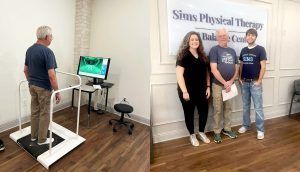
Here is an example: Show a quick video of a patient performing a real-world task (for example of our equipment the PrimusRS) alongside objective strength data to illustrate how clinicians track progress over time beyond subjective pain reports.
When your content aligns with these objectives, social media becomes an extension of your clinical approach, supporting trust, clarity, and long-term value for both patients and referral partners.

Creating Content That Educates, Engages, and Converts
Successful social media content in healthcare follows a strategic framework. Rather than posting randomly, organize your content into three pillars that work together to establish authority, build trust, and drive action.
Pillar 1: Establish Authority Through Evidence-Based Content
Your audience craves reliable, science-backed information in an era of health misinformation. Create content that debunks common misconceptions, simplifies complex conditions, and explains the reasoning behind treatment approaches.
This pillar particularly resonates with people who value evidence and build trust with potential patients researching their conditions online. Frame these posts carefully: you’re educating about general principles, not providing specific medical advice to individuals.
Pillar 2: Build Trust by Humanizing Your Practice
Healthcare can feel intimidating to patients. Use social media to demystify the rehabilitation process and make your practice more approachable. Staff introductions, “day in the life” videos, and patient success stories (always with explicit written consent) help potential patients envision themselves in your care.
This content directly addresses a key insight: video content helps reduce patient anxiety about starting therapy. A short Instagram Reel introducing a new therapist, their specialty, and their treatment philosophy makes your clinic feel less clinical and more welcoming.
Pillar 3: Drive Action by Showcasing Tangible Value
This pillar connects your social media efforts directly to business outcomes. Create content that highlights objective results and solves specific problems for your target audience.
For occupational health programs, post an infographic on LinkedIn showing your average return-to-work timeline compared to industry standards, tagging local employers who might benefit from your services. Include data showing how comprehensive functional testing reduces re-injury rates by identifying workers who need additional conditioning before returning to full duty.
Sports medicine programs can share videos of athletes completing return-to-sport testing, demonstrating the objective criteria you use to clear athletes safely. Clinic owners should create posts promoting specific services with clear calls-to-action, for example: “Struggling with shoulder pain? Our Direct Access evaluation means you can see our specialists without waiting for a physician referral. Book your assessment today through our website link.”
Efficiency, Compliance, and Measuring What Matters
Streamlining Your Workflow for 30-Minute Daily Management
Social media doesn’t have to consume hours of your day. With proper systems, you can maintain an effective presence in just 30 minutes daily. Use scheduling platforms like Hootsuite or Later to batch-schedule content during less busy times. Design templates in Canva to maintain consistent branding, particularly important for hospital systems maintaining standardization across multiple departments.
Ethics & Compliance: Beyond Basic HIPAA
While HIPAA compliance remains fundamental, ethical social media use in healthcare extends much further. Create a comprehensive social media policy that addresses:
Patient Privacy Protection: Never share identifiable information without written consent, even in success stories. Blur faces in background shots of your clinic. Avoid posting anything that could identify a patient through context, even without showing their face.
Professional Boundaries: Establish clear guidelines about staff connecting with current patients on personal social media accounts. Define how to respond when patients send private messages asking for medical advice (always redirect to proper clinical channels).
Managing Public Feedback: Develop protocols for responding to both positive and negative reviews professionally. Never discuss specific patient cases in public responses, even to defend your practice. A simple “We appreciate your feedback and take all concerns seriously. Please contact our patient relations team directly so we can address this properly” maintains professionalism while showing responsiveness.
The Education vs. Advice Line: Always frame content as general education rather than specific medical recommendations. Include disclaimers that social media content doesn’t replace professional evaluation. When patients ask specific questions in comments, respond with “Great question! This really depends on individual factors. We’d be happy to discuss this during an evaluation.”
Measuring Your Return on Investment
The biggest gap in most therapy practices’ social media strategy is connecting activity to actual business outcomes. Here’s how to measure what matters:
For Business Growth: There are many ways to measure website traffic referred from social media. Google Analytics includes a breakdown of traffic sources, including social media. Most social media scheduling platforms include click counts. You can also use UTM codes in your links to track which specific campaigns drive traffic. Most importantly, ask new patients during intake how they heard about your practice, creating a simple tracking system for social media-originated patients.
Calculate your Cost Per Acquisition (CPA) from social media by dividing your monthly social media investment (including staff time) by the number of new patients acquired through these channels. Compare this to other marketing channels like print ads or physician liaison programs to demonstrate value.
For Clinical Impact: Engagement metrics on certain post types can indicate your level of patient education provided via social media. For example, high save rates on exercise videos suggest patients are using them for home programs. Comments and questions show what people want to know about certain exercises or treatment approaches, which may influence how you explain them in a treatment scenario.
For Program Development: Monitor which content generates the most interest to identify service line opportunities. If posts about work conditioning consistently outperform general content, consider expanding that program. Use social media insights to support business cases for new equipment or expanded services.

Activate Your Strategy and Build Your Evidence Base
Social media success in rehabilitation therapy isn’t about going viral or accumulating followers. It’s about implementing a consistent, goal-oriented strategy that aligns with your business and clinical objectives. You’re not engaging in random acts of marketing; you’re building a system that drives measurable results.
Your path forward is clear: Move beyond generic posting to strategic content creation. Stop measuring vanity metrics and start tracking real business outcomes. Transform social media from an obligation into an asset that attracts ideal patients, enhances clinical care, and differentiates your practice.
Choose one specific goal from Part 1 that aligns with your role. Create one piece of content from Part 2’s framework. Set up one measurement system from Part 3 to track your progress. Small, strategic steps compound into significant results.
The practices that will thrive in the next decade won’t be those with the most followers or the cleverest posts. They’ll be those that successfully integrate social media into their overall strategy for delivering exceptional patient care and building sustainable businesses. Make social media work for your practice, not the other way around.