The Modern Playbook for Orthopedic Rehabilitation
Practice Management Transform your orthopedic rehabilitation practice with evidence-based protocols, objective outcome tools, and proven strategies that drive both clinical excellence and business growth. Discover the modern playbook for PT success.-
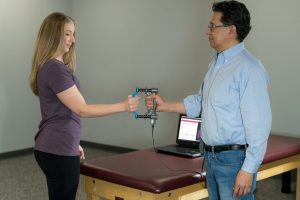
Many rehabilitation clinicians have faced challenges in clinical decision-making due to inconsistent patient performance. For example, what we see in the clinic might not match a patient’s reported limitations. Without objective data to back in-clinic performance, we may be left making more judgment calls about treatment progression than we’d like. Consistency of effort (COE) testing…
-
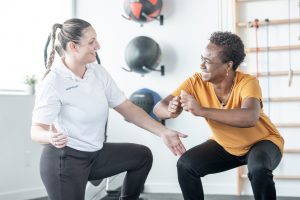
Movement screens earned their place in rehab. The Functional Movement Screen gave clinicians a shared language for movement quality: a standardized, repeatable way to watch someone move, flag asymmetries, and clear for pain. If you have spent any time in this field, you have run hundreds of them. There is real value in that common…
-
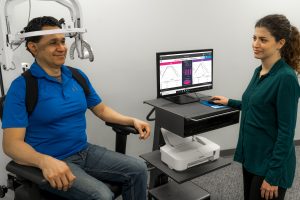
Cervical range of motion (ROM) measures how far the neck joints can move, expressed in degrees across different planes. Healthcare providers use these measurements to assess neck injuries, track rehabilitation progress, and identify movement restrictions that affect daily activities. If you’re standardizing programs across providers, pairing ROM with consistent neck strengthening progressions helps keep care…
-
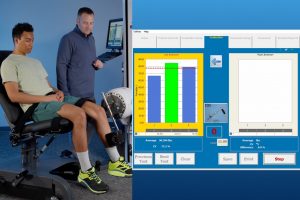
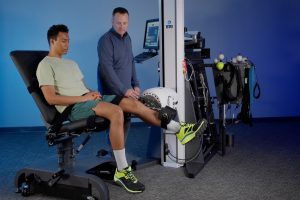
If there is one finding rehab research agrees on in knee osteoarthritis, it is this: quadriceps weakness is among the most consistent drivers of OA-related pain and function loss. It predicts who develops the disease, who progresses, and who ends up needing a joint replacement. So most programs set out to “strengthen the quad.” The…
-
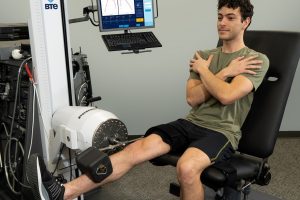
Manual muscle testing is the most widely used strength assessment in rehab. Every PT and OT learns it, nearly every clinic uses it, and for confirming gross weakness or screening quickly at the bedside, it does a real job. It is not going anywhere — and it shouldn’t. But here is something worth addressing: MMT…
-
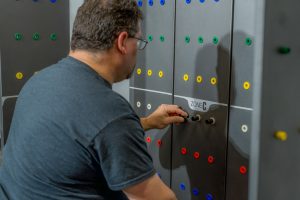
What is a Dexterity Test?
CategoriesA dexterity test measures hand, finger, and arm coordination through controlled tasks that require precision, speed, and accuracy. These tests provide objective measurements of manual dexterity and serve as essential tools in clinical rehabilitation, neurological assessment, and employment screening. Healthcare professionals, employers, and individuals who undergo these assessments need to understand dexterity tests because they…
-
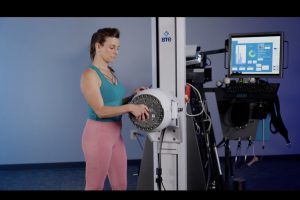
Task simulation is the practice of replicating real-world activities, from job duties to daily self-care, inside a controlled clinical environment. It’s become a cornerstone of modern occupational therapy because it bridges the gap between what patients do in the clinic and what they actually need to do in life. But here’s the thing we don’t…
-
Dynamometry testing for return to sport gives clinicians the objective strength data they need to make defensible clearance decisions. Manual muscle testing misses meaningful deficits, and time-based protocols alone don’t cut it anymore. This article breaks down the types of dynamometry, the metrics that matter beyond peak torque, how to standardize your testing protocols, and…
-

A Strategic Guide to the Rapid Exchange Grip (REG) Test: From Clinical Protocol to Business Growth
CategoriesMaster the rapid exchange grip test with our expert protocol guide. Learn proper administration, result interpretation, and how to integrate REG testing into comprehensive effort assessment systems for better clinical outcomes and defensible documentation.
-

AI in Physical Therapy: What’s Real, What’s Not, and What Actually Matters for Your Clinic
CategoriesAI in physical therapy is moving fast, but what’s actually useful in a real clinic? Explore the AI tools delivering real ROI, where the evidence is still thin, and the critical mistakes PT clinics should avoid before jumping on the hype.
-
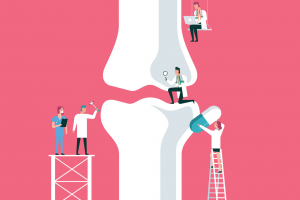
If you’ve treated patients with patellar tendonitis, then you know the sesamoids in the knee. The smaller sesamoid bones of the hand and feet play a big role in other conditions, but they’re often overlooked. Let’s explore the anatomy, function, and rehab techniques for sesamoid bones.
-

Today's emphasis on patient engagement strategies represents an important shift in modern healthcare. The patient-provider relationship has become more collaborative than ever. With these patient engagement strategies, you can maximize efficiency and provide better clinical outcomes.