Discover how strategic ADL equipment selection drives measurable patient outcomes, streamlines documentation for reimbursement, and differentiates your occupational therapy practice. Get actionable insights for clinic owners, OTs, and healthcare administrators to maximize both clinical success and business growth.
A Clinicians Guide to ADL Equipment
ADL equipment isn’t just about providing adaptive tools—it’s about building a strategic program that enhances patient outcomes, streamlines documentation, and differentiates your practice. This guide shows you how to leverage ADL assessments and equipment as measurable KPIs, justify medical necessity for cleaner reimbursement, and implement advanced strategies that set your clinic apart. We’ll move beyond basic equipment lists to explore how objective ADL data can drive both clinical success and business growth.
ADLs are Your Clinic’s Hidden KPI
Your therapists help patients regain independence every day, but are you effectively measuring, documenting, and capitalizing on this value? Activities of Daily Living (ADLs) are more than a clinical checklist—they’re a powerful Key Performance Indicator (KPI) for patient progress, clinic efficiency, and demonstrating value to payers.
Think about it: every insurance authorization, every progress note, and every discharge summary revolves around one fundamental question—can this patient safely perform their daily activities? Yet many clinics still rely on subjective observations rather than objective, quantifiable ADL data that speaks the language of administrators and payers.
This guide provides you with a strategic framework for leveraging ADL equipment in your occupational therapy practice. We’ll move beyond simple equipment lists to explore how to build a program that improves objective outcomes, streamlines documentation for cleaner reimbursement, and differentiates your services in a competitive market.
The Foundation: Defining ADLs and IADLs for a Business Context
ADLs & IADLs as Measurable Goals
When we talk about Activities of Daily Living (ADLs), we’re referring to the fundamental self-care tasks: bathing, dressing, toileting, transferring, continence, and feeding. Instrumental Activities of Daily Living (IADLs) take it a step further, encompassing more complex activities like meal preparation, medication management, financial management, and shopping.
But here’s where most clinics miss the opportunity—these aren’t just clinical categories. They’re measurable, reportable metrics that directly impact your bottom line.
Connecting to Business Metrics
For Hospital Administrators: ADL independence becomes your critical benchmark for safe discharge. When you can objectively demonstrate that a patient has achieved specific ADL milestones, you’re not just improving patient flow—you’re reducing readmission risk and improving your quality metrics.
For Clinic Owners: Every ADL performance score—whether it’s FIM, Barthel Index, or another validated measure—becomes concrete data you can present to referral sources. “We improved our patients’ average FIM scores by 15 points” carries far more weight than “our patients got better.”
For Occupational Health Directors: IADL mastery directly correlates with return-to-work readiness. A worker who can manage meal prep and medication schedules independently is more likely to successfully maintain their work schedule. This connection strengthens your value proposition to employers and insurers.
The Practical ADL Toolkit: An Evidence-Based Overview
Let’s organize equipment strategically by functional area, focusing not just on what’s available, but on the clinical rationale and objective impact each category provides.
Bathing & Toileting
The foundation of dignity and independence starts here. Equipment like shower chairs, grab bars, raised toilet seats, and bedside commodes serve specific clinical populations.
Clinical Rationale: These tools are essential for post-operative hip and knee replacements, stroke recovery, and fall prevention programs. They’re not just conveniences—they’re medical necessities for specific diagnoses.
Objective Impact: When you implement proper bathing and toileting equipment, you’re reducing transfer risk scores and enabling unassisted toileting, which directly improves FIM scores. Document this: “Patient’s toilet transfer FIM score improved from 3 (moderate assistance) to 6 (modified independence) following grab bar installation and training.”
Dressing & Grooming
Sock aids, reachers, dressing sticks, button hooks, and universal cuffs might seem simple, but they’re game-changers for maintaining independence.
Clinical Rationale: Essential for patients with arthritis, limited range of motion, hemiparesis, or any condition affecting fine motor control. These tools bridge the gap between dependence and self-sufficiency.
Objective Impact: Track and report meaningful metrics: “Dressing time decreased by 40%, caregiver assistance reduced from daily to twice weekly.” This data supports continued therapy and equipment justification.
Feeding & Meal Prep
Adaptive utensils, plate guards, non-slip mats, and one-handed cutting boards address a fundamental human need—the ability to nourish oneself independently.
Clinical Rationale: Critical for patients with tremors, weakness, poor coordination, or cognitive impairments. These adaptations maintain dignity while ensuring adequate nutrition.
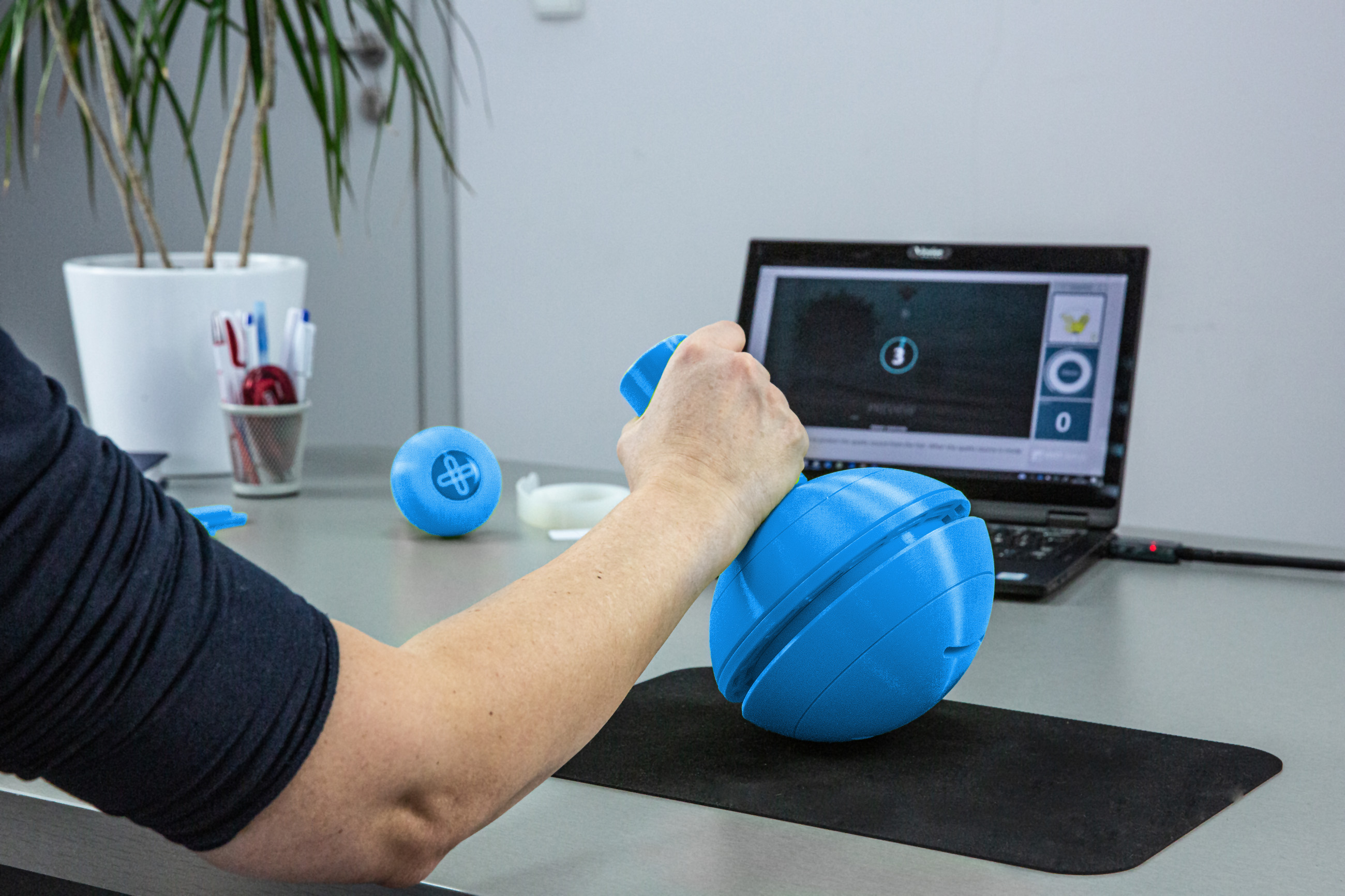
Objective Impact: Document specific improvements: “Independent feeding achieved, resulting in 25% increase in nutritional intake and elimination of feeding assistance at two meals daily.” For fine motor control essential to feeding tasks, the Capri system helps clinicians provide engaging, gamified therapy that improves the neuromuscular control needed for these activities.
Mobility & Transfers
Transfer boards, bed rails, leg lifters, and mobility aids form the backbone of safe patient movement.
Clinical Rationale: Essential for spinal cord injuries, generalized weakness, and progressive neurological conditions. These tools enable independence while minimizing injury risk.
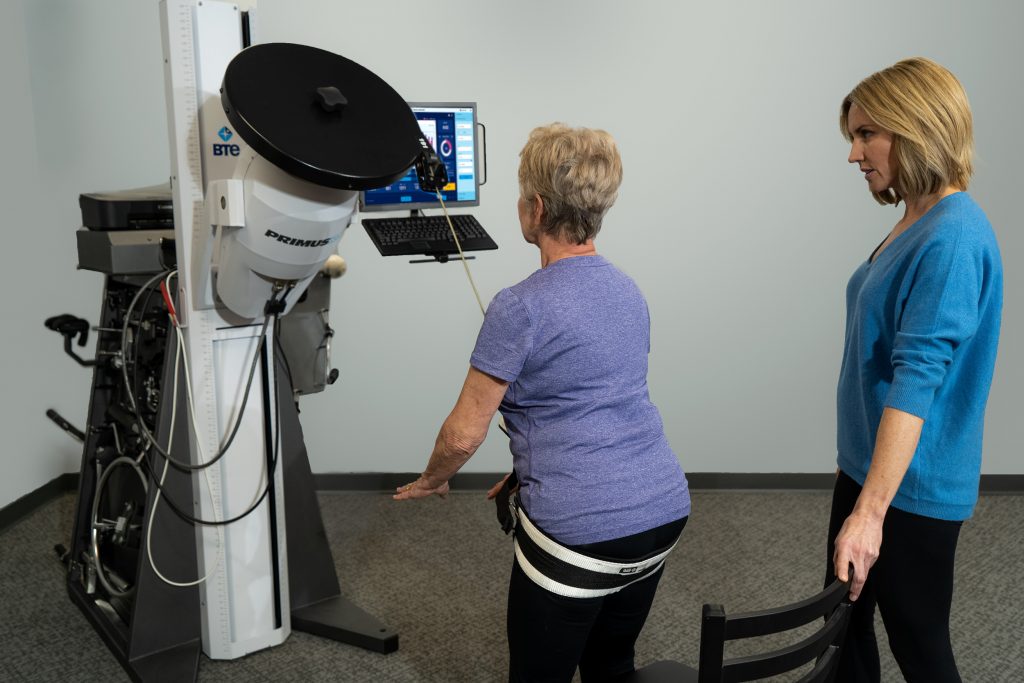
Objective Impact: Quantify safety improvements: “Transfer assessment scores improved from high fall risk to moderate risk following equipment training.” The PrimusRS helps clinicians objectively assess and strengthen the specific muscle groups needed for safe transfers, providing documented progress toward independence.
Documentation that Drives Reimbursement
The Problem We All Face
Here’s an uncomfortable truth: DME (Durable Medical Equipment) is often underutilized or denied not because it isn’t needed, but because we’re not documenting effectively. Payers don’t deny equipment—they deny poorly justified requests.
The Solution: Justifying Medical Necessity
Linking Equipment to Functional Deficits: Your documentation must clearly articulate why the patient cannot perform the ADL without the device. Generic statements won’t cut it. Be specific: “Due to 2/5 grip strength bilaterally secondary to rheumatoid arthritis, patient unable to maintain grasp on standard utensils for duration of meal, resulting in inadequate nutritional intake.”
Writing a Strong Letter of Medical Necessity (LMN): Create templates that prompt for essential information:
- Specific diagnosis and functional limitation
- How the equipment addresses this limitation
- Expected functional improvement with equipment
- Safety concerns without equipment
- Previous interventions tried and why they were insufficient
Efficient Workflows for Practitioners: Implement documentation templates that automatically prompt for this information. Systems like Simulator II and PrimusRS help clinicians capture objective functional data that strengthens equipment justification, providing automated reporting that speaks directly to payer requirements.
Advanced Strategies to Differentiate Your Practice
Cost vs. Value Analysis
Let’s shift the conversation from equipment cost to value delivered. A $30 reacher isn’t an expense—it’s an investment that could prevent a $50,000 hip fracture hospitalization. Document and market this ROI:
- Falls prevented = hospitalizations avoided
- Caregiver hours reduced = family quality of life improved
- Earlier discharge = bed days saved
- Work days recovered = productivity retained
When you frame ADL equipment through this lens, administrators and payers see strategic investments, not line-item expenses.
The Rise of “Smart” ADL Tech
We’re entering an era where ADL equipment goes beyond mechanical aids. Smart home devices, voice assistants, and app-controlled environments are becoming part of the OT toolkit. Position yourself as the expert who bridges traditional therapy with emerging technology.
Telehealth Integration: Virtual ADL assessments are no longer the future—they’re the present. Develop protocols for remote equipment recommendation and training. Use validated assessment tools that work virtually, and document outcomes just as rigorously as in-person sessions.
Specialized Programs
Pediatric Considerations: Children need equipment that grows with them. Consider adjustable options and focus on developing skills rather than compensating for deficits. Document developmental milestones achieved with adaptive equipment support.
Geriatric Focus: Balance high-tech solutions with user-friendly designs. Not every senior needs a smart home—sometimes a well-placed grab bar is the perfect solution. The key is matching the technology to the individual’s cognitive and physical capabilities.
Building Community Partnerships
Partner with DME reuse programs and local nonprofits to serve uninsured and underinsured patients. This isn’t just good community service—it’s smart business. These partnerships:
- Demonstrate social responsibility
- Generate referrals from grateful families
- Build relationships with community organizations
- Create positive PR opportunities
Implementing a High-Value ADL Program in Your Clinic
For Clinic Owners and Managers
Standardize your ADL assessment process across all therapists. Create “post-op ADL kits” bundled by diagnosis—market these as value-adds to orthopedic surgeons. Use your ADL outcome data in marketing materials: “Our comprehensive ADL program helped 87% of hip replacement patients achieve independence in all basic ADLs within 6 weeks.”
Consider implementing objective systems like PrimusRS to provide consistent, reliable ADL performance data across your clinic. This standardization improves quality while reducing documentation time.

For Practitioners
Use objective ADL measures consistently to track progress and engage patients. Show them their scores improving week by week—this visual progress motivates compliance and validates your interventions. Simplified, objective documentation makes justifying continued care straightforward.
For Hospital Administrators
Implement standardized ADL protocols across all sites to improve throughput and enable meaningful data comparison. When every facility measures and documents ADLs consistently, you can identify best practices and replicate success system-wide.
For Occupational Health Directors
Incorporate comprehensive ADL and IADL assessments into your functional capacity evaluations. Workers’ compensation carriers increasingly recognize that successful return-to-work depends on overall functional independence, not just job-specific tasks.
Your ADL Program as a Strategic Asset
An effective ADL equipment program is more than a clinical service—it’s an operational force multiplier. When you approach ADL equipment strategically, you enhance patient care, empower your therapists with objective data, and build a stronger, more defensible business model.
The clinics that thrive in today’s value-based care environment are those that can demonstrate objective, measurable improvements in functional independence. Your ADL program, properly structured and documented, becomes your proof of value—to patients, payers, and referral sources alike.
Remember: every piece of adaptive equipment you prescribe tells a story. Make sure you’re telling it with objective data, clear documentation, and strategic thinking that positions your practice as the clear choice for functional rehabilitation.
Ready to transform your ADL assessments into objective, reportable data that drives both clinical outcomes and business growth? Learn how BTE’s comprehensive evaluation and rehabilitation systems help leading clinics streamline documentation, demonstrate measurable progress, and differentiate their services. Explore our solutions to see how objective functional data can elevate your ADL program.
ADL Equipment in Occupational Therapy: FAQs for PT & OT Clinic Staff
Q1: How do I determine which adaptive equipment is appropriate for a specific patient?
A: Start with a comprehensive ADL assessment evaluating the patient’s physical capabilities, cognitive function, and environmental context. Consider their specific deficits (strength, range of motion, coordination, vision) and prioritize equipment that addresses their most limiting factors first. Always involve the patient in the selection process to ensure acceptance and compliance. Trial different options when possible, as patient preference and comfort significantly impact success rates.
Q2: What’s the difference between compensatory and restorative approaches when recommending ADL equipment?
A: Compensatory approaches use adaptive equipment to work around permanent limitations, helping patients accomplish tasks despite deficits. Examples include using a reacher for someone with hip precautions or adaptive utensils for permanent hand weakness. Restorative approaches use equipment temporarily while rebuilding skills, such as using a sock aid during recovery from a stroke with the goal of eventually dressing independently without aids. Choose based on the patient’s prognosis and rehabilitation potential.
Q3: How should we document ADL equipment recommendations for insurance coverage?
A: Documentation must clearly establish medical necessity by linking the equipment to specific functional deficits and safety concerns. Include baseline ADL scores, specific functional limitations, safety risks without the equipment, and how the device will improve independence or prevent injury. Use objective measurements when possible (grip strength, range of motion) and cite relevant diagnosis codes. Follow up documentation should demonstrate improved function or maintained safety with equipment use.
Q4: What are the most cost-effective ADL equipment options for patients with limited budgets?
A: Start with low-cost, high-impact items: reachers ($15-25), built-up foam tubing for utensils ($5-10), non-slip mats ($10-15), and long-handled shoehorns ($8-12). Many items can be improvised using household materials – tennis balls on walker legs, rubber jar openers as grip aids, or elastic shoelaces. Partner with community organizations, loan closets, and durable medical equipment companies that offer payment plans. Always prioritize safety-critical items first.
Q5: How do we train patients effectively on new ADL equipment?
A: Use the “show, do, teach back” method: demonstrate proper technique, have the patient practice with your guidance, then have them demonstrate independently while explaining the steps. Break complex tasks into smaller components and practice in realistic environments when possible. Provide written instructions with pictures, and ensure caregivers are also trained. Schedule follow-up sessions to address problems and reinforce proper technique, as initial training rarely achieves mastery.
Q6: What safety considerations should we address when recommending bathroom ADL equipment?
A: Prioritize fall prevention through grab bar placement (horizontal bars for stability, vertical for pulling up), non-slip surfaces, and adequate lighting. Ensure grab bars are properly installed into wall studs and can support 250+ pounds. For shower chairs and bath benches, verify weight capacity exceeds patient needs and check for secure, non-slip feet. Assess transfer techniques and ensure patients can safely get on/off equipment. Always consider the patient’s cognitive ability to remember and properly use safety equipment.