Building Data-Driven Balance Training Programs for Clinical Success
Treatment Guidelines
Learn data-driven balance training strategies to improve patient outcomes, streamline care, and grow clinic revenue with proven clinical protocols.
Balance training is essential for rehabilitation, but many clinics rely on outdated, subjective methods. This article outlines how to build a data-driven balance program that improves patient outcomes, streamlines operations, and drives revenue.
You’ll learn to implement objective assessments, develop condition-specific protocols, integrate cognitive and strength training, and leverage technology for measurable results.
What Does Your Current Balance Training Program Look Like?
Balance training is a cornerstone of rehabilitation, critical for fall prevention, post-operative recovery, and performance enhancement. But here’s the real question: Is your current balance program truly setting your clinic apart? Are you capturing objective data, delivering patient-centered care, and maximizing both clinical outcomes and revenue potential?
If you’re still relying on subjective assessments and basic cone-stepping exercises, you’re leaving opportunities on the table. This article outlines a framework to elevate your balance training from a standard service to a data-driven, high-value program that attracts patients, impresses referrers, and strengthens your bottom line.
Understanding the Three Pillars of Stability
Before we dive into advanced strategies for balance physical therapy, let’s establish our foundation. Balance relies on three interconnected systems working in harmony:
- Visual System: Your eyes provide spatial orientation and environmental awareness
- Proprioceptive System: Muscles and joints send signals about body position and movement
- Vestibular System: The inner ear maintains equilibrium and spatial orientation
When one system becomes impaired, whether through injury, aging, or neurological conditions, the others must compensate. Effective therapy requires identifying and targeting specific deficits within this complex system. Understanding this foundation is crucial, but diagnosing and addressing these deficits with subjective methods leaves your practice vulnerable to inconsistent outcomes and documentation challenges.
The Challenge with Conventional Balance Training
The Subjectivity Trap
Most clinics still document balance as “good,” “fair,” or “poor.” This subjective approach creates multiple problems. You can’t definitively show progress to patients or payers. Your documentation becomes vulnerable during audits. And perhaps most importantly, you miss opportunities to demonstrate the value of your services through measurable improvement.
The One-Size-Fits-All Protocol
Generic exercises like single-leg stance and tandem walking have their place, but they fail to address the unique needs of specific patient populations. The post-stroke patient requires different interventions than the athlete recovering from an ACL reconstruction. The individual with Parkinson’s disease needs specialized approaches that differ from those for vestibular dysfunction. When you apply the same protocol to everyone, you limit both outcomes and efficiency.
The Disconnected Home Program
We’ve all seen it before: handing patients a photocopied sheet of exercises with instructions to “do these three times a week.” Without tracking progress or ensuring proper form, compliance plummets and recovery slows. This approach limits your clinic’s throughput and frustrates patients who don’t see the progress they expect.
Building Better Clinics and Better Patient Outcomes
Let’s transform your approach with a comprehensive framework that addresses these challenges head-on.
Pillar 1: Start with Objective, Standardized Assessment
Move beyond subjective grades by implementing objective balance assessments. The Berg Balance Scale provides a quantifiable baseline that creates objective documentation for cleaner reimbursement and robust progress tracking. This standardization becomes especially powerful when managing multiple sites or training new staff.
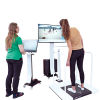
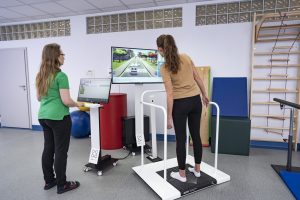
Consider how technology enhances this process. The Alfa interactive balance platform allows clinicians to objectively measure and document balance performance while providing real-time feedback to patients. This combination of standardized assessment and technology creates the foundation for data-driven care that referrers and payers respect.
Pillar 2: Develop Condition-Specific, Evidence-Based Protocols
Your protocols should reflect the diversity of your patient population. Here’s how to structure specialized approaches:
For Neurological Conditions:
Focus on vestibular rehabilitation therapy for inner-ear issues and neuroplasticity principles for stroke and Parkinson’s patients. These patients benefit from progressive challenges that stimulate adaptation and compensation. The Alfa helps clinicians provide gamified balance exercises that improve neuromuscular control, particularly valuable for patients rebuilding proprioception alongside balance.
For Orthopedic Recovery:
Emphasize proprioceptive training post-injury to reduce re-injury risk. After ankle sprains or ACL reconstructions, patients need targeted exercises that restore joint position sense and reactive stability. Progressive loading and customized difficulty settings on Alfa prepare patients for return to sport or work.
For Geriatric Fall Prevention:
Build comprehensive programs that integrate static balance, dynamic balance, and functional strength. The Eccentron allows clinicians to provide eccentric resistance training for lower extremities, building the strength foundation essential for postural control while reducing cardiovascular stress, a key consideration for older adults.

Pillar 3: Integrate Balance with Cognitive and Strength Training
Balance doesn’t exist in isolation. Real-world stability requires simultaneous physical and cognitive processing. Dual-task training, such as maintaining balance while counting backward or identifying objects, mirrors daily life demands and improves functional outcomes.
Strength forms the non-negotiable foundation for balance. Core stability and lower extremity power directly influence postural control and recovery from perturbations. The PrimusRS helps clinicians provide multi-joint functional rehabilitation with objective strength assessment, allowing you to address both strength and balance within integrated treatment sessions.

This integrated approach delivers superior outcomes and positions your clinic as forward-thinking. When patients experience comprehensive care that addresses all aspects of their functional limitations, they become your strongest advocates.
Pillar 4: Leverage Technology for Engagement and Precision
Technology transforms balance training from repetitive exercises into engaging, measurable interventions. Interactive platforms provide several advantages:
- Immediate Feedback: Patients see their performance in real-time, improving motor learning and motivation
- Objective Progression: Track improvements with precision, adjusting difficulty based on measurable performance
- Enhanced Compliance: Gamification elements increase engagement and adherence to treatment plans
- Defensible Documentation: Generate reports that clearly demonstrate progress for insurance and referral sources
These technological advantages create powerful marketing opportunities. When you can show referring physicians objective pre- and post-treatment data, you differentiate your services from competitors still using subjective assessments.

Actionable Implementation: Your 3-Step Plan
Ready to transform your balance program? Here’s your roadmap:
Step 1: Standardize Your Assessment
Choose a primary balance assessment tool and ensure all clinical staff receive training on its administration and documentation. Create templates in your EMR system that prompt consistent data collection. This standardization immediately improves your documentation quality and allows for meaningful progress tracking across your patient population.
Step 2: Build a Comprehensive At-Home Program
Structure progressive home programs that extend your clinical care. Include:
- Clear Frequency Guidelines: Specify exact repetitions and weekly frequency
- Progressive Challenges: Start with stable surfaces and progress to unstable ones using household items like pillows or foam pads
- Safety Parameters: Provide explicit instructions about clearing obstacles and using support surfaces when needed
- Tracking Mechanisms: Implement app-based or paper logs that patients bring to sessions
This structured approach transforms home exercises from an afterthought into an integral component of care that accelerates progress and improves satisfaction.
Step 3: Market Your Balance Specialization
Package your enhanced balance program as a distinct service line. Create materials highlighting:
- Your objective assessment capabilities
- Specialized protocols for specific conditions
- Technology-enhanced treatment options
- Measurable outcome data
Develop targeted messaging for referring physicians that emphasizes your data-driven approach. Create direct-to-consumer content that explains how your comprehensive program differs from basic balance training. Consider hosting educational events or webinars that showcase your expertise and technology.
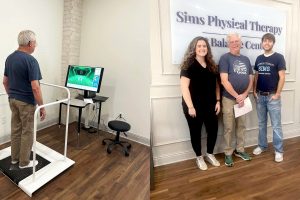
Learn how Jeremy Sims started a new balance training program that expanded his clinic into a specialized balance center.
Measuring Success: Key Performance Indicators
Track these metrics to evaluate your program’s effectiveness:
Clinical Metrics:
- Average improvement on standardized assessments
- Time to achieve functional goals
- Re-injury or fall rates post-discharge
- Patient-reported outcome measures
Business Metrics:
- Program utilization rates
- Average visits per balance training episode
- Revenue per balance training patient
- Referral source satisfaction scores
Regular monitoring allows you to refine protocols, demonstrate value to stakeholders, and continuously improve your program’s effectiveness.
Common Pitfalls to Avoid
As you implement your enhanced balance program, watch for these common mistakes:
Rushing Technology Implementation: Introduce new equipment gradually, ensuring staff competency before expanding use. Technology enhances care but requires proper training to maximize benefits.
Neglecting Documentation Updates: Enhanced assessments and protocols require updated documentation practices. Invest time in creating templates and training staff on thorough, consistent documentation.
Overlooking Patient Education: Patients need to understand why you’re using specific assessments and technologies. Take time to explain how objective data drives better outcomes.
Conclusion: Your Competitive Edge Through Balance Excellence
A modern balance program isn’t just about preventing falls; it’s about building a resilient, efficient, and profitable practice. By integrating objective data, specialized protocols, and modern technology, you achieve better outcomes for patients while strengthening your business position.
The clinics that thrive in today’s healthcare environment are those that combine clinical excellence with operational efficiency. Your enhanced balance program delivers both, creating satisfied patients, impressed referrers, and improved financial performance.
Ready to elevate your balance training program? Explore how BTE’s comprehensive rehabilitation solutions provide the objective assessment tools, standardized protocols, and patient engagement technology you need to build your premier balance program. Your patients deserve evidence-based, measurable care, and your practice deserves the competitive advantage that comes with delivering it.
FAQs:
1. What are the key differences between static and dynamic balance training, and when should each be used?
Static balance training focuses on maintaining stability in stationary positions, such as single-leg stands or eyes-closed standing on foam surfaces. Dynamic balance training involves maintaining stability during movement, like walking on uneven surfaces or performing step-ups with head turns. Static exercises should be introduced first for patients with significant balance deficits to establish foundational postural control. Dynamic training is appropriate once patients demonstrate adequate static balance and need to progress toward functional movement patterns. Most comprehensive balance programs incorporate both types, with the ratio depending on the patient’s functional goals and current abilities.
2. How do we properly assess balance using the Berg Balance Scale, and what scores indicate different intervention needs?
The Berg Balance Scale consists of 14 tasks scored from 0-4 points each, with a maximum score of 56. Each task should be demonstrated first, then the patient performs it while you observe for safety. Scores of 45-56 indicate low fall risk and minimal balance impairment. Scores of 36-44 suggest moderate fall risk requiring targeted interventions. Scores below 36 indicate high fall risk and need for intensive balance training with close supervision. The assessment should be performed in a safe environment with appropriate guarding, and individual item scores help identify specific areas of weakness to target in treatment planning.
3. What safety precautions and equipment should be in place during balance training sessions?
Essential safety measures include having a gait belt on the patient, positioning yourself for optimal guarding (typically on the patient’s weaker side), and ensuring clear pathways free of obstacles. Equipment should include parallel bars, sturdy chairs, and non-slip mats. Emergency protocols must be established, including how to safely assist a patient who loses balance. Always assess the patient’s cognitive status and ability to follow safety instructions before beginning exercises. Document any near-falls or safety concerns, and modify exercises immediately if the patient appears fatigued or unsteady beyond their baseline capabilities.
4. How do we incorporate proprioceptive training effectively into balance rehabilitation programs?
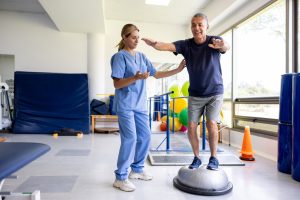
Proprioceptive training should progress systematically from stable to unstable surfaces. Begin with firm surfaces and eyes open, then progress to foam pads, balance boards, or BOSU balls. Advance by closing eyes or adding head movements to challenge the proprioceptive system further. Exercises should target both static positions (standing on foam) and dynamic movements (walking on uneven surfaces). Duration typically starts at 30 seconds and progresses to 2-3 minutes as tolerated. Always ensure patients can perform exercises safely on stable surfaces before progressing to unstable ones, and provide appropriate physical support during initial attempts.
5. What role does cognitive training play in balance rehabilitation, and how do we implement dual-task exercises?
Cognitive training addresses the attention demands of balance control, as many falls occur when patients are distracted or multitasking. Dual-task exercises combine physical balance challenges with cognitive tasks like counting backwards, naming items in categories, or carrying on conversations. Start with simple cognitive tasks during basic balance exercises, then progress complexity of both components. Examples include walking while reciting the alphabet backwards or standing on foam while performing mental math. Monitor both balance performance and cognitive task accuracy, as deterioration in either indicates the need to reduce task difficulty. This training is particularly important for older adults and those with cognitive impairments.
6. How do we modify balance training for patients with different diagnoses, such as stroke, Parkinson’s disease, or vestibular disorders?
For stroke patients, focus on weight-shifting exercises toward the affected side, visual scanning training, and addressing any visual field deficits. Progress from sitting balance to standing and walking activities. Parkinson’s patients benefit from large-amplitude movements, external cues (visual or auditory), and exercises that challenge automatic postural responses. Include freezing episode strategies and dual-task training. Vestibular disorder patients require habituation exercises, gaze stabilization training, and gradual exposure to provocative movements. Modify exercises based on whether the condition is peripheral or central vestibular dysfunction. All diagnoses require individualized progression rates, with stroke patients often needing longer to achieve gains, Parkinson’s patients requiring consistent cueing strategies, and vestibular patients potentially experiencing temporary symptom increases during early treatment phases.