
Learn to identify cervical spine pathology through common symptoms, pain patterns, and underlying causes. Discover key warning signs and when to seek care.
Cervical spine pathology refers to any abnormal condition, disease, or injury affecting the seven vertebrae that make up the neck region of the spine. These conditions can involve the vertebrae themselves, the intervertebral discs, surrounding ligaments, muscles, nerves, or the spinal cord.
Understanding cervical spine pathology matters because the neck region houses vital neurological structures and supports head movement, making early recognition and proper management essential for preventing long-term complications.
Identifying the Most Frequent Cervical Spine Disorders
The cervical spine can be affected by various pathological conditions ranging from degenerative changes to traumatic injuries. These conditions often overlap in their presentation, making accurate identification important for appropriate treatment planning.
The following table provides a comprehensive comparison of the most common cervical spine conditions to help differentiate between various pathologies:
| Condition Name | Primary Cause/Mechanism | Affected Structures | Typical Age Group | Key Distinguishing Features
|
|---|---|---|---|---|
| Cervical Disc Herniation | Disc material protrudes beyond normal boundaries | Intervertebral disc, nerve roots | 30-50 years | Sharp, shooting arm pain; specific nerve distribution patterns |
| Cervical Spondylosis | Age-related changes | Vertebrae, facet joints, discs | 40+ years | Gradual onset; neck stiffness; bone spur formation |
| Cervical Stenosis | Narrowing of spinal canal | Spinal cord, nerve roots | 50+ years | Walking difficulties; hand clumsiness; balance problems |
| Cervical Radiculopathy | Nerve root compression/irritation | Specific nerve roots | 40-60 years | Dermatomal pain/numbness; muscle weakness in specific patterns |
| Cervical Myelopathy | Spinal cord compression | Spinal cord | 50+ years | Hand coordination loss; gait instability; hyperreflexia |
| Whiplash | Rapid acceleration-deceleration injury | Soft tissues, ligaments, muscles | Any age | Recent trauma history; delayed symptom onset possible |
| Cervical Fractures | High-energy trauma or osteoporosis | Vertebral bones | Varies by cause | Severe trauma history; immediate severe pain; neurological deficits |
| Inflammatory Conditions | Autoimmune or infectious processes | Multiple structures | Varies | Systemic symptoms; elevated inflammatory markers |
Age-Related Changes
Cervical disc degeneration occurs when the cushioning discs between vertebrae lose water content and height over time. This process can lead to disc herniation, where disc material protrudes and potentially compresses nearby nerves or the spinal cord.
Cervical spondylosis represents changes that affect the cervical spine with aging. This condition involves:
- Formation of bone spurs (osteophytes)
- Thickening of ligaments
- Facet joint arthritis
- Disc space narrowing
Cervical stenosis develops when the spinal canal or nerve root openings become narrowed, creating pressure on neural structures. This narrowing can result from bone spurs, thickened ligaments, or bulging discs.
Nerve and Spinal Cord Compression Problems
Cervical radiculopathy occurs when nerve roots exiting the spinal cord become compressed or irritated. Each nerve root supplies specific areas of the arm and hand, creating predictable patterns of symptoms.
Cervical myelopathy represents compression of the spinal cord itself within the cervical region. This condition is more serious than radiculopathy because it affects the central nervous system pathway that controls multiple body functions.
Injury-Related Cervical Spine Damage
Whiplash results from sudden acceleration-deceleration forces that cause the neck to move rapidly back and forth. This mechanism can damage soft tissues, ligaments, and muscles without necessarily causing fractures.
Cervical fractures can occur from high-energy trauma such as motor vehicle accidents, falls, or sports injuries. These injuries require immediate medical attention due to the risk of spinal cord damage.
Recognizing Cervical Spine Pathology Symptoms
Cervical spine pathology manifests through various symptoms that can help identify the underlying condition and its severity. Recognizing these symptoms early enables appropriate medical evaluation and treatment.
Pain Patterns and Characteristics
Neck pain is the most common symptom and can vary significantly in character:
- Acute, sharp pain often indicates recent injury or nerve irritation
- Chronic, aching pain typically suggests degenerative changes
- Pain that worsens with movement may indicate mechanical problems
- Pain that improves with rest often points to inflammatory conditions
Referred pain patterns can extend beyond the neck region:
- Shoulder and upper back pain
- Chest pain that may mimic cardiac conditions
- Jaw pain that can be confused with dental problems
In a busy ortho setting, shoulder pain can be especially misleading—pair cervical screening with a brief shoulder workup using our rotator cuff tests to help clarify the source.
Nerve-Related Warning Signs
Arm and hand symptoms indicate nerve involvement:
- Numbness and tingling following specific nerve distributions
- Weakness in particular muscle groups
- Sharp, shooting pain that travels down the arm
- Loss of fine motor control in the hands
Coordination and balance problems suggest spinal cord involvement:
- Difficulty with buttoning clothes or writing
- Unsteady gait or frequent falls
- Leg stiffness or weakness
- Loss of position sense
Movement and Function Restrictions
Range of motion restrictions commonly occur with cervical pathology:
- Difficulty turning the head side to side
- Limited ability to look up or down
- Stiffness that worsens in the morning
- Pain that increases with certain neck positions
Emergency Symptoms Requiring Immediate Care
Certain symptoms require immediate medical attention as they may indicate serious conditions:
- Severe headache with neck stiffness and fever
- Progressive weakness in arms or legs
- Loss of bowel or bladder control
- Severe pain following trauma
- Numbness or tingling in both arms simultaneously
Diagnosing and Treating Cervical Spine Problems
Accurate diagnosis of cervical spine pathology requires a systematic approach that combines clinical assessment with appropriate imaging and, when available, objective neck strength and range-of-motion testing. Treatment options range from conservative management to surgical intervention, depending on the specific condition, the severity of symptoms, and the presence of neurological compromise.
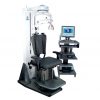
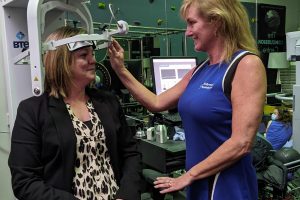
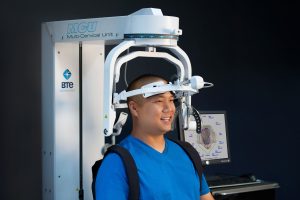
Clinicians may also use specialized cervical rehabilitation systems such as BTE’s Multi-Cervical Unit (MCU) to support objective evaluation and progressive treatment of neck conditions. This system is designed to help clinicians evaluate and treat the cervical spine for both strength and ROM deficits. Its automatic data capture and reporting streamline documentation and provide objective data to justify continued care.


Physical Examination and Clinical Assessment
Healthcare providers use specific examination techniques to evaluate cervical spine pathology:
- Range of motion testing assesses movement limitations and pain patterns
- Neurological examination evaluates muscle strength, reflexes, and sensation
- Provocative tests such as Spurling’s test help identify nerve root compression
- Palpation identifies areas of tenderness, muscle spasm, or structural abnormalities
For clinics looking to optimize cervical spine evaluations, the MCU enables objective capture of neck strength and range of motion and automated progress reports. These reports include comparison to a healthy population to clearly document deficits, and data visualization of each patient’s progress over time.

Medical Imaging for Cervical Spine Evaluation
Different imaging techniques provide specific information about cervical spine structures:
X-rays serve as the initial imaging study for most cervical spine complaints. They show bone alignment, fractures, and degenerative changes but cannot visualize soft tissues like discs or nerves.
Magnetic Resonance Imaging (MRI) provides the most detailed view of soft tissue structures including discs, nerves, and the spinal cord. This imaging method is essential for diagnosing disc herniations, spinal cord compression, and soft tissue injuries.
Computed Tomography (CT) offers superior bone detail compared to X-rays and can identify subtle fractures or bone abnormalities. CT scans are particularly useful in trauma cases or when MRI is contraindicated.
Specialized studies such as CT myelography or electromyography (EMG) may be used in specific situations to provide additional diagnostic information.
Non-Surgical Treatment Methods
Most cervical spine conditions respond well to non-surgical treatment:
Physical therapy forms the cornerstone of conservative management:
- Strengthening exercises for neck and shoulder muscles
- Range of motion exercises to maintain flexibility
- Postural training to reduce strain on cervical structures
- Manual therapy techniques to improve joint mobility
Medications help manage pain and inflammation:
- Non-steroidal anti-inflammatory drugs (NSAIDs) for pain and swelling
- Muscle relaxants for muscle spasm
- Neuropathic pain medications for nerve-related symptoms
- Short-term use of stronger pain medications when necessary
Injection therapies can provide targeted relief:
- Epidural steroid injections for nerve root inflammation
- Facet joint injections for arthritis-related pain
- Trigger point injections for muscle-related pain
For patients with persistent neck pain, weakness, or movement limitations, clinicians may also incorporate progressive, device-supported cervical rehabilitation. BTE’s Multi-Cervical Unit (MCU) is designed specifically for cervical spine treatment and evaluation, allowing clinicians to combine neck strengthening, controlled motion, objective testing, and progress reporting in one workflow.
For more information, you can read our ebook entitled “Don’t Just Manage Neck Pain. Fix it for Good.”
Surgical Intervention Options
Surgery is considered when conservative treatment fails or when there is significant neurological compromise:
Anterior cervical discectomy and fusion (ACDF) removes damaged disc material and fuses adjacent vertebrae. This procedure is commonly used for disc herniations and degenerative disc disease.
Cervical laminectomy removes part of the vertebral bone to decompress the spinal cord or nerve roots. This approach is often used for spinal stenosis.
Cervical disc replacement preserves motion by replacing a damaged disc with an artificial device, though this option is limited to specific conditions.
When to Seek Immediate Medical Care
Certain situations require urgent medical evaluation:
- Trauma to the neck with severe pain or neurological symptoms
- Progressive weakness in arms or legs
- Signs of infection such as fever with neck pain and stiffness
- Loss of bowel or bladder control
- Severe headache with neck stiffness
Final Thoughts
Cervical spine pathology encompasses a wide range of conditions that can significantly impact quality of life and neurological function. Early recognition of symptoms, accurate diagnosis through appropriate clinical assessment and imaging, and timely implementation of treatment are essential for optimal outcomes. While many cervical spine conditions respond well to conservative management, understanding when more aggressive intervention is necessary helps prevent long-term complications.
For healthcare professionals working with patients who have cervical spine pathology, specialized assessment tools and rehabilitation equipment can support more consistent evaluation and treatment workflows. BTE’s Multi-Cervical Unit (MCU) is specifically designed for cervical spine assessment and rehabilitation. When you need to support protocols with clinical evidence, refer to our MCU published research documentation.