Master functional rehabilitation practices. This guide for clinicians helps you design evidence-based programs, integrate objective data, and confidently prove return-to-activity readiness.
Functional rehabilitation has become a defining philosophy within progressive physical therapy practices. As clinicians increasingly shift from isolated impairment treatment to restoring meaningful participation in life and sport, functional rehab offers a framework grounded in real-world relevance, objective testing, and patient-centered outcomes.
This article explores the core principles, practical implementation strategies, and ongoing debates shaping this evolving clinical model. The word “functional” has become very common in the rehab space. Understanding what it truly means is important. Let’s dive in.
Understanding the Core of Functional Rehab
What Is Functional Rehabilitation?
Functional rehabilitation moves beyond the traditional rehabilitation models that focus primarily on impairments—strength, range of motion, or pain—evaluated in isolation. Instead, it emphasizes the integration of strength, mobility, coordination, and motor control within the exact tasks patients need to perform in daily life, work, or sport.
Rather than asking, “How strong is the quadriceps?” functional rehab asks, “Can this patient safely navigate stairs, squat to pick up a child, or return to deceleration drills?” It places real-world demands at the center of clinical decision-making.
Early in my career as a physical therapist, I would focus on the area of the body my patients told me hurt and apply interventions and prescribe exercises for that specific area. That area would stop hurting, then I would have them return to their regular activities. This usually resulted in them returning to my office with a flare up because we had not worked through the necessary progressions up to their prior level of function. They had simply rested, the condition calmed down and then they went right back to what they had been doing at the same intensity level.
This is where functional rehabilitation and functional rehab exercises come into play. I was only covering the first step in these patients’ continuum of care. The next step was to take them through a graded progression back to their prior level of activity to ensure they were ready to function at 100%.
Key Principles and Goals
A functional approach relies on:
- Patient-centered goal setting: Meaningful, personalized goals shape each step of care. Whether returning to UPS work duties, pivoting during soccer, or managing daily ADLs, these goals guide the progression of load, complexity, and movement specificity. This is where your functional interventions start to take shape. It is important to begin with the end in mind.
- Restoring pre-injury function and independence: As I demonstrated in my example earlier, rehab is not complete when symptoms resolve—it is complete when patients demonstrate safe, confident performance of essential tasks that they need/want to get back to doing.
The result is a model that blends biomechanics, strength and conditioning, task analysis, and psychology to support long-term return to activity.
The Functional Rehab Lifecycle: A Step-by-Step Framework
Initial Assessment and Functional Testing
The foundation of any functional rehab program begins with a thorough initial assessment that incorporates:
- Objective benchmarks: Strength testing (hand-held dynamometry, isokinetic testing), movement screens, balance metrics, gait analysis, and functional performance measures (hop testing, lift and carry tests).
- Identification of specific functional deficits: Rather than treating a diagnosis alone, clinicians isolate task limitations—lifting mechanics, load tolerance, endurance, coordination, deceleration control, vestibular processing, or cognitive-motor integration.
This baseline determines where the patient is starting and maps out a clear, criteria-based path forward.
The Phases of a Functional Rehab Program
Most functional rehab plans follow three major phases:
Foundational Phase
Focus:
- Pain management
- Restoring mobility
- Rebuilding basic strength and motor control
- Establishing joint integrity and movement confidence
This is where positions, patterns, and low-level loading are introduced.

Advanced Phase
Focus:
- Task-specific training
- Dynamic and multiplanar movements
- Reactive neuromuscular control
- Progressive load and speed exposure
This phase bridges the gap between low-level rehab and the actual demands of work, recreation, or sport.
One of my favorite moments when working with athletes recovering from ACL reconstruction and preparing to return to soccer was finally getting back onto the field for a session. Since our clinic did not have the space to replicate soccer activities, spending 45-60 minutes on the field was imperative. There, I could see how the strength and control built in the foundational phase carried over into the dynamic, game-specific performance of the advanced phase. Just as importantly, this experience also gave the athletes a noticeable boost in psychological readiness to compete again.
Criteria-Based Return to Activity
Functional rehab is criteria-based, not strictly time-based. Tissue healing timelines are very important, but too often we get caught up in the time-based nature of rehab vs. what is optimal for the patient.
- Objective return-to-work/sport criteria: Symmetry benchmarks, strength-to-body-weight ratios, hop or carry metrics, dynamic balance scores, and fatigue-resistant motor control are used to determine readiness.
- Transition to maintenance and wellness: Once cleared, patients benefit from ongoing programming—strength training, mobility work, and periodic functional testing—to reduce reinjury risk.
This data-driven approach enhances safety, improves confidence, and reduces subjectivity in clearance decisions.

Implementing a Functional Rehab Program in Your Clinic
Operational and Staffing Models
Successful functional rehab requires the right infrastructure:
- Staff roles: OT’s and plan of care design, and complex interventions. COTA’s, PTAs, ATC’s, CSCS-certified professionals, and rehab techs can assist with supervised strengthening, movement patterning, and lower-level tasks.
- Training: Staff must be proficient in biomechanics, exercise progressions, load management, and use of objective testing tools.
- Clinic layout: Open-floor, gym-style spaces support functional movement, agility work, and dynamic tasks. Adjustable equipment stations, turf areas, and multipurpose zones increase versatility.
Essential Equipment and Technology
Clinics can implement functional rehab using a wide range of tools:
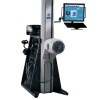
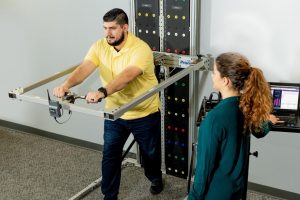
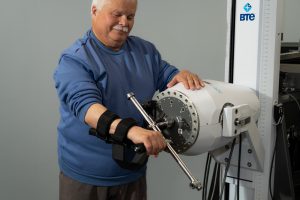
- Objective measurement tools: Dynamometers, timing systems, hop-testing platforms, force plates, isokinetic machines, or complete functional rehab systems like the PrimusRS.
- Functional exercise equipment: Each exercise in your plan of care should be tied to functional goals. BTE’s functional rehab equipment helps you tailor functional rehab exercises to each patient and progress the challenges over time.
- ADL / functional task simulation equipment: Physical therapy equipment that lets you simulate functional tasks like sport-specific movements, ADLs, and job demands will enhance patient outcomes and make your clinic stand out. PrimusRS and Simulator II are designed to do just that plus objective evaluations to support your documentation.
- Low-tech solutions: Cones, bands, sleds, kettlebells, step boxes, straps, and bodyweight stations can still yield highly effective outcomes when paired with good movement analysis and an understanding of what functional tasks the patient is returning to.

Ensuring you have the capability to collect objective data is imperative to providing the most patient-centric treatment. The key is not the cost of equipment, but the clinician’s ability to measure, interpret, and progress.
Specialized Equipment That Differentiates Your Clinic
Strategically investing in functional rehab equipment can completely revolutionize your clinic, especially if you’re looking to branch into specialty care, such as:
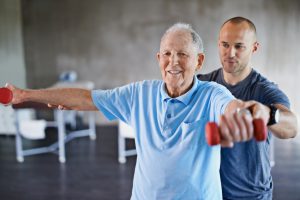
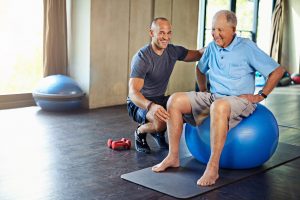
- Balance trainers: Force plates and stabilometric platforms have versatile applications from sports medicine to falls prevention, particularly important in functional rehab for seniors.
- Hand therapy devices: The cornerstone of hand therapy clinics and many OT programs, upper extremity rehab devices like Simulator II help train fine motor skills to help patients return to daily function.
- Job-specific functional assessment tools: These tools specifically focus on measuring functional job tasks for return-to-work and workers’ comp scenarios. Prism and EvalTech are completely FCE-ready, while EVJ and Evaluator offer portable testing tools for job site evaluations.
- Sport-specific functional trainers: Simulating sport-specific movements makes a world of difference in athletes’ physical and psychological readiness to return to sport. The PrimusRS’ versatile attachments and resistance modes let you replicate functional movements of tennis, soccer, baseball, basketball, and more, all in one device.
- Neurological rehab equipment: The key to functional NMR treatment sessions is engaging visual processing while training force control. Specialized neurological rehab equipment like Capri and Alfa leverage therapeutic gaming to deliver functional, objective rehab for neurological conditions.

I’ve seen firsthand what it takes to launch a new neurological rehab program, and getting the right equipment is absolutely essential. From documentation requirements to keeping patients engaged, equipment investment can be the difference between a good program and a highly successful one.
Billing, Documentation, and Compliance
To sustain a functional rehab model:
- Coding: Functional activities often fall under therapeutic exercise, neuromuscular re-education, therapeutic activities, and gait training CPT codes, depending on intent and complexity.
- Documentation: Objective data justifies care—strength asymmetries, time-to-fatigue metrics, movement quality assessments, functional task difficulty gradings, and progress toward specific, measurable goals.
Payers respond well to documented progress that is quantifiable and clearly tied to functional limitations.
Addressing Patient Needs and Emerging Trends
Patient Education and Empowerment
Functional rehab inherently requires patient buy-in and understanding.
Clinicians play a critical role in helping patients:
- Understand the “why” behind each task.
- Navigate fear, frustration, or setbacks.
- Manage insurance limitations, deductibles, and out-of-pocket costs.
- Build confidence through graded exposure and clear goal-setting.
Education transforms the patient from a passive recipient to an active participant.
Hybrid Delivery Models
Hybrid care is rapidly expanding:
- In-clinic functional testing: Objective strength, capacity, and functional movement assessments require hands-on support and specialized equipment.
- Tele-rehab: Remote sessions support ongoing coaching, adherence, and self-management.
- Remote monitoring: Wearable sensors, smartphone apps, and periodic video check-ins extend the reach of the clinic while improving data capture.
The hybrid model enhances access, continuity of care, and long-term adherence. When patient care becomes a team activity between clinician and patient, results improve and return to function is expedited.
Debates and Controversies in Functional Rehab
Movement Quality vs. Movement Quantity
A longstanding clinical debate centers on whether emphasis should be placed on technical perfection or on progressive exposure to load and variability.
- Movement quality: Prioritizes ideal biomechanics, reduced compensatory patterns, and optimized motor control.
- Movement quantity: Focuses on building tolerance, capacity, and graded stress—recognizing that real-life movement is rarely perfect.
A balanced approach recognizes that acceptable mechanics combined with progressive load often yields the safest and most sustainable results.
Group-Based vs. One-on-One Models
With today’s increasingly demanding caseloads, clinics can explore different delivery models:
- Group-based sessions: Cost-effective, efficient, socially engaging, and scalable for general strengthening and conditioning.
- One-on-one sessions: Provide deeper evaluation, individualized cueing, complex progression, and personalized loading strategies.
Most high-performing clinics leverage both models, where individual evaluations and periodic 1:1 sessions complement group-based strengthening programs.
I’ve scheduled sessions with 2-3 patients at the same time who are in the same stage of ACL rehab and the session is exceptionally beneficial. These individuals usually play team sports, so the session becomes even more functional and beneficial with the players’ friendly competition, teamwork, and communication. However, each athlete has had in-depth 1:1 sessions with me so that I have a thorough understanding of how to program a group-based session that is safe and effective for each of them.
Red Flags to Look for: Compensatory Movements
It’s always important to watch for compensatory movements, but they aren’t always easy to spot. I’ve seen high-performing individuals pass functional tests using compensatory movements that are not optimal. For example, a lot of individuals with anterior knee conditions will compensate at the ankle and hip, reducing their knee flexion loads. This not only predisposes them to injury, but it also reduces performance by affecting power output with certain functional movements like jumping.
As clinicians, we can spot these compensatory patterns and identify where the deficits are with objective testing. For example, I would identify the anterior knee compensation above by testing the force output of the quads through a variety of ranges of motion. With a close eye and objective functional testing, we can set our patients up for success.
Conclusion
Functional rehabilitation is a dynamic, evidence-informed approach that prioritizes real-world capacity, patient goals, and objective progressions. As clinics adopt this model, they must integrate clinical expertise, operational systems, and technology to deliver safe, measurable, and meaningful outcomes.
The future of functional rehab lies in hybrid care, data-driven decision-making, and a continued focus on empowering patients to return not just to movement—but to life.
Dan Squire, PT, DPT earned his degree from Campbell University. Before joining BTE as a Clinical Specialist, he managed an outpatient physical therapy clinic where he specialized in orthopedic and sports medicine as well as vestibular therapy. With BTE, he performs installations and provides training on advanced rehabilitation equipment for clinicians around the world.