Knee Replacement Recovery Time: What to Expect and How to Stay on Track
Treatment Guidelines
Explore knee replacement recovery time, milestones, and factors affecting healing. Learn evidence-based timelines to guide rehab and improve outcomes.
If you’re preparing for or recovering from a knee replacement, one of your biggest questions is likely: “How long will it take to feel normal again?”
Every person that I have worked with throughout the years asks some form of that question. Despite all the pre-operative education and the standardization of the procedure itself, there remains unknown variables to this process that can change the typical timeline of recovery from a total knee replacement. Knee replacement recovery time isn’t one-size-fits-all. Your progress is influenced by variables such as your health, your consistency with rehab, and how your body heals.
This guide will walk you through realistic knee replacement recovery timelines, key milestones, and practical ways to optimize your outcome—so you know what’s normal and when to take action.
How Long Does Knee Replacement Recovery Take?
Generally speaking, the timeline after a total knee replacement is as follows:
- 0–2 weeks: Early recovery (pain, swelling, basic mobility)
- 3–6 weeks: Improved walking and function
- 6–12 weeks: Return to many daily activities
- 3–6 months: Significant strength and mobility gains
- 6–12 months: Full recovery and maximal improvement
That said, full recovery can take up to a year, especially when it comes to strength, endurance, and feeling “normal.”
Key Recovery Milestones
While everyone progresses differently, here are common benchmarks that help determine if you’re on track:
At 2 Weeks
- Walking short distances (with walker or cane)
- Knee bending to around 90 degrees
- Able to perform basic daily activities (dressing, toileting)
- Swelling and pain still present but improving
There will be ups and downs during the early weeks of recovery. Some days you will feel like you are making great progress and then the next day you feel like you took two steps back.
Many of my patients would begin to feel better, then increase their activity level drastically. This would cause increased swelling and pain that evening and the next day, making them feel like they’re regressing. But in reality, they just needed to recover from the increased activity. Your rehab specialist should guide the process through proper load management strategies and objective tracking to reduce the risk of excessive flare ups.
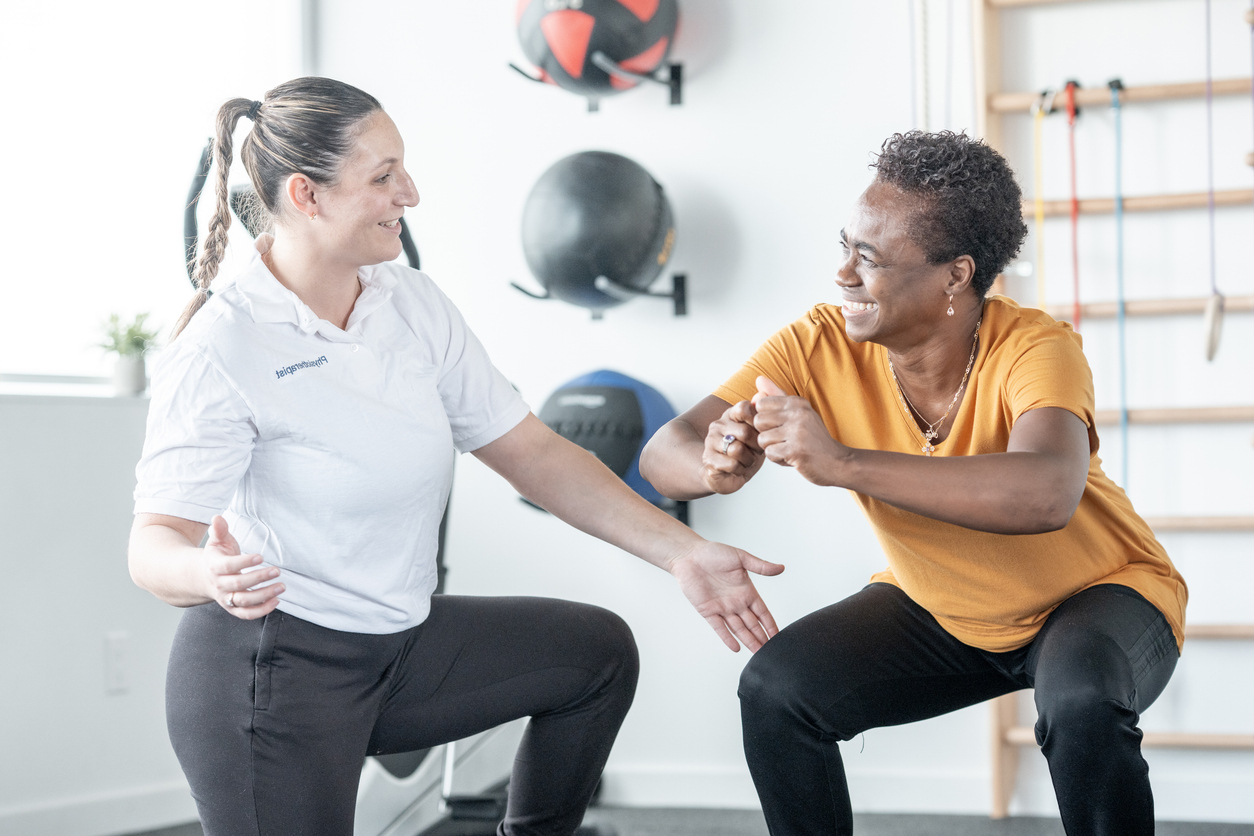
At 6 Weeks
- Transitioning away from assistive devices
- Walking more comfortably
- Able to perform uncompensated, full revolutions on upright bike
- Driving may be possible (depending on side, ROM and control of limb)
- Knee bend typically 110–120 degrees
- Starting more advanced strengthening exercises
This is the time frame where pain and discomfort start to ease but the healing process is still going on. Load management and good programming are key in this phase. With too much load, swelling and soreness will occur which can slow progress.
A small amount of swelling and soreness after increasing movement volume and intensity can be normal and non-detrimental. You just need to watch out for symptoms that require a few days or more to recover from.
One of the most celebrated milestones after a knee replacement is when a patient can perform a full revolution on an upright bike without compensation at the trunk, hip or ankle.
At 3 Months
- Walking independently without a limp (or close to it)
- Minimal swelling
- Improved strength and endurance
- Returning to low-impact activities (golf, light hiking, biking, gardening)
Typically, this is where rehab visit frequency reduces and home exercise performance increases. However, this will depend on the patient’s goals. If the patient is a younger individual who wants to get back to strenuous hiking, playing golf, or running, they may need many more rehab sessions to meet those goals. If the patient wants to be able to do daily activities independently, then those goals will be almost complete at this stage.
Beyond 3 Months
- Continued strength gains
- Return to recreational activities like dancing, hiking or tennis.
- Ongoing improvement in confidence and function
All the patients I have worked with post-knee-replacement had been dealing with symptoms for years prior to their surgery. That fact alone means they had been subconsciously offloading that limb, using compensatory movement strategies and changing body mechanics for those years.
After joint replacement, the body has to relearn how to use it. At first, muscles may not activate as strongly, movement patterns change, and your sense of joint position and control can feel different. Because these take time to adjust, continued rehab beyond the first three months is important to fully restore strength, coordination, and function.
What Determines How Fast You Recover?
Several key factors influence your recovery speed and overall success:
- Pre-surgery fitness: Stronger patients tend to recover faster. Good quadriceps strength and mobility give you a head start. Understanding core concepts of post-op management prior to surgery are also very helpful. Prehab has been shown to be extremely effective for improved outcomes.1
- Physical therapy adherence: Consistent rehab is one of the biggest predictors of success. Skipping exercises, under-loading the knee and lack of understanding of the recovery process can delay progress.
- Pain and swelling management: Uncontrolled swelling can limit motion and muscle activation, slowing recovery.
- Age & overall health: Conditions like diabetes, obesity, or cardiovascular disease may slow healing.
- Surgical factors: Implant type, surgical technique, and complications all play a role.
- Holistic considerations: Mindset/motivation, sleep hygiene, nutrition, hydration, social engagement and support from others are ways to improve the recovery process.
The Role of Rehabilitation in Recovery
Rehabilitation is the engine of your recovery. It’s not just about moving the knee—it’s about restoring strength, control, and confidence.
One of the most beneficial elements of going through formal post-surgery rehabilitation is having professional guidance through the process. Not just for sound exercise prescription, but for education and interpretation about what you are feeling and how you are performing throughout the process.
I have had many valuable treatment sessions involving more talking and educating than exercising. An empowering rehabilitation specialist who guides you through the process can make a huge difference in your recovery.
A quick look at the rehab process can include:
Foundational exercises:
- Quad sets
- Straight leg raises
- Calf raises
- Heel slides (knee bends)
- Sit-to-stand exercises
- Step-ups and functional training
- Balance training
- Cardio (bike, elliptical, etc)
Manual therapy
- Soft tissue mobilization/massage
- Joint mobilizations
- Dry needling
Modalities
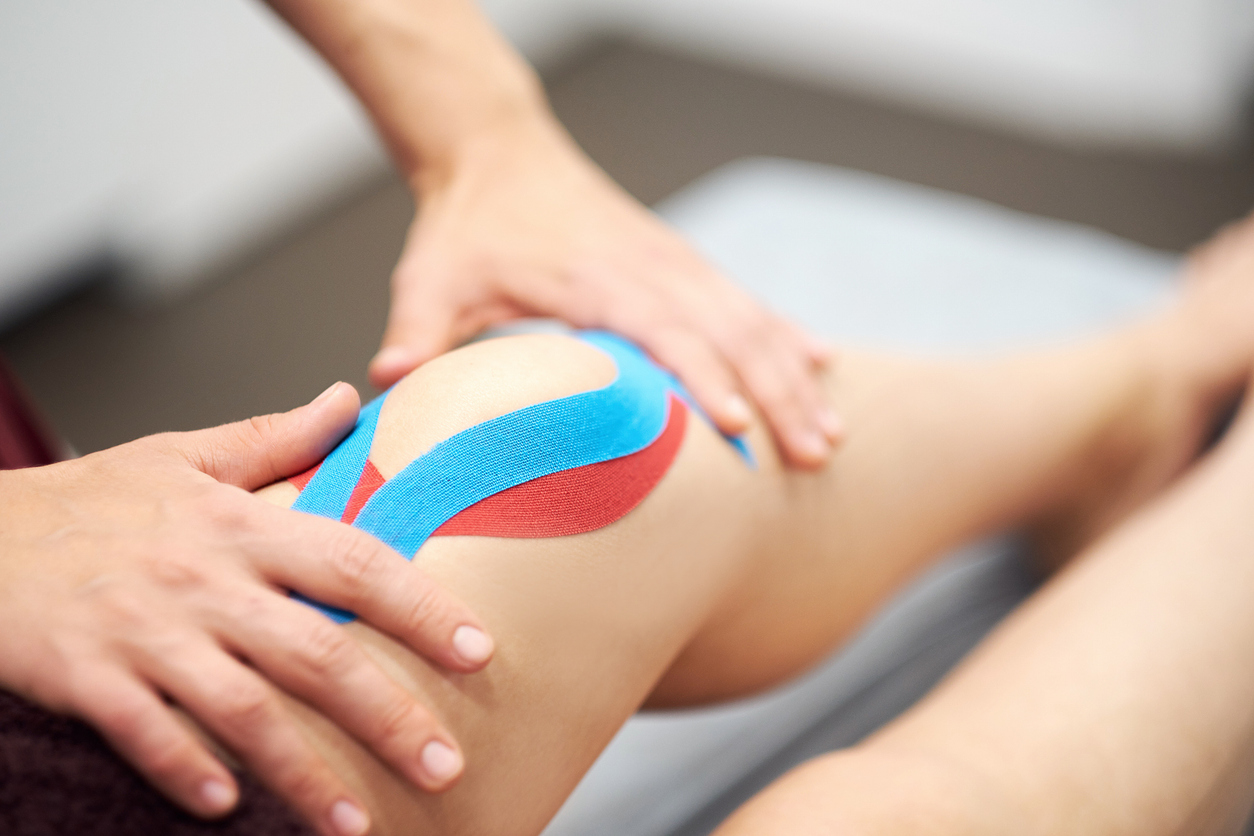
- Kinesiology taping techniques
- Compression therapy
- Electrical stimulation
- Cryotherapy/thermotherapy
- Laser
Advanced Rehabilitation Tools
Modern rehab often incorporates specialized equipment to safely accelerate progress and get more optimal results:
- Eccentric training devices like Eccentron help build strength through eccentric muscular contractions, which helps build strength and muscle growth. Research has shown that incorporating controlled eccentric resistance training after total knee replacement can significantly improve strength and functional outcomes.2
- Multi-functional rehab systems like PrimusRS allow controlled resistance across a wide range of motions.
- Blood flow restriction training allows for strength and muscle mass gains while working at lower loads that the joint can handle.
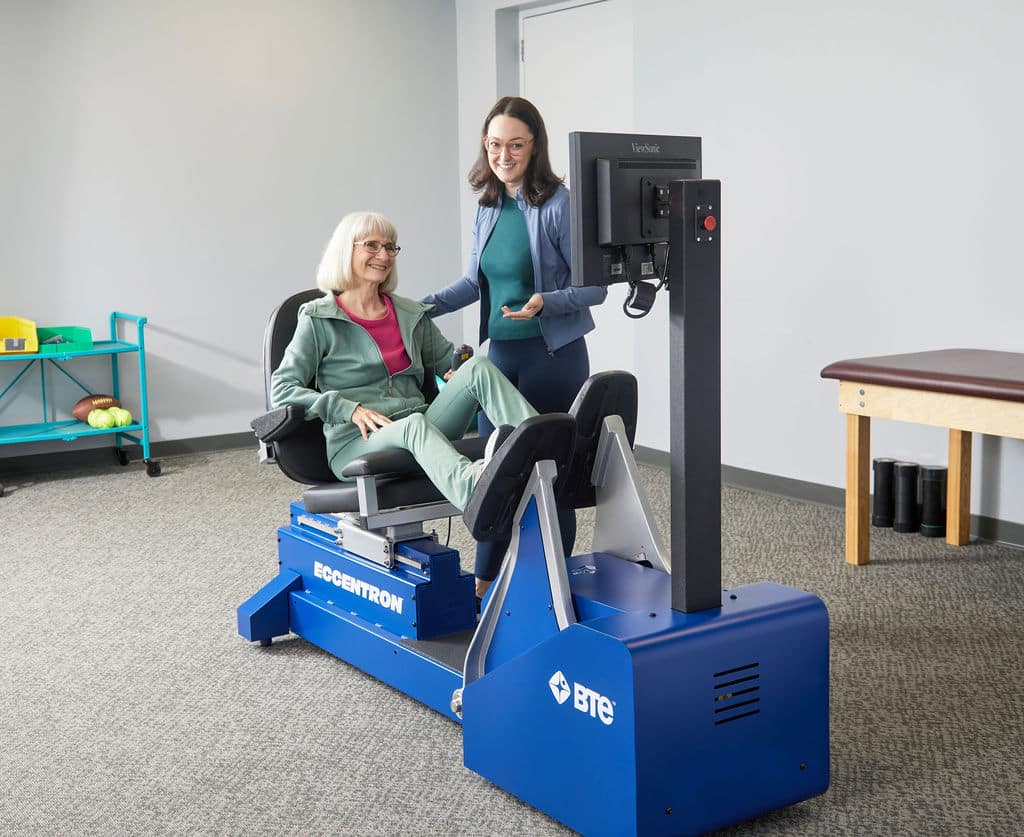
These tools enable clinicians to progress loading safely, improving strength without overstressing the joint.
Managing Common Recovery Challenges
Pain
- Normal in early recovery
- Should gradually decrease over weeks
- Managed with medication, ice, and movement
Swelling
- One of the biggest barriers to progress
- In the acute phase use:
- Elevation
- Compression
- Ice
- Frequent movement (don’t stay still too long)
Stiffness
- Common if motion isn’t addressed early
- Prioritize daily range-of-motion exercises
What’s Normal vs. Concerning?
Normal Healing Signs
- The first two weeks are the hardest due to pain, swelling and immobility
- Gradual improvement week to week
- Some pain with activity
- Mild swelling that fluctuates
- Stiffness after sitting
Red Flags (Call Your Provider)
- Redness, warmth, or drainage from incision
- Fever
- Sudden loss of motion
- Calf pain (see Wells Prediction rules for blood clot)3
When Can You Return to Activities?
Here are general guidelines:
- Walk without assistive device:
- Time based: 2-3 weeks
- Criterion based: able to straight leg raise with no “lag.” Able to hold single leg stance for 4-5 seconds, minimal to no gait compensations.
- Up and down stairs with reciprocal gait pattern
- Time based: 3-6 weeks
- Criterion based: Knee flexion range of motion 70 degrees or more, moderate quadriceps control, pain free with single leg loaded knee bend.
- Ride a stationary bike
- Time based: 4-6 weeks
- Criterion based: Knee flexion range of motion of 105 degrees or more, no hip or ankle compensation with full revolutions.
- Driving:
- Time based: 4–6 weeks
- Criterion based: Knee flexion range of motion of 90 degrees or more, motor control to move leg between car accelerator and break, force production to utilize break and accelerator, ability to get into and out of driver’s seat.
- Work:
- Desk job: 2–6 weeks
- Physical job: 8–12+ weeks
- Sports:
- Low-impact (golf, cycling): 2–3 months
- Higher-impact: Consult rehab specialist and surgeon. This is possible but specific variables need to be considered.
How to Speed Up Recovery (Safely)
You can’t rush healing, but you can optimize it. Here are my five key elements to expedite recovery:
- Coax don’t crank: Coax range out of the knee, allow yourself to rest/recover. If you push too hard, you’ll only create an inflammatory response that makes movement much more difficult.
- Sleep is a powerful recovery tool: It’s amazing what happens to our bodies when we sleep well. There is a lot of repair and recovery that occurs with sleep
- Get quad control with a straight knee ASAP: The ability to isolate a quadriceps contraction (especially with a straight knee) allows you to get back to a lot of activities.
- Communicate with your rehab specialist: Your therapist cannot feel what you feel but they are experts at interpreting what those sensations mean and what to do about them. Keep your therapist in the loop.
- Be patient: The knee replacement recovery process is not a straight path – it’s more of a winding road with ups and downs. There will be good days, hard days, and days you feel like you’re not progressing fast enough. Don’t get derailed by the down moments. Celebrate the moments of progress, and understand this process is a marathon, not a sprint.
The Bigger Picture: Recovery Is Holistic
Your knee doesn’t heal in isolation—your entire body and mind play a role.
Nutrition
- Protein supports tissue repair
- Collagen supplementation once you begin rehab assists the rebuilding processes
- Vitamins (especially D and C) aid healing
Sleep
- Growth hormone release during sleep accelerates recovery
Mental Health
- Frustration and anxiety are common
- Staying positive and goal-focused improves outcomes
Realistic Expectations: Will You Be Pain-Free?
Most patients experience significant pain relief compared to pre-surgery pain. However, some mild stiffness or awareness of the knee can persist, full “normal” feeling may take up to a year and outcomes are best when strength and mobility are fully restored.
Final Thoughts
Knee replacement recovery is a process, not a deadline. While timelines provide guidance, your individual journey matters more than hitting exact dates.
With the right approach—including structured rehabilitation, proper progression, and attention to your overall health—you can return to the activities you enjoy with confidence.