
Discover how biofeedback therapy helps clinics enhance patient outcomes, improve adherence, and offer effective, evidence-based care.
It’s not uncommon for patients to reach a plateau with traditional physical therapy interventions, especially when faced with chronic pain, complex post-surgical recovery, or persistent motor dysfunction. These moments of stagnation can be discouraging, leaving both patients and clinicians feeling frustrated despite their best efforts.
Often, these plateaus highlight an underlying challenge: the patient’s struggle to sense or control the specific movements being targeted in therapy. While standard cues, exercises, and hands-on techniques are valuable, they sometimes fall short in specific populations that have difficulty activating or relaxing certain muscle groups.
This is where biofeedback therapy (BFT) becomes a powerful, patient-centered tool. The challenge isn’t understanding what biofeedback is, but rather how to implement it strategically as a service line to patients. Understanding biofeedback modalities, staff training requirements, and documentation protocols can improve patient outcomes while providing a feasible alternative when progress is hindered.
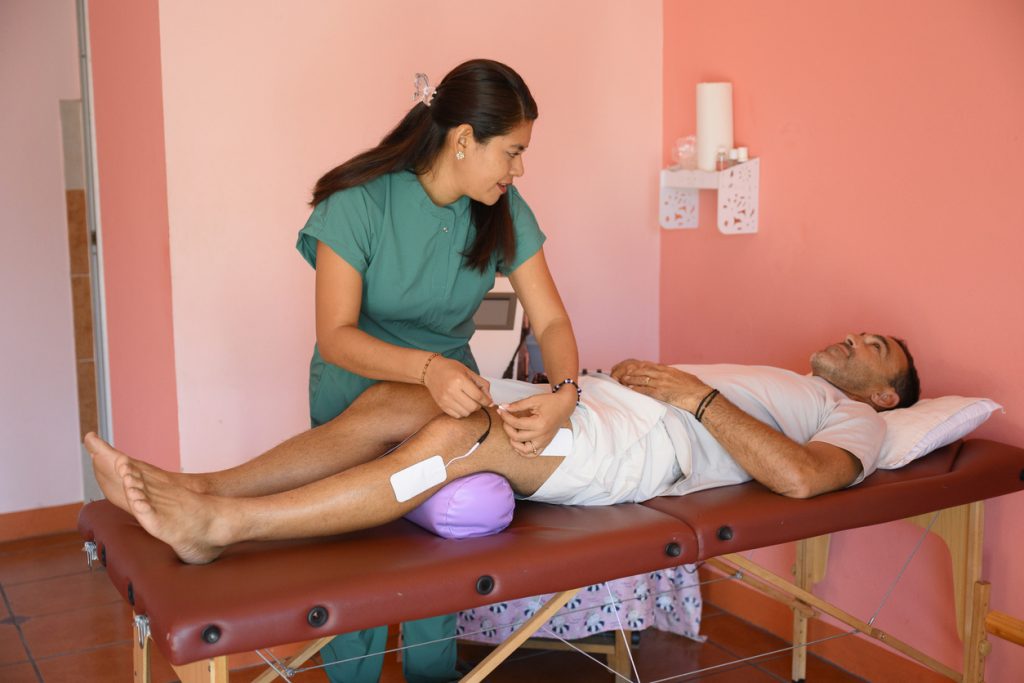
Understanding Biofeedback Therapy
Biofeedback therapy uses specialized equipment to monitor and display physiological processes, such as muscle activation, heart rate, and breathing patterns, in real time. By providing immediate feedback, BFT bridges the gap between what patients feel and how their bodies are actually functioning, helping them recognize and adjust their movements with greater accuracy.
For example, noninvasive sensors can track muscle activity and present the information as visual or auditory cues, making it easier for patients to learn how to contract or relax specific muscles as needed. In clinical practice, biofeedback is used to help patients with tension headaches1 learn to relax the muscles in their forehead and neck, or to assist stroke survivors in regaining control over weakened limbs.2
Research demonstrates that biofeedback can interrupt the cycle of pain and stress, promoting relaxation, reducing muscle tension, and alleviating emotional distress. According to a 2025 systematic review published in the Journal of Pain Management, patients who participated in biofeedback sessions experienced significant reductions in chronic pain symptoms3 compared to those who received standard care.
Biofeedback works through two main mechanisms. First, it promotes neuroplasticity which is the brain’s ability to reorganize itself by forming new neural connections. This adaptation helps with motor learning and retraining. Second, biofeedback helps down-regulate the autonomic nervous system, meaning it reduces activity in the system that controls involuntary functions like heart rate, blood pressure, and digestion. This is particularly helpful for chronic pain patients, whose pain receptors may be overly sensitive and reactive.
Key Biofeedback Modalities for Physical Therapy
Electromyographic (EMG) Biofeedback
EMG biofeedback measures muscle electrical activity and converts it into visual or auditory signals patients can monitor and control. This modality proves particularly effective for post-surgical rehabilitation, motor relearning after neurological injury, and muscle re-education.
Surface EMG biofeedback facilitates recovery from total knee arthroplasty,4 with findings suggesting advantages over neuromuscular electrical stimulation in quadriceps strength, range of motion, and functional recovery. For clinic directors serving orthopedic populations, EMG biofeedback addresses one of the most common post-surgical challenges: activating the quadriceps after knee surgery.
For neurological populations, the evidence is particularly compelling. A systematic review of 18 randomized trials including 429 stroke patients found that biofeedback improved performance of lower limb activities more than usual therapy.5 The research demonstrated that biofeedback during practice of standing and walking activities produced moderate improvements compared to therapist communication alone, suggesting that objective, accurate information feedback proves superior to traditional verbal cueing for motor relearning.
Heart Rate Variability (HRV) Biofeedback
HRV biofeedback monitors heart rate patterns to help patients regulate autonomic nervous system function. This modality particularly benefits patients with fibromyalgia, chronic pain syndromes, and stress-related conditions. Research shows that improved pulse regulation from biofeedback leads to better physical stress responses and improved adjustment to pain. Multiple studies demonstrate that HRV biofeedback proves effective for individuals with fibromyalgia when combined with exercise.6
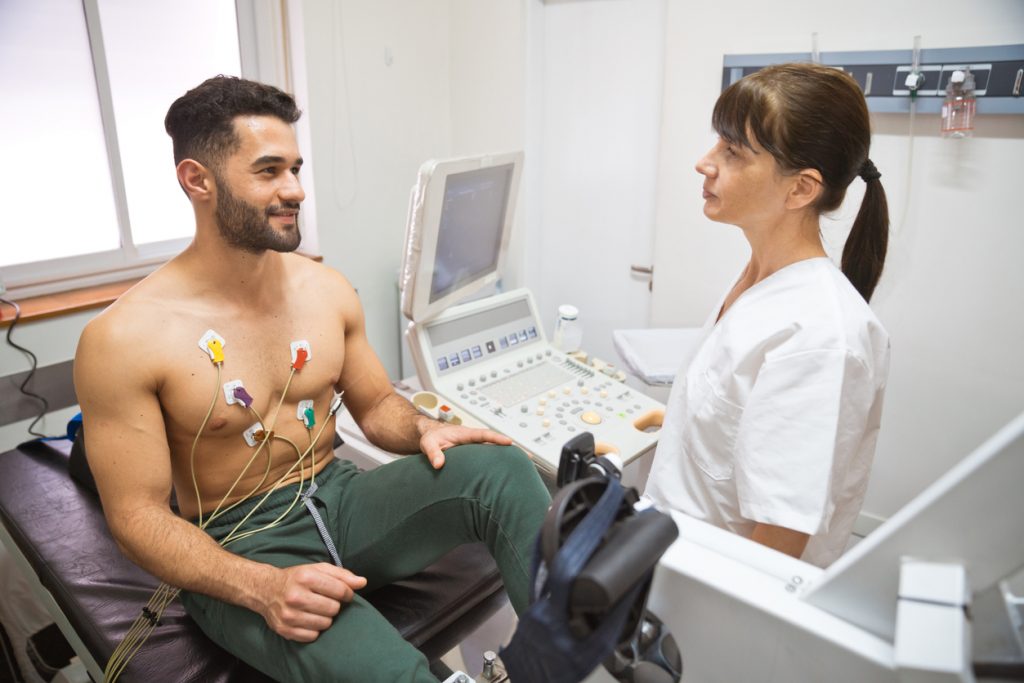
Real-Time Ultrasound (RTUS) Biofeedback
RTUS provides visual feedback of deep muscle activation, making it invaluable for pelvic floor rehabilitation and core stability training. This modality addresses conditions where surface EMG cannot effectively monitor target muscles, including low back pain secondary to multifidus dysfunction. When biofeedback assists with abdominal training, patients may experience reduced back pain through improved activation of deep stabilizer muscles.
The Clinic Director’s Implementation Guide
Start Small, Scale Smart: Equipment Selection
The most common implementation mistake is over-investing in equipment before developing staff competencies and patient demand. Begin with one portable EMG unit. Many quality devices cost between $2,000-$5,000 and serve multiple patient populations. Mobile surface EMG units offer the greatest versatility for general orthopedic and neurological populations.
Staff Training Tips
Therapist competency with biofeedback principles and application is extremely important to successful implementation. Effective biofeedback requires therapists to understand motor learning principles, provide appropriate feedback timing and frequency, and integrate biofeedback with evidence-based exercise progression.
Internal training programs should address condition-specific protocols, proper electrode placement, interpretation of feedback signals, and patient education strategies. The Biofeedback Certification International Alliance offers specialized certifications in BFT training. However, many therapists can begin using BFT effectively under supervision from certified providers.
Structuring Sessions for Workflow Integration
Biofeedback sessions typically last 10-20 minutes as an adjunct to physical therapy exercise, not as standalone interventions. For example, a patient recovering from ACL reconstruction may use EMG biofeedback for targeted quadriceps activation for 15 minutes, then continue with other therapeutic activities without biofeedback. Following biofeedback with neuromuscular reeducation exercises like using the Eccentron further promotes motor control with progressive loading of the lower extremity.
In addition to ACL recovery, stroke rehab studies support this method, finding that about 30-minute biofeedback sessions, 3–4 times per week over five weeks, lead to significant functional gain. The research demonstrated that biofeedback during practice of standing and walking activities produced moderate improvements5 compared to therapist communication alone. This suggests that objective, accurate information feedback available through biofeedback proves superior to traditional verbal cueing for motor relearning after stroke.
Ensuring Profitability Through Proper Documentation and Billing
Understanding reimbursement requirements prevents the financial disappointments that often derail biofeedback programs. Reference common CPT codes in rehab for comprehensive guidance.
Understanding CPT Codes for Biofeedback
CPT Code 90901 is used for biofeedback training, any modality, helping patients regulate physiological functions through real-time feedback. This code applies to EMG biofeedback for conditions like post-surgical quadriceps activation deficits, chronic shoulder pain with muscle imbalances, or low back pain with impaired core muscle recruitment.
Justifying Medical Necessity
Documentation must clearly establish why biofeedback is required beyond standard therapeutic exercise. Effective documentation includes objective baseline measurements showing impaired motor control, failed response to traditional interventions, and measurable progress with the added modality.
For example, accurate documentation might look like: “Patient demonstrates 40% quadriceps activation deficit on affected limb despite 3 weeks standard therapeutic exercise. EMG biofeedback initiated to provide real-time visual feedback of muscle activation patterns to facilitate motor relearning and improve weight-bearing symmetry required for ambulation.”
Integrating Biofeedback with Evidence-Based Pain Science
Biofeedback aligns perfectly with modern pain science approaches that recognize pain as a multifactorial experience. By providing patients with concrete, controllable feedback, it addresses the psychological dimensions of chronic pain while improving overall function.
As a result, BFT improves pain regulation and quality of life for fibromyalgia, chronic low back pain, idiopathic wrist and forearm pain, chronic postoperative knee pain, and temporomandibular joint dysfunction. The key lies in setting appropriate expectations: biofeedback facilitates active rehabilitation rather than providing passive symptom relief.
Building Your Competitive Edge
Biofeedback therapy offers physical therapy clinic directors a data-driven pathway to superior outcomes for challenging patient populations. Success requires strategic implementation that prioritizes staff training and quality equipment, masters documentation requirements for consistent reimbursement, and integrates biofeedback as an adjunct to evidence-based rehabilitation.
Start small with a mobile EMG unit serving orthopedic and neurological populations. Develop internal expertise through focused training and mentorship. Document medical necessity clearly, emphasizing objective improvements in motor control and function. As staff competencies develop and patient demand justifies expansion, scale strategically into specialized applications like HRV training or stroke rehabilitation.
Martin Gonzalez, DPT, Cert DN, is a board-certified physical therapist and health writer specializing in chronic pain management, injury prevention, and Achilles tendon ruptures. With more than six years of clinical experience across neurological, outpatient, and pediatric settings, Dr. Gonzalez combines hands-on expertise with a passion for education. As a writer, he has contributed to fitness publications, newsletters, and rehabilitation courses, with the goal of improving health literacy and breaking down socioeconomic barriers to care.