How Objective Data is Revolutionizing Rehab Therapy for Better Outcomes and a Stronger Business
Treatment Guidelines
Improve your Clinic; How data-driven rehab improves clinical decisions, patient engagement, and business performance.
Data in healthcare isn’t just about electronic records anymore; it’s about proving your value in rehabilitation. Objective measurements help clinicians deliver better patient outcomes, justify reimbursement, and build stronger practices. By moving from subjective observations to quantifiable progress tracking, rehab and other professionals can engage patients more effectively, standardize care across teams, and make defensible clinical decisions.
The shift to data-driven rehabilitation transforms your practice from opinion-based to evidence-based care.
The Data Revolution Has Arrived in Rehab
Healthcare is transforming before our eyes. The shift from volume-based to value-based care means “proving your value” isn’t just industry jargon anymore; it’s essential for your clinic’s survival and growth. While major medical centers discuss “big data” and artificial intelligence, you might wonder: what does this data revolution actually mean for your busy outpatient rehab clinic, hospital therapy department, or sports performance center?
Here’s the reality: leveraging objective data has become the single most important strategy for modern rehab professionals. It’s how you improve patient outcomes, justify reimbursement, streamline operations, and build a defensible, competitive practice. Let’s explore why data is important in healthcare, specifically through the lens of rehabilitation therapy.
Why Objective Data in Rehab Matters Now
The Old Way vs. The New Way
Consider how documentation has evolved in rehabilitation. Traditional notes relied heavily on subjective observations: “patient reports feeling better” or “seems to have improved balance.” While your clinical expertise remains invaluable, today’s healthcare environment demands more. Objective, quantifiable data tells a different story: “Patient’s knee extension force increased by 15%” or “Single-leg stance time improved from 8 to 45 seconds.”
This shift represents more than just better documentation. It’s about transforming rehabilitation into a measurable science while maintaining the human connection that makes therapy effective.
The Three Pillars of Data-Driven Rehab
Superior Clinical Outcomes: When you use data to create evidence-based, personalized treatment plans, patients recover more efficiently. For example, our physical and occupational rehab systems, such as our most popular product, the PrimusRS, help clinicians objectively measure strength across multiple joints, providing baseline assessments that guide targeted interventions.
Smarter Business Operations: Data optimizes your workflows, justifies payment requests, and increases revenue. Objective measurements create documentation that withstands scrutiny from insurance reviewers and supports your clinical decisions.
A Stronger Competitive Position: Data helps you win physician referrals, employer contracts, and build patient trust. When you can demonstrate measurable outcomes, referral sources take notice.
Having the Right Data-Driven Equipment for your OT or PT Practice
In healthcare, the value of data ultimately depends on how accurately it can be captured at the point of care. BTE’s rehabilitation systems, such as the PrimusRS, Multi-Cervical Unit (MCU), and Eccentron, help clinicians generate objective, repeatable strength and functional performance data during every session. This data supports evidence-based clinical decisions, strengthens documentation for reimbursement, and gives patients clear visibility into their progress, aligning rehab practices with the demands of value-based care.

Solving Your Biggest Challenges
For the Clinic Owner & Manager: Drive Revenue & Prove Your Value
Beat Denials & Justify Reimbursement
When payers question medical necessity or progress, objective outcome data becomes your strongest defense. Strength benchmarks, range of motion improvements, and functional capacity measurements create bulletproof documentation that payers can’t easily dispute.
Increase Market Competitiveness & Revenue
Your outcomes data becomes a powerful marketing tool. When you can show referring physicians that your clinic achieves low re-injury rates or consistently meets functional benchmarks, you differentiate yourself from competitors. This data-driven approach attracts more referrals.
Optimize Staffing & Throughput
Analyzing patient demand patterns, session lengths, and outcome trajectories helps you forecast scheduling needs and allocate resources efficiently. You’ll know when to add staff, which treatments yield the best results, and how to maximize clinic productivity without sacrificing care quality.

For the Clinician (PT/OT/ATC): Elevate Your Practice & Engage Your Patients
Personalized, Evidence-Based Protocols
Initial assessment data helps you predict recovery trajectories and tailor treatment plans beyond one-size-fits-all approaches. For example, our product, the Eccentron enables clinicians to provide eccentric resistance training with precise load control, allowing you to track strength gains objectively and adjust protocols based on measurable progress.
Increase Patient & Athlete Buy-In
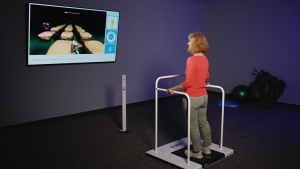
Nothing motivates patients like seeing their progress displayed on a screen with clear graphs and numbers. When athletes can visualize their strength symmetry improving or patients see their therapeutic gaming scores increasing week by week, compliance soars. For example, our balance system, the Alfa allows for objective balance assessments and therapeutic gaming to address balance deficits. The instant feedback and objective testing transformabstract concepts like “postural control” into engaging, measurable challenges.
Simplify & Speed Up Documentation
Digital testing tools can auto-populate progress reports, reducing manual entry and saving valuable time. Instead of spending minutes describing functional improvements, equipment like PrimusRS records and reports these measurements automatically.
Make Defensible Return-to-Work/Sport Decisions
Objective metrics allow you to confidently clear employees for work or athletes for sport, reducing risk of reinjury. When you base decisions on quantifiable data rather than subjective judgment, you protect both your patients and your practice from potential complications or re-injury. BTE’s functional evaluation products facilitate completely objective testing that measures employees’ abilities to safely perform their job tasks.

For the Administrator & Director: Standardize Care, Win Contracts
Standardize Care
Implementing objective testing protocols across all sites and practitioners ensures consistent, high-quality care.
Win Contracts with Compelling Employer Reporting
Employers and work comp carriers want clear evidence of functional improvements and return-to-work readiness. Systems like Prism generate comprehensive reports showing objective progress, making your value undeniable to corporate clients.
The Analytics Playbook for Rehab Professionals
Understanding different types of analytics empowers you to extract maximum value from your data:
Descriptive Analytics: “What happened?”
This foundational level tells you the patient’s grip strength measured 45 pounds this week.
Diagnostic Analytics: “Why did it happen?”
When grip strength drops after introducing nerve gliding exercises, diagnostic analytics helps identify the correlation, suggesting possible irritation that needs addressing.
Predictive Analytics: “What is likely to happen?”
Based on progress rates, you can forecast that a patient will likely meet their goals in four more sessions, helping with discharge planning and authorization requests.
Prescriptive Analytics: “What should we do about it?”
Data analysis might reveal that eccentric strengthening yields better results than isometric holds for specific conditions, guiding your treatment selection.
The Role of AI & Machine Learning
Artificial intelligence analyzes vast amounts of data, including unstructured notes, to identify patterns humans might miss. This technology helps refine protocols and predict outcomes based on thousands of similar cases.
Overcoming the Hurdles: A Practical Guide to Data Management
The “Garbage In, Garbage Out” Problem
Data quality determines its usefulness. Inaccurate or incomplete data leads to flawed clinical decisions and poor care. That’s why standardized testing procedures matter so much.
Actionable Steps:
- Establish consistent testing positions and protocols
- Use reliable, objective measurement tools
- Train all staff on proper data collection methods
- Regularly calibrate equipment to maintain accuracy
Breaking Down Data Silos: The Need for Interoperability
Rehab therapists need to see data from the referring surgeon, and comprehensive reports must reach the primary care physician. Modern healthcare demands seamless information sharing while maintaining security. Standards like HL7 FHIR facilitate this interoperability, ensuring your objective measurements integrate with broader healthcare records.
Protecting Your Patients & Your Practice: Security and HIPAA
Modern, HIPAA-compliant platforms handle the technical burden of encryption, access controls, and data security. When selecting equipment and software, verify they meet healthcare security standards to protect sensitive patient information while enabling the data analysis you need.
Conclusion
Data has evolved from an optional enhancement to the core engine driving clinical excellence and business success in rehabilitation. This transformation doesn’t diminish therapists’ clinical expertise—it amplifies it. When professional judgment is supported by objective, repeatable measurements, clinicians gain clearer treatment pathways, patients stay engaged through visible progress, and organizations build resilient, value-driven practices.
However, the true value of data in healthcare depends on how accurately and consistently it is captured during everyday care. That’s where purpose-built rehabilitation technology plays a critical role. Systems like BTE’s Functional Rehabilitation Equipment enable clinicians to collect reliable strength and functional performance data directly within treatment sessions—without adding complexity or disrupting workflow. This ensures that the data driving clinical decisions, documentation, and reporting is both defensible and meaningful.
Embracing data transforms rehabilitation from opinion-based care to objective proof. It strengthens reimbursement documentation, supports confident return-to-work and return-to-sport decisions, and aligns clinics with the demands of value-based healthcare. The question is no longer why is data important in healthcare, but how effectively your practice captures and applies it.
Your patients deserve evidence-based treatment. Your referral sources expect measurable results. Your payers demand objective documentation. With the right tools and a commitment to data-driven care, rehabilitation professionals are positioned not just to adapt—but to lead the future of healthcare.
FAQ About Why Data is Important in Healthcare for PT & OT Clinics
Q1: How does data help us create better treatment plans for our patients?
A1: Data allows us to analyze patient history, track progress metrics, and identify patterns in recovery. By examining objective measurements like range of motion, strength gains, and functional improvements, we can personalize treatment plans based on what works best for similar patient profiles. This evidence-based approach helps us predict recovery timelines more accurately and adjust interventions when progress stalls, leading to better patient outcomes and more efficient use of therapy sessions.
Q2: What role do wearable devices and remote monitoring play in our patient care?
A2: Wearable devices collect real-time data on patient activity, movement patterns, and exercise compliance between sessions. This continuous monitoring helps us track whether patients are following their home exercise programs and identify potential issues before the next appointment. Remote monitoring also enables us to provide timely feedback and motivation to patients, ensuring they stay engaged with their treatment plan even when they’re not in the clinic.
Q3: How does data sharing between healthcare providers improve patient safety and care coordination?
A3: When we have access to complete patient data through interoperable systems, we can see the full picture of a patient’s medical history, medications, and previous treatments. This prevents dangerous drug interactions, reduces duplicate testing, and ensures we’re not working against other treatments. It also saves valuable session time since we don’t need to repeatedly gather the same information, allowing us to focus more on actual treatment delivery.
Q4: Why is it important for us as therapists to understand data analytics and outcome measurements?
A4: Understanding data analytics helps us make evidence-based clinical decisions rather than relying solely on intuition. By analyzing outcome measurements, we can identify which interventions are most effective for specific conditions, track our own performance as clinicians, and demonstrate the value of our services to insurance providers and administrators. This knowledge also helps us stay current with best practices and contribute to the advancement of our profession through quality improvement initiatives.
Q5: How does telehealth data help us maintain continuity of care for our patients?
A5: Telehealth platforms capture data on patient attendance, exercise performance, and self-reported progress between in-person visits. This information helps us identify patients who may be struggling with adherence or experiencing setbacks, allowing for early intervention. The data also helps us optimize the balance between in-person and virtual sessions based on individual patient needs and progress patterns, ensuring consistent care delivery regardless of location barriers.
Q6: What steps should our clinic take to protect patient data while still benefiting from data analytics?
A6: Our clinic must implement robust cybersecurity measures including encrypted data storage, secure access controls, and regular staff training on HIPAA compliance. We should only collect necessary data, ensure proper consent procedures, and work with vendors who meet healthcare security standards. Regular audits of our data practices, backup procedures, and incident response plans are essential. By maintaining these security measures, we can confidently use data analytics to improve patient care while protecting sensitive health information.