Work Conditioning vs Work Hardening: Getting Patients Safely Back to Work
Treatment Guidelines
Learn about the difference between work conditioning vs. work hardening—both structured rehabilitation programs that help injured workers safely return to their jobs.
Work Conditioning vs Work Hardening: Getting Patients Safely Back to Work
Work Conditioning and Work Hardening are structured rehabilitation programs that help injured workers safely return to their jobs. In this article, you’ll learn the key differences between these programs and how to choose the right approach to support successful return-to-work outcomes.
The High Stakes of Returning to Work
Picture this scenario in your clinic: A warehouse worker sits across from you, six weeks post-lumbar fusion. Their acute care is complete, pain is managed, but they’re nowhere near ready to lift 50-pound boxes for eight hours a day. The employer is anxious about rising costs. The insurance adjuster questions the ongoing treatment. And your patient is afraid of re-injury but desperate to return to their normal life.
This gap between basic recovery and work readiness costs U.S. employers billions annually in lost productivity and workers’ compensation claims. As rehabilitation professionals, we have powerful tools to bridge this divide: Work Conditioning and Work Hardening programs.
This guide moves beyond simple definitions. You’ll discover a strategic framework for understanding, implementing, and leveraging these programs to improve patient outcomes, create competitive advantages, and build lucrative partnerships with employers and payors. Whether you’re a clinic owner exploring new revenue streams or a work comp director seeking defensible return-to-work solutions, this comprehensive comparison will equip you with the insights needed to make informed program decisions.
Foundational Concepts: Defining the Programs
What is Work Conditioning?
Work Conditioning represents the focused, intensive approach to restoring physical capacity after injury. As a single-discipline program delivered by either physical or occupational therapists, it centers on rebuilding the fundamental physical capabilities workers need for their jobs.
The primary goal is to restore strength, endurance, flexibility, and motor control to meet general physical job demands. Think of Work Conditioning as the “strength and conditioning” phase for returning to the “sport” of work. Your clinic provides structured, progressive exercises that systematically rebuild the worker’s physical tolerance for occupational activities.
During Work Conditioning, clinicians help patients through circuit training, progressive resistance exercises, and cardiovascular conditioning. Programs typically run 2-4 weeks, with sessions lasting 2-3 hours, focusing purely on physical restoration without the psychological or vocational components found in more comprehensive programs.
What is Work Hardening?
Work Hardening takes rehabilitation several steps further, providing a multidisciplinary, holistic program that addresses physical, psychological, and vocational needs simultaneously. This comprehensive approach prepares workers for the total demands of their specific job through real-world simulation and integrated support services.
Consider Work Hardening as the “full training camp,” simulating game-day conditions to ensure complete readiness. Beyond physical conditioning, it incorporates job-specific task simulation, psychological counseling, vocational planning, and education about injury prevention and body mechanics.
The multidisciplinary team might include physical therapists, occupational therapists, psychologists, vocational counselors, and case managers, all working together to address every barrier to successful return to work. Programs run longer, typically 2-8 weeks, with intensive 4-8 hour sessions that mirror actual work shifts.
Key Differences Between Work Conditioning and Work Hardening
Understanding the distinctions between these programs helps you allocate resources effectively and match patients to the right intervention:
| Aspect | Work Conditioning | Work Hardening
|
|---|---|---|
| Focus | Physical restoration only | Comprehensive: physical, psychological, vocational |
| Intensity | Moderate to high | High, simulating full work demands |
| Duration | 2-4 weeks typical | 2-8 weeks typical |
| Session Length | 2-3 hours | 4-8 hours |
| Team | Single discipline (PT or OT) | Multidisciplinary team |
| Approach | General conditioning | Job-specific simulation |
| Psychological Support | Minimal | Integrated counseling |
| Cost | Lower | Higher |
| Reimbursement | Generally covered by workers’ comp | Requires pre-authorization |
This comparison reveals crucial resource implications for your practice. Work Conditioning requires less staffing and space but may not adequately prepare workers with complex needs. Work Hardening demands greater investment but can handle challenging cases that might otherwise result in permanent disability claims.
Ideal Candidates for Each Program
When to Choose Work Conditioning
Work Conditioning serves as the optimal choice when your patient has resolved their primary injury but remains deconditioned. These workers typically present without significant psychological barriers like fear-avoidant behaviors or catastrophizing. Their primary need? Improving physical tolerance for job duties following moderate injuries or routine surgeries.
Consider the electrician who’s completed post-operative care for rotator cuff repair. They’re pain-free with good range of motion but lack the strength and endurance for repeated overhead work. Work Conditioning helps rebuild that specific capacity through targeted exercises and progressive loading.
The PrimusRS system excels in these scenarios, enabling clinicians to provide versatile task simulation while objectively measuring functional improvements throughout the program. This objective data proves particularly valuable when demonstrating progress to case managers and employers. With its versatile attachments and resistance modes, PrimusRS can help injured workers simulate job tasks in HV/AC, electrician work, construction, and other physically demanding job.
When to Choose Work Hardening
Work Hardening becomes essential when dealing with complex injuries, prolonged recovery, or significant psychological barriers. Workers who’ve developed fear of re-injury, anxiety about returning to work, or low confidence in their abilities need the comprehensive support this program provides.
High-risk or physically demanding occupations often warrant Work Hardening regardless of injury complexity. Firefighters, construction workers, and baggage handlers face unique physical and psychological challenges that benefit from intensive, job-specific preparation. Similarly, any worker who’s failed a previous return-to-work attempt needs the additional support Work Hardening provides.
The multidisciplinary approach addresses not just “Can they do the job physically?” but also “Will they feel confident and equipped to sustain performance without re-injury?” Programs like these benefit from evaluation tools such as Prism which helps clinicians measure specific job tasks while providing objective documentation of functional improvements.
Communicating Value to Key Stakeholders
For Clinic Owners and Hospital Administrators: The Business Case
Work Conditioning and Work Hardening programs represent specialized services that attract high-value workers’ compensation cases. By offering these premium programs, you differentiate your clinic from competitors who only provide traditional therapy. These programs often receive reimbursement through workers’ compensation plans, creating predictable revenue streams.
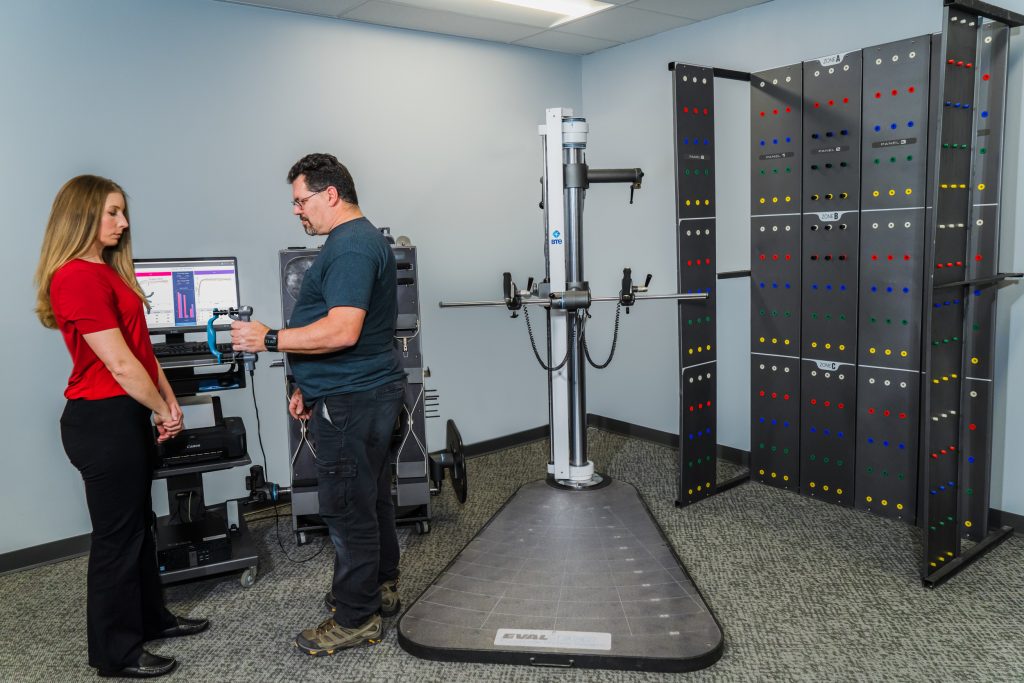
The operational benefits extend beyond revenue. Successful programs create clear pathways from injury to discharge, improving throughput and reducing treatment duration uncertainty. When you can demonstrate objective progress using systems like EvalTech, you strengthen relationships with referral sources and reduce payment disputes.
Consider the competitive advantage: While other clinics struggle with generic exercise programs, your facility offers evidence-based, data-driven rehabilitation that insurers and employers trust. This positions your practice as the regional leader in occupational rehabilitation, attracting not just individual cases but potentially exclusive contracts with large employers.
For Occupational Health and Work Comp Directors: The Partnership Case
Your role demands defensible return-to-work decisions backed by objective data. Work Conditioning and Work Hardening programs, especially when integrated with Functional Capacity Evaluations using tools like Prism, provide the documentation needed to prove readiness while reducing liability and disputes.
The measurable impact on employer costs speaks your language: reduced lost workdays, lower re-injury rates, and decreased overall workers’ compensation expenses. When presenting to C-suite executives, you can demonstrate ROI through concrete metrics rather than anecdotal success stories.
These comprehensive programs make you a more attractive partner for employers managing workforce health. Instead of simply treating injuries, you’re providing strategic solutions that address the full continuum from injury prevention through successful, sustained return to work.
Building a Best-in-Class Program: Components and Unique Differentiators
How to Differentiate Your Program
Use Real-World Job Simulation: Move beyond generic exercises. Replicate specific job tasks using actual or simulated work equipment like PrimusRS. PrimusRS includes treatment templates for demanding jobs such as HV/AC, concrete workers, electricians, and more.
Integrate Ergonomics for Long-Term Success: Your program shouldn’t end at discharge. Offer on-site ergonomic assessments, helping prevent re-injury at the source. This creates continuous relationships with employers, positioning your clinic as a strategic partner rather than just a treatment provider. Portable measurement tools like EVJ and Evaluator help clinicians measure job demands and provide functional evaluations on the job site.
Evaluation Tools with Documentation: Evaluation tools that record data and provide assessment reports will save time in your documentation. Specialized equipment like Prism and EvalTech streamline your workflow with automated objective reports that drop seamlessly into existing health records.
Emphasize Timely Intervention: Research consistently shows that the longer someone remains off work, the lower their chances of successful return. Position your programs as urgent, necessary interventions that prevent the slide into chronic disability. This messaging resonates particularly well with employers watching costs escalate with each week of lost time.
From Treatment to Strategic Asset
Work Conditioning and Work Hardening transcend traditional clinical services. When implemented strategically, they become powerful assets driving superior patient outcomes, creating undeniable value for employers, and building more profitable, defensible rehabilitation businesses.
The key lies in matching the right program to each patient’s needs while maintaining objective documentation of progress. Whether you choose the focused approach of Work Conditioning or the comprehensive support of Work Hardening, success depends on structured protocols, measurable outcomes, and clear communication with all stakeholders.
As healthcare continues evolving toward value-based care, these programs position your practice at the forefront of occupational rehabilitation. You’re not just treating injuries; you’re facilitating successful, sustainable returns to productive work, benefiting workers, employers, and your practice simultaneously.
Ready to build a best-in-class industrial rehabilitation program? Discover how BTE’s comprehensive suite of evaluation and rehabilitation equipment provides the objective testing, evidence-based protocols, and automated reporting you need to standardize care, prove outcomes, and win employer contracts. From initial Functional Capacity Evaluations through targeted strengthening and work simulation, BTE systems help clinicians deliver measurable results that set your program apart.
The future of occupational rehabilitation belongs to practices that combine clinical expertise with objective measurement and strategic program design. By understanding the nuances between Work Conditioning and Work Hardening, then implementing the right program with the right tools, you position your practice as an indispensable partner in the modern healthcare ecosystem.

Work Conditioning vs. Work Hardening FAQs
How do I determine if a patient needs work conditioning or work hardening?
Assess the patient’s current functional level, job demands, and complexity of barriers to return-to-work. Choose work conditioning if the patient primarily needs physical capacity building (strength, endurance, flexibility) and can function independently. Select work hardening if the patient has complex needs including psychological barriers, requires job simulation, needs behavioral modification, or has been out of work for extended periods. Consider work hardening for patients with chronic pain, fear avoidance behaviors, or when previous rehabilitation attempts have failed.
What billing codes are used in Work Conditioning and Work Hardening?
CPT code 97545 applies to the first two hours of Work Conditioning and Work Hardening. Time spent after two hours falls under CPT code 97546.
What are the typical program durations and how do I explain this to patients?
Work Conditioning typically lasts 2-4 weeks with 2-4 hour sessions, 3-5 times per week, totaling 20-40 hours. Explain to patients this focuses on building physical capacity to meet job demands. Work Hardening lasts 4-8 weeks with 6-8 hour sessions, 5 days per week, totaling 120-320 hours. Tell patients this intensive program simulates a full workday and addresses all aspects of returning to work, including physical, psychological, and behavioral components.
When should I consider transitioning between Work Conditioning and Work Hardening?
Consider transitioning to Work Hardening if the patient plateaus, develops fear avoidance, or cannot tolerate job-specific activities despite adequate physical capacity. Transition back to Work Conditioning if the patient cannot tolerate the intensity or if physical deficits become apparent during job simulation.
What equipment do I need to start a Work Conditioning or Work Hardening program at my clinic?
Most clinics use Prism or EvalTech for objective worker testing. For a complete rehabilitation program including treatment exercises, PrimusRS is the most versatile solution. For job-site evaluations, EVJ and Evaluator are portable for consistent testing at any location.
How can I get work simulation equipment or functional testing tools?
Talk to BTE’s product experts to identify the right functional capacity evaluation equipment for your clinic. We’ll help determine what your clinic needs to improve your Work Conditioning or Work Hardening programs.