Discover how strategic prehab PT equipment transforms clinics from basic exercise providers to data-driven leaders. Learn which tools boost revenue, improve patient outcomes, and create competitive advantages for PT/OT practices, hospitals, and sports medicine centers.
How Strategic Prehab Equipment Drives Outcomes for PT/OT Clinics
Prehabilitation is evolving from a general wellness concept to a measurable, equipment-driven service line. While most content focuses on exercises and protocols, the real differentiator for clinics is strategic equipment implementation. By leveraging objective measurement tools, advanced strengthening systems, and data-driven technology, you can transform prehab from a buzzword into a profitable, evidence-based program that improves outcomes, strengthens referral relationships, and sets your clinic apart from competitors.
The Proactive Revolution in Rehab
Healthcare is shifting. We’re moving from reactive treatment to proactive preparation, and prehabilitation sits at the forefront of this movement. Yet many clinics are leaving its full potential—and revenue—on the table.
You’ve probably seen the common approaches to prehab. Some focus exclusively on pre-surgical preparation, getting patients ready for their knee replacement or rotator cuff repair. Others take the wellness angle, promoting general injury prevention and movement optimization. Both approaches have merit, but they’re missing something critical.
Here’s what nobody’s talking about: while the concept of prehab is well-established, the conversation consistently overlooks the most critical component for clinical and business success—the strategic implementation of specific PT equipment. This is what transforms prehab from a general idea into a measurable, efficient, and profitable service line.
If you’re a clinical leader or practitioner ready to move beyond generic exercise sheets, this guide will show you how to leverage specific equipment to prove value, generate objective outcomes, streamline workflows, and build a powerful business case for your prehab program.
Redefining Prehab: From Clinical Concept to Measurable Service Line
Let’s reframe prehab. It’s not just “pre-surgery exercises.” It’s a strategic tool for risk reduction, performance optimization, and improved surgical pathways. Modern prehab stands on three pillars that address different aspects of patient preparation.
The Three Pillars of Modern Prehab
Surgical Optimization forms the foundation. By establishing strong baselines in strength, range of motion, and function before surgery, you help mitigate post-operative decline. Patients who enter surgery stronger typically leave rehabilitation faster.
Proactive Health & Injury Prevention empowers patients and athletes to manage their health before problems arise. This isn’t about fear-mongering potential injuries—it’s about building physical capacity and resilience.
Psychological Preparation might be the most overlooked element. Using objective data and structured progress helps reduce patient anxiety, build confidence, and increase motivation. When patients see measurable improvements, they believe in the process.
For clinic owners, this translates to differentiation from competitors and a new billable service line. Hospital administrators see reduced post-op complications and shorter stays. Clinicians achieve better patient buy-in and demonstrate value with concrete data.
The Modern Prehab Arsenal: Tools for Objective, Evidence-Based Practice
The difference between basic and elite prehab programs lies in your tools. Let’s break down essential equipment categories and how they directly address your professional goals.
Foundational Exercise & Strengthening Equipment
Start with the basics. Resistance bands, slide boards, and balance pads form your versatile foundation. These tools allow clinicians to provide targeted strengthening and proprioceptive training without breaking the budget. For owners and managers, they’re essential, low-barrier-to-entry equipment for building out your initial prehab program.
But here’s where many clinics stop—and where opportunity begins.
Therapeutic & Neuromuscular Modalities
Electrical stimulation (NMES/EMS) and feedback systems take your prehab to the next level. These tools help clinicians overcome neuromuscular inhibition and improve muscle activation patterns while providing real-time patient feedback for faster learning.
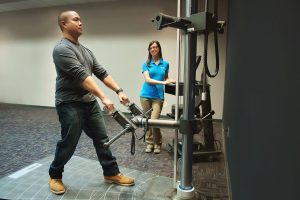
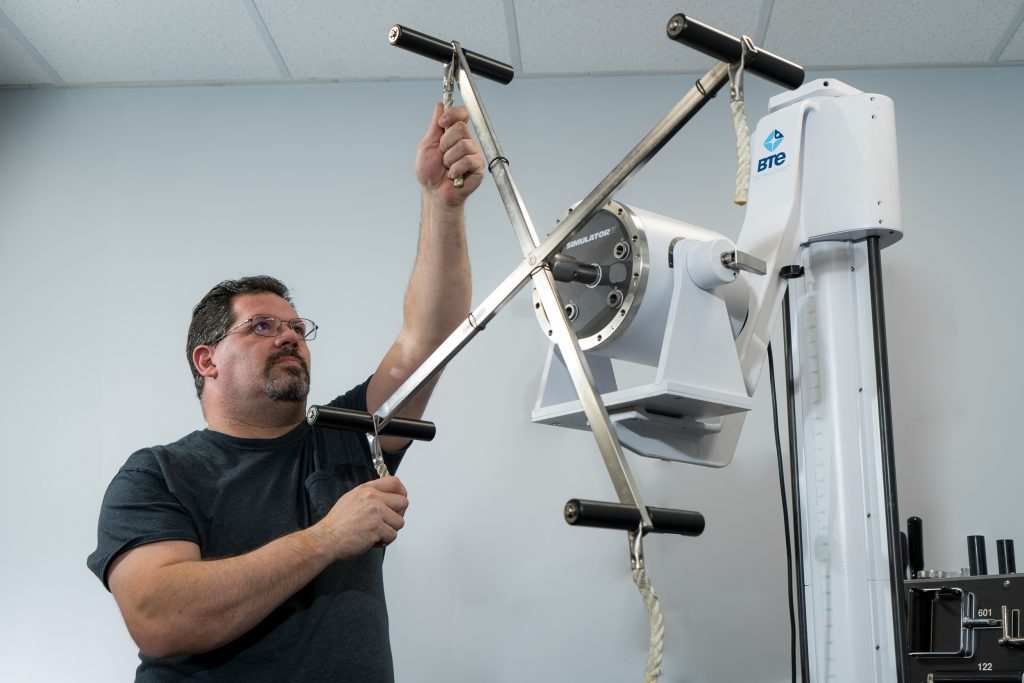
Consider how the Simulator II enables clinicians to replicate job tasks and activities of daily living with objective documentation. For sports medicine and occupational health professionals, these systems become critical for re-educating muscles for return-to-sport or return-to-work tasks, ensuring proper firing patterns under load.
Advanced Measurement & Technology: Your Key Differentiator
This is where you separate yourself from the competition. Digital measurement tools and advanced testing systems provide the objective data that transforms prehab from subjective assessment to evidence-based practice.
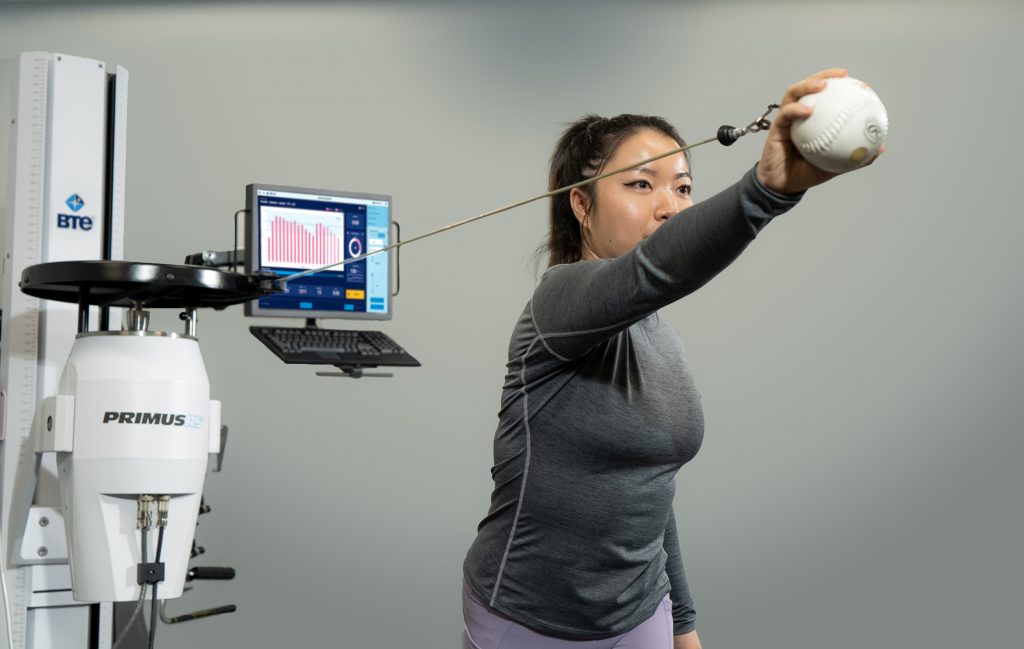
Systems like PrimusRS help clinicians perform functional testing with automated reporting—critical for establishing baselines and tracking progress. For an industrial rehab setting, the Evaluator offers portable objective strength testing that can be used anywhere, making it ideal for on-site prehab screenings.

For clinicians, these tools eliminate guesswork and make documentation faster and more reliable. Owners and managers gain the objective data needed for cleaner reimbursement claims and can prove intervention value to payers. Hospital administrators achieve standardization across all sites and practitioners, ensuring data consistency.
Putting It Into Practice: Equipment-Driven Prehab Scenarios
Theory means nothing without application. Let’s explore how strategic equipment selection transforms common prehab scenarios.
Scenario 1: The Total Knee Replacement Patient
Your objective: maximize post-op recovery, manage expectations, and prepare for activities of daily living.
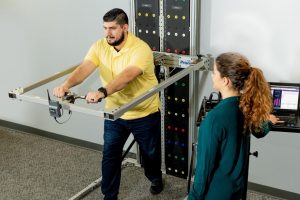
Start by establishing objective baselines using reliable measurement tools. Document knee flexion and extension, setting clear pre-op and post-op goals. The PrimusRS helps clinicians assess strength objectively while providing task simulation for functional preparation.
For targeted muscle activation, particularly the quadriceps to combat pre- and post-op quad atrophy, incorporate neuromuscular electrical stimulation. Add controlled, low-impact movements using slide boards to strengthen hips and prepare for post-surgical mobility.
This tech-enabled approach creates a high-value surgical pathway that justifies prehab sessions and impresses orthopedic referral sources. You’re not just preparing patients—you’re providing surgeons with objective data about their patients’ readiness for surgery.
Scenario 2: The Overhead Athlete
Your goal shifts to injury risk reduction during the off-season, focusing on shoulder health and performance optimization.
Begin with objective shoulder assessment, tracking internal and external rotation to identify deficits like GIRD (Glenohumeral Internal Rotation Deficit). The MCU (Multi-Cervical Unit) can help clinicians evaluate and strengthen the cervical spine—often overlooked in shoulder rehabilitation but critical for overhead athletes.
Implement structured rotator cuff and scapular stabilization programs using resistance bands and cables. Add feedback systems to ensure proper scapulohumeral rhythm during throwing motion drills. The PrimusRS device assists clinicians in sport-specific task simulation, particularly useful for athletes working on pitch, throw, racquet swing or other repetitive motions.
Sports medicine centers can use this data to get athlete buy-in, track progress objectively, and build data-driven performance programs that coaches and athletic directors value.
Scenario 3: The Industrial Worker
Preparing new hires for physically demanding roles requires establishing functional baselines and ensuring job readiness.
Start with objective strength testing to measure baseline lift and carry capacity. The Prism system provides compact, high-precision functional testing that’s FCE-ready, perfect for occupational health settings with limited space.
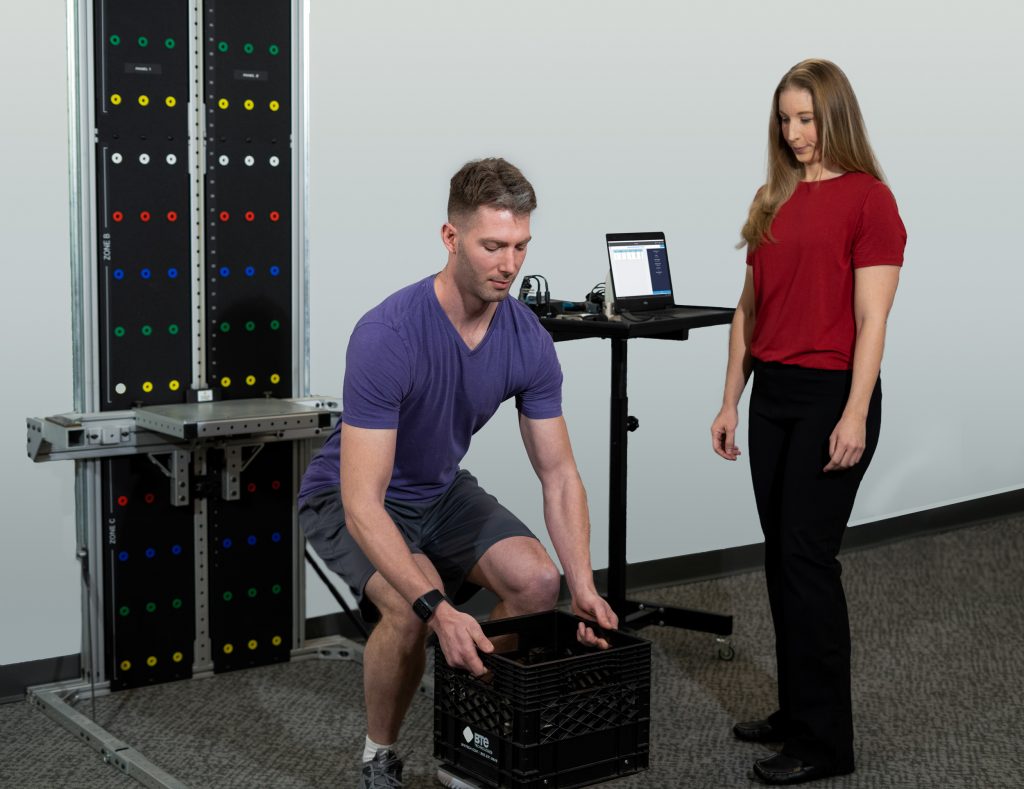
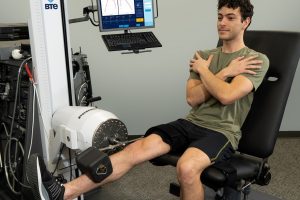
Simulate material handling tasks in a controlled environment. Use slide boards for pushing and pulling exercises, and assess spinal and extremity ROM required for specific job tasks. The Eccentron allows clinicians to provide eccentric training for lower extremities—particularly valuable for workers who need to control loads during lowering movements.
This approach gives occupational health directors the exact metrics needed for pre-employment screens, functional capacity evaluations, and clear, defensible return-to-work reporting for employers and insurers.
The Business Case: Why Investing in Prehab Equipment is Investing in Growth
Let’s talk ROI. Strategic prehab equipment investment impacts multiple areas of your practice.
Revenue Growth & Differentiation comes from positioning your clinic as a premium, data-driven provider. Create new cash-based or well-reimbursed prehab packages that patients and payers value. When you can show objective improvements, you justify your pricing.
Improved Reimbursement & Compliance follows naturally. Objective data from digital measurement tools helps justify treatment and ensures cleaner claims. Documentation becomes faster and more defensible during audits.
Operational Efficiency improves as assessment and documentation time decreases. The EVJ Mobile Evaluation System allows clinicians to perform strength and ROM testing anywhere, reducing bottlenecks in your clinic flow. Higher throughput and improved job satisfaction follow when clinicians spend less time on paperwork and more time with patients.
Strengthened Referral Relationships develop when you provide orthopedic surgeons, sports teams, and employers with objective progress reports. They value data, and when you speak their language, you secure more business.
Superior Patient Outcomes remain the ultimate goal. Better preparation leads to faster recovery, higher patient satisfaction, and more word-of-mouth referrals. Your success stories become your marketing.
Own the Future of Proactive Care
Prehab is more than a buzzword—it’s a strategic imperative. By moving beyond generic protocols and embracing equipment that provides objective, actionable data, you unlock superior clinical outcomes while building a more resilient, profitable practice.
The clinics thriving in the coming years will be those that can prove their value. Strategic prehab equipment is your proof. It transforms subjective assessments into objective measurements, general exercises into targeted interventions, and hopeful outcomes into predictable results.
Your patients deserve more than photocopied exercise sheets. They deserve a comprehensive, equipment-supported prehab program that prepares them physically and mentally for what’s ahead. Whether they’re facing surgery, returning to sport, or starting a demanding job, the right tools help clinicians provide the preparation that makes the difference.
Ready to build a data-driven prehab program that sets your clinic apart? Explore how objective measurement and functional rehabilitation systems can help you turn prehab into your competitive advantage. Because in today’s healthcare landscape, being proactive isn’t just smart—it’s essential.

Prehab Equipment FAQs:
FAQ 1: What’s the difference between prehab and traditional rehab equipment?
The use of prehab equipment focuses on prevention and preparation rather than recovery from injury. The key difference is how it’s used: prehab equipment prepares the body for upcoming challenges, while rehab equipment restores function after injury or surgery. While many tools overlap, the difference in prehab is the intent, application of the intervention, and dosage.
FAQ 2: How do I determine which prehab equipment is appropriate for each patient?
Start with a comprehensive movement screen and functional assessment. Consider the patient’s upcoming surgery type, current fitness level, and any existing limitations. For joint replacement patients, focus on range of motion tools and strengthening equipment for surrounding muscles. For spinal surgery candidates, emphasize core stabilization tools like exercise balls and balance pads. Always match equipment intensity to the patient’s current capacity—prehab should challenge without causing pain or fatigue that could compromise their pre-surgical condition.
FAQ 3: What are the most cost-effective prehab equipment pieces for a new clinic?
Priority equipment includes resistance bands (various resistances), foam rollers, balance pads, exercise balls, and a digital goniometer for objective measurements. These tools are versatile, space-efficient, and address multiple body systems. Resistance bands alone can provide strengthening, stretching, and proprioceptive training. A basic electrical stimulation unit for muscle activation and simple heat/cold therapy options round out an effective starter kit. This foundation covers approximately 80% of prehab needs while remaining budget-friendly.
FAQ 4: How should we clean and maintain prehab equipment between patients?
Follow your facility’s infection control protocols, typically involving EPA-approved disinfectants. Non-porous equipment like resistance bands and exercise balls can be wiped with disinfectant between patients. Foam rollers may need covers or thorough cleaning between uses. Electronic devices require careful cleaning around ports and displays—use disinfectant wipes rather than sprays. Create equipment rotation schedules to allow proper drying time. Document cleaning logs for compliance. Replace foam and fabric items regularly as they can harbor bacteria even with proper cleaning.
FAQ 5: What documentation is required when using prehab equipment?
Document the specific equipment used, settings (resistance levels, time parameters), patient response, and any modifications made. For electrical stimulation devices, record electrode placement, intensity levels, and duration. With measurement tools like goniometers, document baseline values and progress over sessions. Include patient education provided about home equipment use. Note any adverse reactions or equipment malfunctions. This documentation supports medical necessity, tracks progress, ensures continuity of care between therapists, and provides liability protection.
FAQ 6: How can we ensure patient safety when using prehab equipment?
Conduct thorough equipment inspections before each use, checking for cracks, wear, or malfunction. Provide clear instruction and demonstration for each tool, ensuring patients understand proper form and safety precautions. Start with lower intensities and progress gradually. Establish clear contraindications for each piece of equipment—for example, avoiding certain electrical stimulation with pacemakers or pregnancy. Maintain appropriate therapist-to-patient ratios for supervision. Keep emergency procedures accessible and ensure all staff know how to quickly disconnect or stop equipment if needed.