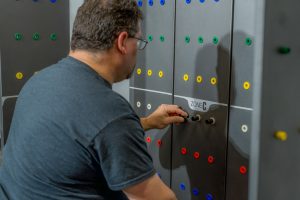

A dexterity test measures hand, finger, and arm coordination through controlled tasks that require precision, speed, and accuracy. These tests provide objective measurements of manual dexterity and serve as essential tools in clinical rehabilitation, neurological assessment, and employment screening.
Healthcare professionals, employers, and individuals who undergo these assessments need to understand dexterity tests because they reveal important information about fine motor control and functional capabilities. Many clinics also bundle dexterity testing alongside broader OT assessments to support consistent documentation and care planning.
Measuring Manual Coordination Through Standardized Assessment
A dexterity test evaluates how well someone performs precise manual tasks under standardized conditions. These assessments measure the coordination between visual input and motor output, providing measurable data about hand and finger function.
Key characteristics of dexterity tests include:
- Fine motor control assessment – Evaluates precise finger movements and hand-eye coordination
- Clinical and occupational applications – Used in rehabilitation settings for neurological assessment and in employment screening for jobs requiring manual skills
- Speed and accuracy evaluation – Measures both the time taken to complete tasks and the precision of movements
- Bilateral comparison – Compares performance between dominant and non-dominant hands to identify asymmetries
- Objective measurement – Provides standardized scores that can be compared against normative data to identify impairments or capabilities
These tests serve multiple purposes across different settings. In clinical environments, they help diagnose conditions affecting motor function, track rehabilitation progress, and assess the impact of neurological disorders. In occupational settings, they evaluate job readiness and identify candidates suitable for positions requiring manual dexterity, especially when paired with strategies for better FCE data.
Standardized Tests for Different Assessment Needs
Several standardized dexterity assessments are widely used across clinical and occupational settings. Each test measures specific aspects of manual dexterity and serves different evaluation purposes.
The following table provides a comprehensive comparison of the most commonly used dexterity tests:
| Test Name | Primary Focus | Task Description | Target Population | Administration Time | Key Advantages
|
|---|---|---|---|---|---|
| Nine-Hole Peg Test (NHPT) | Fine motor precision | Insert and remove pegs from holes using fingertips | Clinical/neurological assessment | 2-3 minutes per hand | Gold standard for clinical assessment, highly sensitive to neurological changes |
| Purdue Pegboard Test | Fine motor coordination | Place pins, washers, and collars in sequence | Employment screening, research | 5-10 minutes total | Most widely used for job screening, excellent normative data |
| Minnesota Manual Dexterity Test | Gross manual dexterity | Move and flip wooden discs between boards | Vocational assessment | 15-20 minutes total | Measures both placing and turning tasks, good for job-related skills |
| Box and Block Test | Gross manual dexterity | Transfer blocks over partition one at a time | Clinical rehabilitation | 2 minutes total | Quick administration, measures grasp-and-release function |
| O’Connor Finger Dexterity Test | Fingertip precision | Place small pins in holes using tweezers | Precision job screening | 10-15 minutes total | Evaluates very fine motor control, good for detailed assembly work |

Choosing the Right Test for Your Purpose
The choice of dexterity test depends on several factors:
- Assessment purpose – Clinical diagnosis versus employment screening requires different test sensitivities
- Target skills – Fine motor precision versus gross manual dexterity determines appropriate test selection
- Time constraints – Available testing time influences test choice
- Population characteristics – Age, medical conditions, and functional level affect test appropriateness
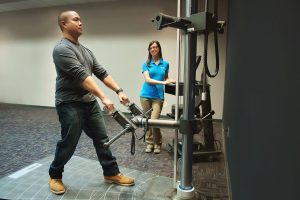
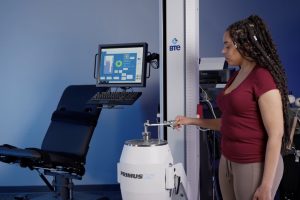
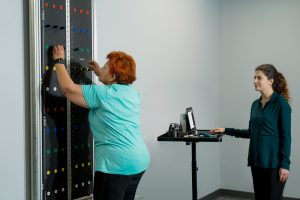
For clinic managers optimizing their functional testing operations while minimizing space requirements, it can help to use multi-functional testing tools like Prism, which includes dexterity testing as well as Functional Capacity Evaluations, Job Demand Analysis, and similar occupational rehab evaluations.
Test Procedures and Scoring Methods
Dexterity tests follow standardized protocols to ensure reliable and valid results. Proper administration requires specific equipment, controlled conditions, and precise timing procedures.
Standardized Administration Requirements
Standard administration involves several key components:
- Equipment setup – Tests require specific materials (pegs, boards, blocks) positioned according to standardized specifications
- Environmental conditions – Controlled lighting, seating height, and table positioning ensure consistent testing conditions
- Participant positioning – Standardized posture and hand placement minimize variables that could affect performance
- Practice trials – Brief familiarization periods help participants understand task requirements
- Timing procedures – Precise timing using stopwatches or electronic timing systems ensures accurate measurement
How Tests Are Scored
Most dexterity tests use time-based scoring systems:
- Completion time – Primary score reflects total time to complete the task
- Speed metrics – Some tests calculate items completed per unit time
- Error penalties – Dropped items or incorrect placements may result in time penalties
- Bilateral comparison – Scores compare dominant versus non-dominant hand performance
Many clinics track dexterity alongside force measures; our pinch strength guide can help you standardize how you capture and progress pinch-related outcomes.
Methods-Time Measurement: An Engineer-Created Scoring Standard
Most dexterity scoring stops at a stopwatch. Methods-Time Measurement (MTM) goes further. Originally developed for industrial settings, MTM breaks a task into its component motions — reaching, grasping, positioning, releasing, visual gaze shifts — and assigns each motion a predetermined time value (a TMU, or time measurement unit) based on decades of industrial engineering research. Summing those values produces an expected completion time for the task as a whole.
BTE has applied this same methodology to its FROM board dexterity testing. Engineers analyzed the specific movements required in FROM tests and established MTM-based benchmarks, so when a patient or claimant completes a test, their result isn’t just a raw time; it’s automatically classified as below competitive, competitive, or above competitive relative to an industrial-engineering standard. That classification adds a layer of objectivity that’s especially valuable in employment and return-to-work contexts, where the question isn’t just whether function improved, but how their performance compares to average workers.
Variables That Influence Test Results
Multiple variables can influence dexterity test results and must be considered during interpretation:
| Factor | Impact on Performance | Magnitude of Effect | Clinical Considerations
|
|---|---|---|---|
| Age | Gradual decline with aging | Moderate to significant | Use age-adjusted norms, expect 10-15% decline per decade after age 60 |
| Gender | Females typically perform better on fine motor tasks | Minimal to moderate | Gender-specific normative data recommended |
| Hand dominance | Dominant hand performs 10-15% better | Moderate | Always test both hands, compare to appropriate norms |
| Practice effects | Improvement with repeated testing | Moderate | Allow adequate rest between trials, document previous exposure |
| Fatigue | Decreased performance with prolonged testing | Moderate | Schedule testing during optimal times, monitor for fatigue signs |
| Medical conditions | Variable impact depending on condition | Minimal to significant | Consider neurological, musculoskeletal, and cognitive factors |
| Environmental factors | Temperature, lighting affect performance | Minimal to moderate | Maintain standardized testing conditions |
Understanding Test Results
Dexterity test scores are interpreted using normative data and clinical benchmarks:
- Normative comparisons – Individual scores compared to age and gender-matched population data
- Percentile rankings – Performance level relative to normal population distribution
- Clinical cutoff scores – Predetermined thresholds indicating impairment or functional limitations
- Change detection – Serial testing tracks improvement or decline over time
Physical Rehabilitation vs Employment Testing Differences
Test administration and interpretation vary between settings:
Clinical Settings:
- Focus on detecting impairments and tracking recovery
- Use sensitive measures to identify subtle changes
- Consider medical history and current symptoms
- Emphasize bilateral comparisons and change over time
Employment Settings:
- Evaluate job-relevant skills and capabilities
- Use job-specific performance standards
- Focus on meeting minimum requirements
- Consider safety implications of manual dexterity limitations
In neuro populations, dexterity outcomes often improve most when assessment is paired with targeted interventions; for example, teams treating Parkinson’s may integrate strength and control strategies like Parkinson’s rehab alongside standardized hand testing. For older adults, pairing results with a home program such as hand strengthening can also make re-test improvements more clinically meaningful.
Final Thoughts
Dexterity tests provide essential objective measurements of manual coordination abilities across clinical and occupational settings. Understanding the different types of tests, their specific applications, and proper administration procedures ensures accurate assessment and appropriate interpretation of results. These standardized assessments serve as valuable tools for diagnosing impairments, tracking rehabilitation progress, and evaluating job readiness.
For organizations seeking comprehensive assessment solutions, we offer high-precision testing tools and reporting with Prism to help your clinic deliver measurable success.