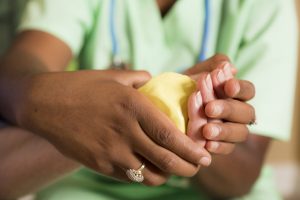
The PT Guide to Senior Hand Strengthening: Devices and Exercises
Treatment Guidelines
Discover evidence-based hand strengthening exercises for seniors that drive measurable outcomes. Learn how grip strength assessment and targeted interventions can differentiate your practice, improve patient function, and support reimbursement with objective data and proven protocols.
Grip strength isn’t just about opening jars—it’s a validated biomarker for overall health in seniors. This guide shows you how to build an evidence-based hand strengthening program that delivers measurable outcomes, improves patient independence, and sets your practice apart. We’ll cover foundational exercises, condition-specific modifications, objective measurement strategies, and how to integrate this high-value service into your clinical workflow.
Why Hand Strength is Your Clinic’s Untapped Opportunity
Let’s move beyond the basics. While other clinics offer generic handouts about squeeze balls, you can leverage hand strengthening as a strategic differentiator that drives both clinical and business outcomes.
Here’s what most practitioners miss: grip strength is one of the most reliable predictors of overall health status in older adults. Research consistently links declining grip strength to increased fall risk, longer hospital stays, cognitive decline, and even all-cause mortality. Yet most clinics aren’t capitalizing on this powerful connection.
For clinic owners, a structured hand strengthening program represents a low-cost, high-impact service that enhances patient outcomes while justifying continued care. For practitioners, it’s your pathway to delivering superior, data-driven interventions that produce real functional improvements.
The Science of Grip Strength: More Than Just Muscle
When you understand grip strength as a vital sign rather than just another metric, everything changes. The research is compelling—studies show that every 5kg decrease in grip strength correlates with a 16% increase in mortality risk and a 7% increase in cardiovascular disease risk.
Making Measurement Matter
Objective measurement transforms hand strengthening from a generic exercise prescription into targeted, progressive intervention. Using tools like dynamometry provides the quantifiable data you need to:
- Establish reliable baselines that inform your treatment planning
- Track incremental progress that motivates patients
- Generate outcome reports that demonstrate medical necessity
- Support reimbursement with concrete evidence of functional improvement
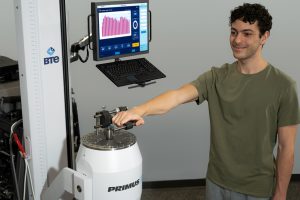
For those looking to enhance their measurement capabilities, systems like the PrimusRS help clinicians objectively assess grip strength alongside other functional measures, providing comprehensive documentation that supports clinical decision-making.
Evidence-Based Senior Hand Strengthening Toolkit
Let’s establish the foundational exercises that form the core of any successful senior hand strengthening program. But we’re not just listing exercises—we’re providing the clinical framework that makes them effective.
The Foundational Five
-
Therapeutic Ball Squeeze
Start with the patient seated, elbow at 90 degrees, wrist neutral. Have them squeeze a therapy ball for 3-5 seconds, then release slowly.
- Clinical Pearl: Focus on controlled eccentric release to engage both flexors and extensors
- Documentation Tip: Record as “Patient demonstrated improved sustained grip endurance from 3 to 5 seconds, facilitating safer transfer capability”
- Progression: Advance from soft foam to firmer resistance balls
-
Finger Lifts (Table Top)
Place the hand flat on a table. Lift each finger independently while maintaining contact with others.
- Clinical Focus: This isolates lumbricals and interossei, crucial for fine motor control
- Functional Connection: Directly translates to buttoning, writing, and manipulation tasks
-
Wrist Curls with Resistance
Using light weights or resistance bands, perform controlled wrist flexion and extension.
- Key Consideration: Many seniors present with weakness in wrist extensors, leading to flexion dominance
- Safety Note: Start with 1-2 pound weights maximum; focus on control over load
-
Towel Wring
Roll a small towel and have the patient wring it as if wringing out water.
- Why It Works: Combines grip strength with rotational control
- Real-World Application: Mimics opening containers and turning doorknobs
-
Rubber Band Extensions
Place a rubber band around all fingers and thumb, then spread against resistance.
- Clinical Value: Strengthens often-neglected extensors
- Modification: Start with thinner bands; progress to thicker resistance

Beyond Strength: Integrating Fine Motor Control
Strength without control won’t restore function. That’s why your program must incorporate dexterity training alongside strengthening exercises.
Consider therapy putty activities that combine resistance with precision movements. Have patients roll putty into balls, pinch it between fingers, or hide coins within it for retrieval. These activities bridge the gap between raw strength and functional application.
For clinics seeking to enhance their fine motor training capabilities, the Capri system provides gamified hand therapy that helps clinicians deliver engaging neuromuscular control exercises with real-time feedback on performance.
Advanced Hand Programs
Here’s where you separate your practice from the competition. While others offer one-size-fits-all programs, you’ll deliver targeted interventions based on specific conditions and functional goals.
Programming for Specific Conditions
Post-Stroke Considerations
For patients with hemiparesis, your approach shifts from pure strengthening to neurological re-education:
- Start with weight-bearing through the affected hand (placing hand flat on table, shifting weight)
- Progress to assisted grasp-release patterns
- Incorporate mirror therapy techniques for cortical remapping
- Focus on functional task practice rather than isolated strengthening
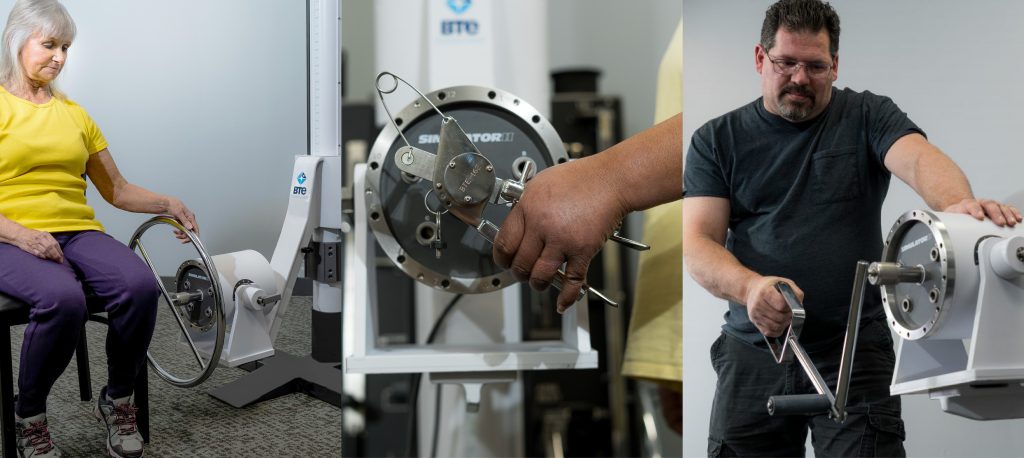
The Simulator II enables clinicians to replicate specific job tasks and ADLs, providing objective documentation of functional improvements crucial for this population.
Carpal Tunnel Syndrome Modifications
These patients require a delicate balance:
- Emphasize nerve gliding and tendon gliding before strengthening
- Avoid sustained grip positions initially
- Focus on frequent position changes and rest breaks
- Progress gradually from isometric to dynamic exercises
General Deconditioning/Sarcopenia
For overall weakness, integrate grip training into full-body movements:
- Farmer’s walks with progressive loading
- Functional reaching tasks with weighted objects
- Multi-planar movements that challenge grip in different positions
Creating Your Progression Framework
Successful outcomes depend on systematic progression. Here’s your framework:
To Increase Challenge:
- Add resistance (progress from 2lb to 5lb therapy balls)
- Increase hold times (3 seconds to 10 seconds)
- Add complexity (single exercises to combination movements)
- Introduce unstable surfaces or positional changes
To Reduce Difficulty:
- Decrease resistance or use gravity-assisted positions
- Shorten exercise duration
- Provide more rest between repetitions
- Use heat modalities before exercise for arthritic hands
Implementation: Integrating Hand Strength into Your Clinical Workflow
Now let’s translate these clinical insights into operational excellence. A successful hand strengthening program requires both clinical expertise and strategic implementation.
Standardizing Your Assessment Protocol
Create a repeatable “Senior Hand Function Screen” that becomes part of your initial evaluation for all older adults. This should include:
- Bilateral grip strength measurement using dynamometry
- Pinch strength assessment (lateral, tip, and palmar)
- Nine-hole peg test for dexterity
- Patient-reported functional limitations checklist
Systems like Simulator II help clinics streamline this assessment process, providing automated reporting that saves documentation time while ensuring comprehensive evaluation data.
Maximizing Patient Engagement
Your success depends on patient buy-in. Transform compliance by:
- Creating visual home exercise programs with clear progressions
- Explaining the connection between grip strength and independence (“This helps you continue living in your own home”)
- Setting functional goals patients care about (“Being able to open your medication bottles independently”)
- Celebrating measurable improvements with objective data
The Documentation and Reimbursement Strategy
Strong documentation drives reimbursement. For every session, connect interventions to functional outcomes:
- “Patient demonstrated 15% improvement in grip strength, correlating with increased independence in meal preparation tasks”
- “Objective dynamometry shows progression from 12kg to 15kg grip force, supporting continued skilled intervention”
- Link improvements to specific G-codes and functional limitation reporting
Remember, objective data from tools like the Evaluator provides portable strength testing that generates the quantifiable outcomes payers require.
Building Your Referral Network
Position your hand strengthening program as a specialized service:
- Educate referral sources about grip strength as a health biomarker
- Share outcome data showing functional improvements
- Offer screening events at senior centers or physician offices
- Create condition-specific protocols (post-surgical, arthritis management, fall prevention)
Measuring Success: Tracking Outcomes That Matter
Your program’s credibility depends on demonstrable results. Track both clinical and operational metrics:
Clinical Metrics:
- Grip strength improvements (percentage change from baseline)
- Functional goal achievement rates
- Patient satisfaction scores
- Fall risk reduction (for those in comprehensive fall prevention programs)
Operational Metrics:
- Program utilization rates
- Average treatment duration
- Reimbursement approval rates
- Patient retention and completion rates
Make Hand Strength Your Signature of Excellence
A strategic hand strengthening program elevates your practice beyond basic care delivery. You’re not just helping seniors open jars—you’re providing evidence-based interventions that measurably improve health outcomes, reduce fall risk, and maintain independence.
By combining foundational exercises with condition-specific modifications, objective measurement, and strategic implementation, you create a program that delivers value at every level: better outcomes for patients, stronger documentation for payers, and clear differentiation for your practice.
The clinics that thrive in today’s healthcare environment are those that combine clinical excellence with operational efficiency. Your hand strengthening program embodies both—providing targeted, measurable interventions that justify continued care while positioning your practice as the regional expert in senior rehabilitation.
Ready to transform your approach to senior hand rehabilitation? Start by implementing objective grip strength screening for all patients over 65. Document baseline measurements, establish functional goals, and track progress with the precision that modern rehabilitation demands. Your patients—and your practice—will see the difference.
Hand Strengthening For Seniors FAQs:
Q: How often should seniors perform hand strengthening exercises to see improvement?
A: Seniors should perform hand strengthening exercises 2-3 times per week with at least one rest day between sessions. This frequency allows muscles to recover while promoting consistent strength gains. Each session should last 10-15 minutes, starting with 5-10 repetitions per exercise and gradually increasing to 15-20 repetitions as strength improves. Consistency is more important than intensity – daily light activities like therapy putty manipulation can supplement the formal exercise sessions.
Q: What are the warning signs that a senior should stop or modify their hand exercises?
A: Seniors should stop exercising immediately if they experience sharp or shooting pain, significant swelling, numbness or tingling that persists after exercise, or sudden loss of grip strength. Mild muscle fatigue and slight stiffness are normal, but pain that rates above 3/10 on a pain scale warrants modification. If a patient has rheumatoid arthritis, exercises should be avoided during flare-ups when joints are hot, swollen, or acutely painful. Always assess for proper form and ensure patients aren’t compensating with other muscle groups.
Q: Which therapy ball resistance level is most appropriate for seniors just starting hand exercises?
A: Begin with a soft or extra-soft therapy ball (typically yellow or red color-coding) that provides minimal resistance. The ball should compress about halfway when the senior squeezes with moderate effort. If they can easily compress the ball completely, move up one resistance level. For seniors with arthritis or significant weakness, therapy putty at the softest consistency may be more appropriate initially. Progress to medium resistance (green) only after 2-3 weeks of consistent exercise with proper form.
Q: How can we modify hand strengthening exercises for seniors with arthritis or joint pain?
A: For arthritic patients, focus on range of motion exercises during flare-ups and strengthening during remission periods. Use warm water soaks or paraffin baths before exercises to reduce stiffness. Replace gripping exercises with gentler activities like finger walking on therapy putty or using larger-diameter objects that require less precise grip. Avoid exercises that stress the thumb CMC joint, and instead emphasize finger flexion and extension. Consider adaptive equipment like built-up handles on therapy tools and always work within pain-free ranges of motion.
Q: What functional activities can seniors practice at home to complement formal hand strengthening exercises?
A: Encourage seniors to incorporate strengthening into daily tasks: opening jars (or using therapy jar openers), shuffling and dealing cards, sorting coins or buttons, using clothespins to hang items, kneading bread or therapy dough, and practicing writing or drawing. Gardening activities like pinching dead flowers or squeezing soil provide natural resistance. Playing piano or typing can improve finger independence and coordination. These functional activities are more engaging than formal exercises and directly translate to improved daily living skills.
Q: How do we progress hand strengthening exercises safely while maintaining patient motivation?
A: Establish baseline measurements using a dynamometer for grip strength and pinch strength to track objective progress. Progress by increasing repetitions before increasing resistance – add 2-3 repetitions weekly until reaching 15-20 reps, then advance to the next resistance level. Introduce exercise variety every 2-3 weeks to prevent boredom while targeting different muscle groups. Use visual progress charts and celebrate small victories like improved jar-opening ability or better handwriting. Set functional goals rather than just strength goals, such as “carry groceries without dropping items” or “button shirts independently.”