Pre-Employment Functional Testing: Building a Safer, More Durable Workforce
Treatment Guidelines
Learn how pre-employment functional testing evaluates a candidate’s ability to meet job-specific physical demands and helps reduce workplace injury risk.
Overlooking pre-employment functional testing opens a massive drain on your bottom line once you factor in workers’ compensation payouts, lost shift output, overtime demands, and early turnover. That number, not a compliance checkbox, is what ought to drive your safety and hiring strategy.
When implemented correctly, pre-employment functional testing stands as one of the highest-return operational investments a company can make. It slashes injury rates in labor-intensive roles, curtails early turnover caused by poor job matches, and provides HR and legal teams with an objective, documented basis for every hiring decision. Executed poorly, however, it becomes an expensive administrative hassle that slows down hiring without actually protecting anyone on the floor.
For plant supervisors, warehouse operations managers, and safety leaders, the goal isn’t to add another layer of red tape to the hiring funnel. The goal is to build a reliable workforce that can handle the physical realities of the shop floor day after day without breaking down.
Understanding Functional Testing on the Shop Floor
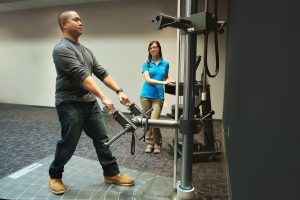
At its core, pre-employment functional testing measures whether a job candidate possesses the physical capacity to perform the essential tasks of a specific role safely. It is not a broad medical checkup, nor is it a generic fitness test. Instead, the process centers on simulated real-world duties:
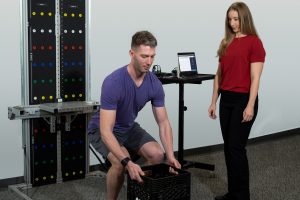
- Lifting a container to the precise shelf height found in your distribution center
- Carrying a realistic load over the actual distances walked during a shift
- Pulling levers and pushing carts with the exact forces required on the assembly line
Traditional medical exams look at broad health indicators like blood pressure or overall medical history. A functional test answers one concrete operational question:
Can this person safely do this specific job, as it is actually performed every day?
Timing and legal sequence are paramount. To maintain compliance with the Americans with Disabilities Act (ADA), post-offer employment testing must occur after a conditional job offer has been extended to the candidate. It cannot be used as an initial screening tool during early interviews, and it must be administered uniformly to every individual entering that specific job classification. Getting this sequence wrong turns a practical safety measure into a significant legal liability.
The Financial and Operational Business Case
When you talk to financial leadership or plant managers, the conversation around safety always comes down to hard numbers: workers’ comp costs, turnover percentages, and production downtime. A structured testing program directly impacts all three metrics.
1. Slashing Musculoskeletal Claims
Musculoskeletal disorders (sprains, strains, disc herniations, and chronic joint wear) are consistently among the most frequent and expensive workplace injuries in manufacturing, logistics, and heavy industry. When you use job-specific functional testing to ensure candidates aren’t placed into physical roles that exceed their actual capabilities, you directly shrink your exposure to these costly claims.
2. Cutting Early-Stage Turnover
The impact on employee retention is less obvious than injury reduction, but often just as valuable to an operations team. A large percentage of avoidable turnover in physically demanding environments happens within the first 90 days. When new hires realize three weeks in that the daily physical demands are more than their bodies can handle, they quit. Aligning a worker’s physical baseline with the actual demands of the role keeps people from washing out early, saving the massive hidden expense of constantly re-advertising, interviewing, and training replacements.
3. Calculating the ROI
Building a business case for leadership does not require complex financial modeling. You can construct a clear ROI projection using three basic inputs:
- Current Injury Costs: Multiply your average cost per lost-time strain or sprain claim by your annual claim frequency in physical roles.
- Turnover Expenses: Calculate the fully loaded cost of replacing an employee who resigns within their first 90 days due to physical mismatch, multiplied by your early turnover volume.
- Testing Program Cost: Multiply your expected candidate volume by the per-test fee of the screening program.
In almost every industrial setting, preventing just one or two serious lost-time injuries or stabilizing a high-turnover shift pays for the entire testing program for the year.

Legally Sound Testing: The Physical Demands Analysis
None of these operational benefits matter if your testing program cannot withstand legal or regulatory scrutiny. The foundation of any defensible program is a rigorous physical demands analysis (PDA).
A physical demands analysis is an objective study that quantifies the real-world physical requirements of a job. Rather than relying on outdated job descriptions or guesses from a hiring manager, a proper PDA involves measuring actual weights lifted, shelf heights, push-pull forces, carrying distances, and posture durations directly on the work floor. Validating these measurements against active employees currently performing the job ensures the data reflects reality.
Key Components of a Valid Functional Assessment
A well-designed functional assessment translates the findings of a physical demands analysis into a series of standardized physical tasks. While protocols vary based on the specific job, a comprehensive test battery generally covers four major physical categories:
| Assessment Area | Physical Actions Measured | Operational Relevance |
| Material Handling | Lifting, lowering, and carrying specific weights at job-matched heights. | Prevents acute back, shoulder, and knee strains during loading/unloading tasks. |
| Force Application | Sustained and peak pushing or pulling forces using calibrated gauges. | Ensures safe operation of heavy material carts, pallet jacks, and machinery levers. |
| Positional Tolerance | Stooping, crouching, kneeling, reaching overhead, and sustained standing. | Confirms candidates can handle awkward assembly positions without rapid fatigue. |
| Endurance & Grip | Hand-grip squeeze strength and repeated task simulation over set time windows. | Protects against repetitive strain injuries (RSI) like carpal tunnel and forearm fatigue. |
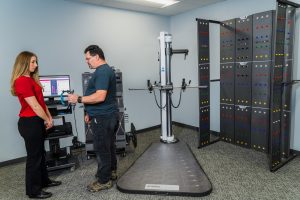
To keep data reliable across testing locations, facility managers should partner with clinical providers who utilize an objective functional evaluation system to measure force, movement, and effort precisely rather than depending on subjective opinion. Furthermore, for companies operating multiple warehouses or production facilities where setting up a full testing lab at every site isn’t practical, using a compact worker-testing device makes it easy to maintain identical, high-quality testing standards across all operations.
Setting Fair Pass/Fail Standards
Setting passing thresholds is where many companies stumble. Cut scores must be tied directly to the minimum physical requirements needed to perform the essential functions of the job, nothing more, nothing less.
This is a strict standard, but intentionally so. When a candidate falls short on an essential physical requirement, a defensible program errs on the side of caution. Overlooking a marginal result on a critical task puts both the worker and the team at risk, as the cost of a physical mismatch, injuries, downtime, and lost wages is steep for everyone involved.
However, if a protocol consistently generates high fail rates on a specific task, that pattern serves as diagnostic feedback for the business. This can signal that an aspect of the role itself may need redesign, mechanical assistance, or procedural modification to reduce baseline injury risk across the entire team.
Holding this line requires operational discipline. When a shift is short-staffed and supervisors are under heavy pressure to fill open slots, there is a temptation to waive testing or pass borderline candidates. Utilizing standardized functional capacity evaluations protects the organization from this short-term pressure. Objective physical data remains neutral regardless of how long a job posting has been open.
Handling Failed Tests and Managing Legal Risk
A failed assessment should prompt an interactive review, not an immediate automated rejection email. Following a structured protocol after a candidate fails to meet a baseline requirement helps protect against claims:
- Verify Essentiality: Confirm that the failed task represents a genuine essential function of the job, rather than an occasional, non-essential task that could easily be reassigned.
- Explore Accommodations: Determine whether a reasonable accommodation, such as adjusting a workbench height, introducing mechanical lift assistance, or modifying tool grips, would allow the candidate to perform the duty safely.
- Document Decisions Uniformly: Maintain a standardized, written workflow for every adverse hiring decision based on test results.
Most ADA-related legal challenges do not stem from the testing itself; they arise from sloppy procedural handling after a candidate fails. Having a clear, consistent post-test workflow protects your business as effectively as the test results themselves.
Improving the Candidate and Employee Experience
Beyond injury reduction and legal protection, job-specific functional testing improves the overall onboarding experience. A transparent, objective test provides candidates with a clear understanding of the physical reality of the role before their first day on the floor.
Clear communication before testing includes explaining what the assessment involves, how long it takes, and what clothing to wear, reduces anxiety and sets a professional tone. During the evaluation, candidate comfort and safety are critical. Applicants who feel rushed, confused by instructions, or intimidated by an unfamiliar setup are more likely to underperform relative to their actual physical ability.
A brief walkthrough of each task, adequate warm-up time, and a clinical administrator who explains what is being measured helps produce results that reflect true workplace capability rather than test anxiety. When candidates understand that the process exists to keep them safe, they view the organization as a thoughtful, safety-conscious employer.
Scaling Your Program Across Multiple Operations
For organizations running multi-site manufacturing or distribution networks, maintaining consistency across locations is essential. Differences in how tests are administered between facilities can create operational friction and compromise legal defensibility.
To build a program that scales reliably:
- Maintain Updated PDAs: Review and update job descriptions whenever equipment, processes, or shift duties change.
- Centralize Data Management: Integrate pass/fail results directly into your Applicant Tracking System (ATS) to preserve audit trails and prevent records from getting lost in local spreadsheets.
- Audit Periodically: Review pass/fail ratios and injury trends across sites to catch scoring drift early, especially when using third-party clinic networks.
- Connect to Broad Safety Efforts: Use physical demand data to inform onboarding, guide comprehensive ergonomics and injury prevention programs, and shape light-duty return-to-work protocols.
To keep data reliable across growing operations, review best practices for getting better data from functional testing to ensure your testing protocol remains accurate as your workforce expands.
Putting It All Together
The primary goal of pre-employment functional testing isn’t finding reasons to turn candidates away, it’s matching people to roles they can perform safely, backed by objective data that supports every decision. By establishing cut scores based on essential job functions, validating standards with a thorough physical demands analysis, and maintaining consistent procedures across all sites, you protect both your workers and your bottom line.
When done right, a functional testing program pays for itself in prevented injuries, reduced turnover, and improved operational efficiency long before anyone questions the initial investment.