Improve Your Practice: A Framework for Modern Sports Injury Rehabilitation
Treatment Guidelines
Evidence-based sports injury rehab strategies to optimize patient recovery, streamline care, and support your clinic’s success.
Modern sports injury rehabilitation requires more than traditional manual techniques and subjective assessments. Today’s successful sports rehab programs integrate objective measurement technology, address psychological recovery factors, incorporate nutrition guidance, and follow evidence-based phased protocols. This approach not only improves athlete outcomes but also differentiates your clinic, streamlines documentation, and supports cleaner reimbursement.
By combining clinical excellence with strategic technology implementation, you can transform your sports rehab services from a commodity offering into a high-value, data-driven program that attracts athletes, teams, and referral sources.
Winning in Sports Rehabilitation
The demand for sports injury rehabilitation continues to surge as participation in athletics grows across all age groups. Yet while demand is high, so is the competition to provide the best sports injury rehabilitation services. If you’re still relying solely on traditional, subjective methods to assess and treat athletes, you risk being left behind by practices that have embraced objective measurement and comprehensive care models.
The future of sports rehabilitation belongs to those who integrate objective data, holistic care strategies, and business acumen into their clinical framework. This isn’t just about keeping up with trends; it’s about building a premier sports rehabilitation program that delivers measurable results, enhances operational efficiency, and drives sustainable revenue growth.
Whether you’re a clinic owner looking to differentiate your services, a practitioner seeking to enhance your clinical approach, or a hospital administrator aiming to standardize protocols across multiple sites, this guide provides the strategic framework you need. We’ll move beyond basic injury management to explore how modern technology and evidence-based protocols can elevate your entire sports rehabilitation program.
Initial Evaluation
Every successful sports rehabilitation journey begins with a comprehensive assessment that goes far beyond simple range of motion measurements and manual muscle testing. While these traditional methods provide valuable baseline information, they represent just the starting point of what should be a data-rich evaluation process.
Your initial assessment serves multiple critical functions: it establishes the clinical foundation for treatment, creates defensible documentation for insurance purposes, and sets expectations with the athlete about their recovery journey. Most importantly, it’s your first opportunity to differentiate your practice through the use of objective, quantifiable data.
Clinical Evaluation Best Practices
When we conduct our initial evaluations, we’re not just looking at the injured area in isolation. A comprehensive sports injury assessment examines the entire kinetic chain, identifies compensatory patterns, and establishes baseline measurements that will guide the entire rehabilitation process. This includes evaluating strength imbalances between limbs, assessing functional movement patterns, and understanding the specific demands of the athlete’s sport.
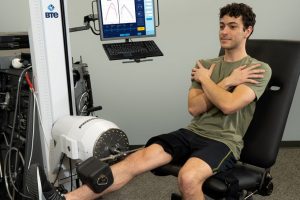
Modern assessment tools allow clinicians to move beyond subjective observations to capture precise, repeatable measurements. For instance, systems like the PrimusRS enable clinicians to perform multi-joint functional assessments that provide objective strength data across multiple planes of motion. This level of detail helps identify subtle deficits that manual testing would miss.

Integrating Functional and Biomechanical Testing Early
The key to building a high-value plan of care lies in establishing comprehensive baseline data from day one. This means incorporating functional testing that mirrors the demands the athlete will face upon return to sport. By quantifying performance metrics early, you create clear, measurable goals that motivate athletes and provide concrete evidence of progress to coaches, parents, and insurance providers.
Consider how this translates to your practice: instead of documenting “decreased quad strength,” you can report “quadriceps strength deficit of 35% compared to the uninjured limb at 60 degrees per second.” This specificity not only enhances your clinical decision-making but also supports more accurate prognosis and cleaner reimbursement.
A Phased, Evidence-Based & Tech-Enabled Approach
Structuring rehabilitation into distinct phases isn’t new, but the way we execute each phase has evolved dramatically. Let’s explore how to infuse each stage with objective measurement and modern interventions that set your program apart.
Phase 1: Acute Care & Pain Management
During the acute phase, your primary goals focus on controlling inflammation, managing pain, and protecting healing tissue. Traditional interventions like RICE (rest, ice, compression, elevation) remain valuable, but we can enhance this phase through systematic tracking and patient engagement tools.
Digital patient-reported outcome measures (PROMs) allow you to track pain and function between visits, providing valuable data about the athlete’s response to treatment. This continuous feedback loop helps you adjust interventions quickly and demonstrates to the athlete that their recovery is being closely monitored, even when they’re not in your clinic.
Setting clear expectations during this phase is crucial. Athletes need to understand that while the acute phase may feel slow, it’s laying the foundation for the accelerated progress they’ll see in subsequent phases.
Phase 2: Subacute & Functional Restoration
As inflammation subsides and tissue healing progresses, we shift focus to restoring range of motion, initiating strengthening, and improving neuromuscular control. This phase represents a critical transition where objective measurement becomes particularly valuable.
Therapeutic exercises during this phase should be progressively challenging while respecting healing constraints. Manual therapy techniques help restore tissue mobility, while proprioceptive drills begin retraining the neuromuscular system. The key differentiator here is how you document and progress these interventions.
Using technology to quantify improvements provides motivating feedback for athletes who might otherwise feel frustrated by the pace of recovery. When an athlete can see objective data showing their range of motion improving by degrees each session or their strength returning in measurable increments, it transforms their perception of progress. Tools that provide real-time feedback during exercises help ensure proper form and optimal loading, accelerating the recovery process while reducing the risk of setbacks.
Phase 3: Rehabilitation & Strengthening
The strengthening phase is where your program can truly differentiate itself through the strategic use of objective measurement and specialized equipment. Building strength, power, and endurance requires progressive overload applied systematically and measured precisely.
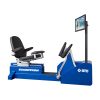
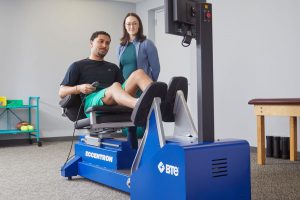
This is where eccentric training becomes particularly valuable. Research consistently demonstrates that eccentric exercise allows higher loading capacity while using significantly less oxygen and reducing fatigue. The Eccentron enables clinicians to provide controlled eccentric resistance training for the lower extremities, helping athletes rebuild strength more efficiently than traditional concentric-only exercises.

During this phase, we move from subjective assessments like “feels stronger” to objective benchmarks like “achieved 85% of pre-injury baseline strength.” This precision is crucial for practitioner confidence and athlete buy-in. When you can show an athlete concrete data comparing their current performance to normative values or their pre-injury baseline, it creates a powerful psychological impact that drives continued engagement and effort.
Phase 4: Return to Sport & Performance
The final phase focuses on safely reintegrating sport-specific movements and preventing re-injury. This is perhaps the most critical phase from a liability and reputation standpoint, as the decision to clear an athlete for return to sport carries significant weight.
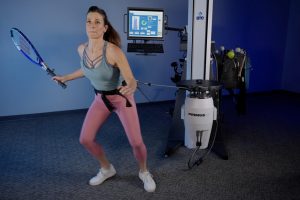
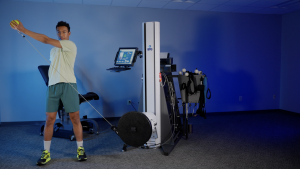
Sport-specific training during this phase should replicate the actual demands the athlete will face. The PrimusRS enables clinicians to recreate sport-specific movements like pitching, swinging a racket, kicking, and lateral movement with data-driven dosing and progress tracking.
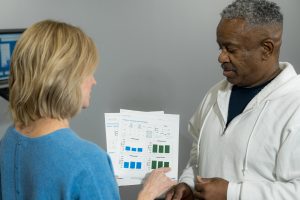
Objective return-to-sport testing provides defensible data for clearance decisions. Systems like PrimusRS allow clinicians to conduct comprehensive functional testing that generates automated reports suitable for physicians, coaches, and insurance providers. This level of documentation protects your practice while building trust with referral sources.
Differentiators Your Competitors Miss
While many sports rehabilitation programs excel at the physical aspects of recovery, the most successful programs recognize that optimal outcomes require addressing psychological, nutritional, and collaborative care components.
Addressing the Psychological Component of Recovery
Fear of re-injury, anxiety about performance decline, and depression from being sidelined can significantly impact recovery trajectories. Yet many rehabilitation programs treat these factors as secondary concerns, if they address them at all.
Integrating psychological support into your rehabilitation framework doesn’t require becoming a mental health provider. Simple strategies like structured goal setting, positive reinforcement protocols, and visualization techniques can be incorporated into regular treatment sessions. Teaching athletes to use mental imagery during rest periods between exercises, for example, has been shown to enhance motor learning and maintain neural pathways even when physical practice is limited.
Consider implementing regular check-ins about psychological well-being, using validated screening tools to identify athletes who might benefit from referral to sport psychology professionals. This proactive approach improves adherence, accelerates recovery, and demonstrates to athletes and their support systems that you understand recovery extends beyond physical healing.

The Untapped Potential of Nutrition
Nutrition plays a critical role in tissue healing, energy availability, and inflammation management, yet it’s rarely integrated into sports rehabilitation programs. This represents a significant opportunity to differentiate your services while improving outcomes.
Protein requirements increase during recovery to support tissue repair, while specific micronutrients like vitamin C, zinc, and omega-3 fatty acids play crucial roles in the healing process. By forming partnerships with registered dietitians, you can create a comprehensive care network that positions your clinic as a one-stop solution for athletic recovery.
Even without formal partnerships, providing basic nutrition education and resources adds value to your program. Simple handouts about anti-inflammatory foods, hydration guidelines, and meal timing around rehabilitation sessions demonstrate attention to detail that athletes and their families appreciate.
Coordinated Care: Teams Working Together for Patients
Breaking down silos between providers creates a more efficient and effective recovery experience. When physical therapists, occupational therapists, athletic trainers, physicians, and coaches collaborate effectively, athletes benefit from coordinated care that addresses all aspects of their recovery.
Technology plays a crucial role in facilitating this collaboration. Centralized platforms that allow secure sharing of objective data and progress reports ensure all team members work from the same information. This reduces redundancy, prevents conflicting advice, and accelerates decision-making about progression and return-to-play timelines.
Achieving Program Success Through Better Care
Clinical excellence alone doesn’t guarantee program success. You need to translate your advanced capabilities into tangible business outcomes that resonate with different stakeholders.
For Clinic Owners and Managers
Your data-driven approach becomes a powerful marketing differentiator. Athletes and their families increasingly expect objective measurement and evidence-based care. By highlighting your technology capabilities and comprehensive approach, you attract patients willing to pay premium prices for premium services.
Consider developing cash-based service lines that leverage your objective testing capabilities. Return-to-sport testing packages, injury prevention screenings, and performance optimization programs create additional revenue streams while building relationships with local sports teams and organizations. The PrimusRS offers objective functional testing and sports training capabilities that support these services and streamline operations.
Technology that streamlines documentation can reduce administrative burden on your clinical staff. When your team spends less time on paperwork and more time providing care, both productivity and job satisfaction improve.

For Hospital and System Administrators
Implementing standardized, evidence-based protocols across multiple locations ensures consistent quality while simplifying training and compliance efforts. Objective measurement systems provide the aggregate data needed to demonstrate value to stakeholders, manage provider performance, and support research initiatives.
The ability to track and report outcomes across your entire system positions your organization as a leader in sports medicine, attracting top talent and preferred provider agreements with local sports organizations.
For Sports Medicine Directors
Objective metrics transform how you communicate with coaches, athletes, and parents about return-to-play decisions. Instead of relying on subjective assessments that leave room for doubt, you provide clear, defensible data that supports your clinical recommendations.
This approach also enhances athlete engagement throughout recovery. Interactive balance training on systems like the Alfa platform turns potentially monotonous exercises into engaging challenges that maintain motivation during long rehabilitation periods.

Build Your Premier Sports Rehab Program Today
Success in modern sports rehabilitation requires more than clinical expertise alone. It demands a strategic fusion of evidence-based protocols, objective measurement technology, holistic patient care, and business acumen. By implementing the framework we’ve outlined, you position your program not just to meet current expectations but to lead the evolution of sports rehabilitation services.
The tools and strategies we’ve discussed aren’t futuristic concepts; they’re available today and being implemented by leading sports rehabilitation programs worldwide. The question isn’t whether to modernize your approach, but how quickly you can implement these changes to capture the growing demand for data-driven, comprehensive sports rehabilitation services.
Your next step is clear: evaluate your current program against this framework and identify the gaps that represent your greatest opportunities for improvement. Whether that means incorporating objective testing technology, developing psychological support protocols, or building multidisciplinary partnerships, each enhancement moves you closer to building the premier sports rehabilitation program your community needs.
Ready to see how BTE’s comprehensive rehabilitation and evaluation systems can provide the objective data and streamlined workflows to implement this framework?
Explore our functional rehabilitation solutions and discover how leading clinics are transforming their sports rehabilitation programs through the strategic integration of technology and evidence-based protocols.
Sports Injury Rehabilitation FAQs
Q1: How do I determine when an athlete can progress from the acute phase to the subacute phase of rehabilitation?
A1: Progress to the subacute phase when acute inflammation subsides (typically 48-72 hours post-injury), pain levels decrease to 3-4/10 at rest, and the athlete can tolerate gentle range of motion without significant pain increase. Look for reduced swelling, improved tissue quality on palpation, and the ability to perform basic movements without protective guarding. Always ensure medical clearance if there’s any doubt about tissue healing status.
Q2: What are the key functional tests I should use before clearing an athlete to return to sport?
A2: Essential functional tests include: single-leg hop tests (achieving 90% of uninjured limb), Y-balance test for dynamic stability, sport-specific movement screens, strength testing showing less than 10% deficit compared to uninjured side, and agility tests like the T-test or 5-10-5 shuttle. Additionally, assess psychological readiness using tools like the ACL-RSI scale, and ensure the athlete demonstrates proper movement patterns under fatigue conditions.
Q3: How should I modify treatment protocols for overhead athletes versus running athletes?
A3: Overhead athletes require emphasis on scapular stability, rotator cuff strengthening, and kinetic chain assessment from ground up. Focus on posterior capsule flexibility, thoracic spine mobility, and plyometric throwing progressions. Running athletes need hip stability work, lower extremity biomechanical analysis, gait retraining if needed, and graduated return-to-running protocols. Both require sport-specific movement patterns, but overhead athletes need more emphasis on upper extremity and trunk integration.
Q4: What documentation is required for sports injury cases, especially for high school and college athletes?
A4: Document initial injury mechanism, baseline measurements (ROM, strength, pain levels), functional limitations, and clearance from team physician. Include objective measures at each visit, progression through rehabilitation phases, and any setbacks. For student-athletes, maintain communication logs with athletic trainers, coaches, and team physicians. Document return-to-sport criteria met, functional test results, and final clearance recommendations. Ensure FERPA compliance for student records and maintain detailed notes for potential insurance or legal requirements.
Q5: How do I address an athlete who is rushing their recovery or not complying with activity restrictions?
A5: Use motivational interviewing techniques to understand their concerns and goals. Educate about injury healing timelines using visual aids and evidence-based research. Set specific, measurable short-term goals to maintain engagement. Involve their support system (parents, coaches, athletic trainers) in education sessions. Document non-compliance and its risks clearly. Consider psychological referral if fear, anxiety, or external pressure is driving the behavior. Establish clear boundaries and consequences while maintaining therapeutic rapport.
Q6: What equipment and space requirements are essential for effective sports injury rehabilitation?
A6: Essential equipment includes: adjustable treatment tables, resistance bands and tubing of varying resistances, free weights (1-50 lbs), stability balls, balance pads and BOSU balls, agility ladders and cones, plyometric boxes (multiple heights), functional movement screens, and sport-specific tools (medicine balls, resistance sleds). Space requirements include: minimum 10×10 feet per treatment area, open floor space for functional movement (20×30 feet ideal), and adequate ceiling height for overhead activities (10+ feet). Consider modular equipment that serves multiple functions to maximize space efficiency.