
About isotonic movement in muscles and how they maintain tension while changing length during dynamic contractions.
What is Isotonic Movement?
Isotonic movement is a type of muscle contraction where muscles change length while maintaining steady tension, allowing joints to move under a constant load. This concept is central to exercise physiology and movement science, separating dynamic muscle contractions from static holds. Anyone involved in rehabilitation, fitness, or human movement analysis needs to understand isotonic movement and how it differs from isokinetic vs isometric movement.
How Isotonic Movement Works in Your Body
Isotonic movement gets its name from Greek roots: “iso” meaning “same” and “tonic” meaning “tension.” This name describes exactly what happens—muscle contractions that maintain consistent tension while producing joint movement under a constant load.
The key characteristics of isotonic movement include:
- Dynamic muscle action: Unlike static contractions where muscles contract without movement, isotonic contractions produce visible joint motion
- Constant external load: The resistance or weight remains consistent throughout the movement range
- Variable muscle length: Muscles actively shorten or lengthen during the contraction process
- Functional movement patterns: Most daily activities and exercise movements involve isotonic contractions
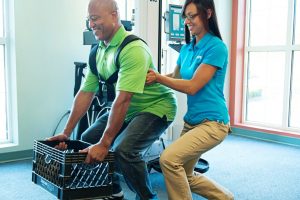
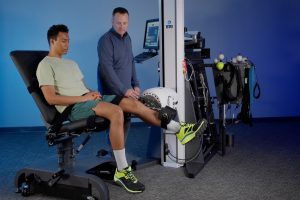
This type of muscle contraction differs from isometric contractions, where muscles generate force without changing length or producing joint movement. Isotonic movement is the most common form of muscle activity in both everyday life and exercise programs. Isotonic movements in functional rehab programs are valuable because they mimic the muscle activation patterns used in daily life, allowing therapists to simulate ADLs more effectively in the clinic.
Two Phases of Isotonic Movement: Muscle Shortening and Lengthening
Isotonic movement consists of two distinct phases that work together to create complete, functional movement patterns. Understanding these phases is important for proper exercise technique, injury prevention, and training results.
The following table illustrates the key differences between concentric and eccentric contractions:
| Characteristic | Concentric Contraction | Eccentric Contraction |
| Muscle Action | Muscle shortens while contracting | Muscle lengthens while maintaining tension |
| Movement Phase | Lifting or pulling phase | Lowering or releasing phase |
| Force Generation | Moderate force production | Higher force production capability |
| Energy Expenditure | Higher metabolic cost | Lower metabolic cost |
| Muscle Adaptation | Moderate muscle adaptation | Greater muscle adaptation |
| Exercise Example | Lifting weight up in bicep curl | Lowering weight down in bicep curl |
| Functional Example | Quadriceps during standing up | Quadriceps during sitting down |
Concentric contractions occur when muscles shorten while generating force, typically during the “lifting” phase of exercises. These contractions require significant energy and represent the primary working phase that most people associate with strength training.
Eccentric contractions happen when muscles lengthen while maintaining controlled tension, usually during the “lowering” phase of movements. Despite being the “negative” portion of an exercise, eccentric contractions often generate more force than concentric contractions and create greater stimulus for muscle adaptation and strength gains.
Both phases occur in most functional movements, making them inseparable components of training and daily activities. The controlled eccentric phase is particularly important for injury prevention and muscle development.
Where You Use Isotonic Movement Every Day
Isotonic movements form the foundation of human locomotion and physical activity, appearing in virtually every aspect of daily life and exercise. These movements make isotonic contractions the most frequently performed type of muscle contraction.
Everyday Activities:
- Walking and running (leg muscles alternately shortening and lengthening)
- Climbing and descending stairs (quadriceps and glutes working concentrically up, eccentrically down)
- Lifting and carrying objects (arms and core muscles adjusting length under load)
- Sitting and standing (leg muscles controlling body weight through both phases)
Popular Exercise Movements:
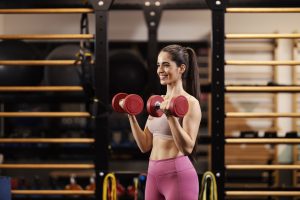
- Bicep curls (arm flexors shortening up, lengthening down)
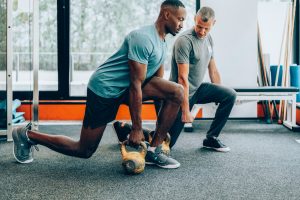
- Squats (leg muscles working through full range of motion)
- Push-ups (chest and arm muscles extending and flexing)
- Bench press (pushing weight up and controlling it down)
- Deadlifts (posterior chain muscles lifting and lowering loads)
Sports and Athletic Movements:
- Throwing motions (arm and shoulder muscles accelerating and decelerating)
- Jumping activities (leg muscles generating explosive power and absorbing landing forces)
- Running mechanics (continuous concentric and eccentric contractions in legs)

These applications demonstrate why isotonic movement serves as the foundation for most strength training programs, rehabilitation protocols, and functional movement assessments. The ability to move joints through their full range of motion under controlled resistance directly translates to improved performance in daily activities and reduced injury risk.
Conclusion
Isotonic movement represents the most fundamental and practical type of muscle contraction, involving dynamic muscle length changes while maintaining consistent tension under load. The two phases—concentric muscle shortening and eccentric muscle lengthening—work together to create the functional movement patterns essential for daily activities, exercise, and athletic performance. Understanding these concepts enables better exercise technique, more effective training programs, and improved movement quality across all physical activities.
For professionals working in rehabilitation, precise evaluation of isotonic movement patterns is crucial for developing effective treatment and training protocols. Companies like BTE specialize in advanced assessment tools and rehabilitation equipment that help healthcare providers and fitness professionals accurately analyze and improve isotonic movement capabilities in their clients and patients.