A Strategic Guide to the Rapid Exchange Grip (REG) Test: From Clinical Protocol to Business Growth
Treatment Guidelines
Master the rapid exchange grip test with our expert protocol guide. Learn proper administration, result interpretation, and how to integrate REG testing into comprehensive effort assessment systems for better clinical outcomes and defensible documentation.
The Rapid Exchange Grip (REG) test helps clinicians assess consistency of effort in grip strength testing by having patients rapidly alternate gripping between hands. While valuable for detecting submaximal effort, the test requires standardized administration and should be part of a comprehensive evaluation system, not a standalone assessment.
How to Use the Rapid Exchange Grip Test
How can you be certain your patient is giving their true maximal effort? Inaccurate grip strength data can muddle return-to-work decisions, put workers at risk for further injury, and create financial and legal ramifications in workers’ comp cases . In today’s clinical environment, where objective data drives decisions, you need reliable methods to verify effort.
The rapid exchange grip test is a well-known but often misunderstood tool in your arsenal for verifying effort. Yet many clinicians struggle with inconsistent protocols, unclear interpretation guidelines, and uncertainty about when and how to apply the results.
This guide can help clinicians implement, interpret, and leverage the REG test to drive clinical decisions. Whether you’re looking to strengthen your documentation, improve patient outcomes, or differentiate your clinic’s testing services, understanding the nuances of REG testing can transform a simple assessment into a powerful clinical and business tool.
The “Why”: Translating the REG Test into Value for Your Role
At its core, the rapid exchange grip test identifies inconsistencies that may indicate submaximal effort during grip strength assessment. The patient rapidly alternates the dynamometer between hands while gripping, and you compare these values to their static grip strength. This comparison reveals patterns that help interpret whether the patient is providing maximal effort.
But here’s where it gets interesting. The value of REG testing extends far beyond simple effort detection.
Let’s explore what this means for your specific role:
For Clinic Owners & Managers
Objective effort testing through REG protocols leads to defensible documentation that supports reimbursement and reduces audit risk. In the competitive landscape of workers’ compensation and personal injury cases, offering standardized consistency-of-effort testing differentiates your clinic. You’re not just providing therapy; you’re delivering objective, legally defensible assessments that insurers and employers trust. This positions your clinic as the go-to facility for complex cases requiring thorough documentation.
For Clinical Practitioners (PTs/OTs)
REG testing gives you confidence in your objective evaluation. When you establish a clear baseline with verified effort, you can track genuine progress and adjust treatment plans accordingly. The data also facilitates those sometimes difficult conversations about effort and engagement.
If your REG test shows inconsistent results, you may need to communicate with the patient or adjust your approach. Learn what can cause these inconsistencies, how to address it with patients, and when consistency-of-effort testing can point towards malingering: Consistency of Effort Testing Guide.
For Occupational Health & Work Comp Directors
Consider REG testing a critical component of your robust functional capacity evaluation. It provides objective data for return-to-work readiness decisions and creates legally defensible reports for employers and insurers. When you can demonstrate that your assessments account for effort levels, your recommendations carry more weight in determining work capacity and disability ratings.
For Hospital & Rehabilitation System Administrators
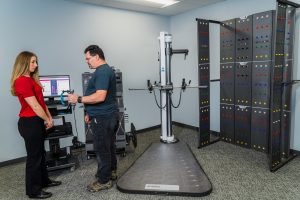
Standardizing consistency-of-effort testing across all your providers ensures consistent data collection and reporting. With standardized REG protocols, you simplify compliance reporting and create system-wide benchmarks for quality assurance. The PrimusRS and EvalTech systems support this standardization by providing consistent evaluation protocols and tools calibrated for precision.
For Sports Medicine & Performance Centers
REG testing establishes accurate strength baselines post-injury and serves as an objective gate in return-to-sport protocols. When an athlete’s career depends on accurate assessment, you need confidence that the strength measurements reflect true capacity, not fear-avoidance or other psychological factors affecting effort.

The “How”: A Step-by-Step Protocol for Administering the REG Test
Variability is the enemy of reliable data. Follow this standardized protocol to ensure your REG test results are as accurate as possible. While different facilities may have slight variations, consistency within your practice is paramount.
1. Patient Setup
Position your patient seated with feet flat on the floor, shoulder adducted and neutrally rotated, elbow flexed at 90 degrees, and forearm in neutral position. The wrist should be between 0 and 30 degrees extension with 0 to 15 degrees of ulnar deviation. Maintaining standardized positioning ensures biomechanical consistency across all tests.
2. Dynamometer Configuration
If using a hand held dynamometer, it should be configured at the individuals “power position”. The power position is wherever the patient was strongest when doing a 5-rung test. Most individuals have a power position of 2 or 3.
If using a fixed dynamometer, the patient may stand or be seated near the device, following the positioning above.
3. Instructions and Verbal Cues
Clear communication is essential. Tell your patient: “You’ll be gripping as hard as you can, alternating between your right and left hands as quickly as possible. I’ll tell you when to switch. Keep gripping with maximum force throughout the test.”
Provide consistent, neutral encouragement such as “Keep going” or “Good effort” without excessive enthusiasm that might influence performance. Your tone should remain professional throughout.
4. Execution and Rhythm
The rapid alternating process typically occurs at 45 to 60 repetitions per minute, though some protocols use up to 100 grips per minute. The goal is preventing conscious force modulation by maintaining a pace that doesn’t allow time for the patient to consciously adjust their grip strength. Most clinicians find that at least five exchanges per hand provides adequate data for comparison.
5. Data Capture
Record the peak force achieved during the REG test for each hand. Document any observable behaviors such as grimacing, hesitation, or inconsistent rhythm. These clinical observations complement the numerical data and provide context for interpretation.
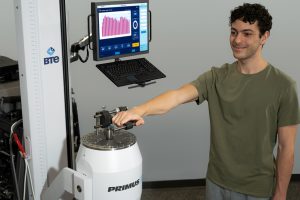
PrimusRS automatically reports peak and average force, the coefficient of variation percent-differences between left and right sides, and quantified changes between testing days over time.
How PrimusRS Produces Better REG Test Data
Unlike handheld dynamometers, the fixed dynamometer setup of the PrimusRS helps reduce variability caused by patient positioning, stabilization, and clinician technique. This creates more standardized testing conditions and improves consistency between sessions and evaluators.
Automatic data capture eliminates manual recording during testing, helping clinicians save time while reducing the risk of transcription errors. The generated reports automatically calculate key metrics such as coefficient of variation (CV) to quickly identify consistency of effort (COE), peak and average force values, percent differences between left and right sides, and quantified changes between testing dates over time. The visualized data is easy for both clinicians and referral sources to interpret, supporting documentation, clinical recommendations, and progress tracking.
The software also provides pacing cue tones to help maintain consistent speed throughout testing. During the assessment, clinicians can observe real-time force curves, allowing them to assess effort quality, identify inconsistencies, and monitor patient performance as the test is being performed.
The “What Now”: Interpreting Results with Clinical Nuance
Understanding REG results requires more than simple number comparison. Let’s explore the interpretation framework while acknowledging the important limitations.
The Basic Comparison Framework
The fundamental analysis compares peak static grip (SG) strength to peak rapid exchange grip (REG) scores:
- Negative REG (SG > REG): This pattern, where static grip exceeds rapid exchange grip, generally indicates sincere effort. The physiological demands of rapid alternation typically result in slightly lower force production compared to focused static gripping.
- Positive REG (REG > SG): When rapid exchange scores exceed static grip strength, this raises a red flag suggesting possible submaximal effort during static testing. This finding doesn’t provide a decisive conclusion itself. Rather, it may point you towards further consistency of effort testing to figure out the cause.
Critical Considerations
Here’s what separates experienced clinicians from those who simply run tests: understanding that a positive REG is not a definitive diagnosis of malingering or insincerity. Multiple factors can influence these results.
REG testing is better for showing consistency of effort, not sincerity. In controlled settings with uninjured subjects, specificity can reach 97%, meaning the test excels at confirming when someone is giving maximal effort. However, sensitivity varies widely, particularly in clinical populations dealing with pain, fear, or genuine weakness.
Patients may struggle with giving consistent effort for many reasons not related to malingering. Pain, fear-avoidance, misunderstanding the instructions, or cognitive factors can all impact performance. A patient with carpal tunnel syndrome might show a positive REG not from insincerity but from pain patterns that change with repetitive gripping.
Integrating REG into a Comprehensive Evaluation
The REG test reaches its full potential when integrated into a comprehensive evaluation rather than used in isolation. Think of it as one piece of a larger clinical puzzle.
Building a Complete Clinical Picture
Combine REG results with standard grip tests to identify patterns of consistency or variation. Include coefficient of variation analysis to assess consistency within repeated trials. Your clinical observations of patient behavior, facial expressions, and movement patterns provide crucial context that numbers alone cannot capture.
Patient subjective reports about pain, fatigue, and perceived effort complete the assessment picture. When these multiple data points align, you can make confident clinical decisions. When they diverge, you know to investigate further.
Leveraging Technology for Efficiency
Manually performing and cross-referencing these tests is time-consuming and prone to error. Modern dynamometry systems streamline this process significantly. The EvalTech system automates data collection and provides instant, integrated reports that combine REG, coefficient of variation, and other metrics into comprehensive consistency-of-effort analysis.
This automation doesn’t just save time; it provides the standardized, defensible data that payers and employers demand. When you can present objective, consistent data across multiple assessment types, your clinical recommendations carry more weight. The system’s ability to generate detailed reports helps clinicians communicate findings clearly to referral sources, insurers, and legal representatives when needed.
Protocol Integration in Practice
Consider implementing REG testing as part of your standard intake evaluation for workers’ compensation cases, personal injury claims, or any situation where effort verification matters. By establishing this as routine practice, you avoid the appearance of bias while building a robust database of normative values for your patient population.
Elevating Your Practice from Performing a Test to Implementing a Strategy
The rapid exchange grip test represents more than a simple assessment tool; it’s a gateway to more confident clinical decision-making and stronger operational outcomes. When administered through standardized protocols and interpreted within a comprehensive evaluation framework, REG testing transforms from a standalone measurement into a strategic asset.
Your next step? Evaluate your current grip strength assessment protocols. Are they standardized? Do they include effort verification? Can you defend your findings if challenged? If you answered “no” to any of these questions, it’s time to elevate your approach to grip strength testing. Consider how integrating comprehensive evaluation systems can transform not just your data quality but your entire practice’s approach to objective assessment.
FAQs
What is the difference between a positive and negative REG test result?
A negative REG result occurs when the patient’s peak static grip strength is greater than their peak REG scores, indicating sincere effort. A positive REG result occurs when the peak REG scores exceed the peak static grip scores, which may suggest submaximal effort or potential malingering. However, due to the test’s limited sensitivity and specificity, positive results should be interpreted cautiously and within the context of other clinical findings.
How should I position the patient for accurate REG testing?
Position the patient seated with feet flat on the floor, arms at their sides (adducted), elbows bent at 90 degrees, and forearms in a neutral position. Ensure the patient maintains this standardized position throughout the entire test to obtain reliable measurements.
What grip alternation rate should I use – 45 or 60 grips per minute?
Research shows no significant differences in peak REG scores between 45 and 60 grips per minute. Choose one rate and use it consistently across all your assessments. Many clinics use a metronome or timer to maintain the chosen rhythm. The key is consistency within your practice to ensure reliable comparisons over time.
How many repetitions should I record during the REG test?
While protocols vary, most clinics record multiple grips per hand (typically 10-20 alternations) to establish a reliable peak score. The exact number is less important than maintaining consistency across all your assessments. Document your chosen protocol and use it consistently for all patients to ensure valid comparisons and reliable data.
Can I rely solely on the REG test to detect malingering or submaximal effort?
No, the REG test should never be used in isolation for detecting insincere effort. Studies show the test has relatively low sensitivity and specificity for detecting malingering. Always use REG results as part of a comprehensive evaluation that includes multiple grip strength tests, clinical observations, patient history, and other functional assessments.