-
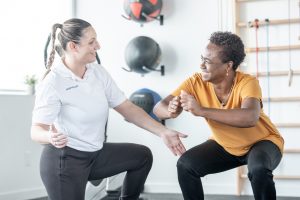
Learn how to calculate the limb symmetry index (LSI), where it falls short, and which other measures can inform return-to-sport decisions.
-
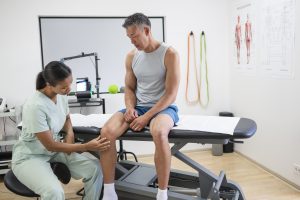
Learn how to test for arthrogenic muscle inhibition (AMI) and explore treatment options to restore quadriceps activation after knee injury or surgery.
-
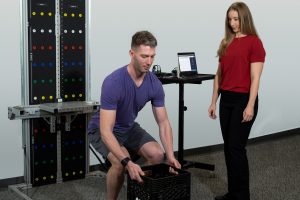
Learn how pre-employment functional testing evaluates a candidate’s ability to meet job-specific physical demands and helps reduce workplace injury risk.
-

Learn how Functional Capacity Evaluations use standardized tests and job-specific tasks to objectively measure a patient’s physical work abilities.
-
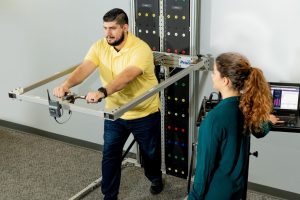
Functional Assessment Screening Tools for Physical Therapy: Implementation and Best Practices
CategoriesDiscover functional assessment screening tools for physical therapy. Get implementation strategies and best practices to improve patient outcomes effectively.
-

ACL Rehab Protocol With Concomitant Meniscus Repair: Why "Just a Slower ACL Rehab" Isn't Enough
CategoriesLearn how meniscus repair changes ACL rehab, from weight-bearing and range-of-motion restrictions to the milestones that guide progression.
-
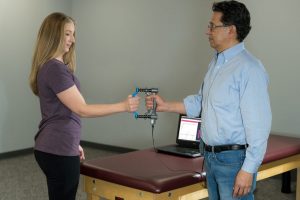
Many rehabilitation clinicians have faced challenges in clinical decision-making due to inconsistent patient performance. For example, what we see in the clinic might not match a patient’s reported limitations. Without objective data to back in-clinic performance, we may be left making more judgment calls about treatment progression than we’d like. Consistency of effort (COE) testing…
-
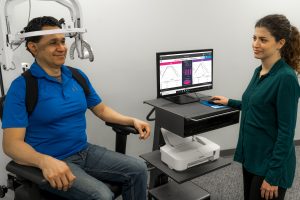
Cervical range of motion (ROM) measures how far the neck joints can move, expressed in degrees across different planes. Healthcare providers use these measurements to assess neck injuries, track rehabilitation progress, and identify movement restrictions that affect daily activities. If you’re standardizing programs across providers, pairing ROM with consistent neck strengthening progressions helps keep care…
-
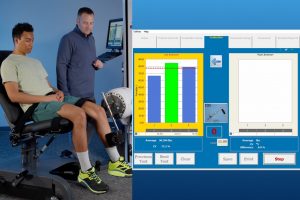
If there is one finding rehab research agrees on in knee osteoarthritis, it is this: quadriceps weakness is among the most consistent drivers of OA-related pain and function loss. It predicts who develops the disease, who progresses, and who ends up needing a joint replacement. So most programs set out to “strengthen the quad.” The…
-
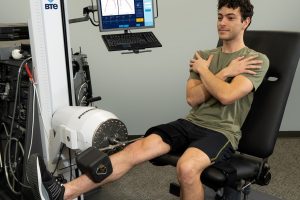
Manual muscle testing is the most widely used strength assessment in rehab. Every PT and OT learns it, nearly every clinic uses it, and for confirming gross weakness or screening quickly at the bedside, it does a real job. It is not going anywhere — and it shouldn’t. But here is something worth addressing: MMT…
-
What is a Dexterity Test?
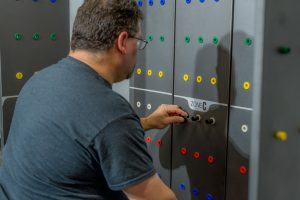
CategoriesA dexterity test measures hand, finger, and arm coordination through controlled tasks that require precision, speed, and accuracy. These tests provide objective measurements of manual dexterity and serve as essential tools in clinical rehabilitation, neurological assessment, and employment screening. Healthcare professionals, employers, and individuals who undergo these assessments need to understand dexterity tests because they…
-
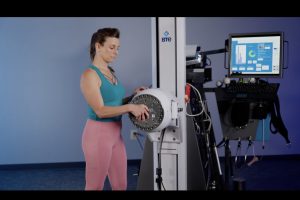
Task simulation is the practice of replicating real-world activities, from job duties to daily self-care, inside a controlled clinical environment. It’s become a cornerstone of modern occupational therapy because it bridges the gap between what patients do in the clinic and what they actually need to do in life. But here’s the thing we don’t…